Why Personal Injury Lawyers Reject Cases: 8 Key Reasons
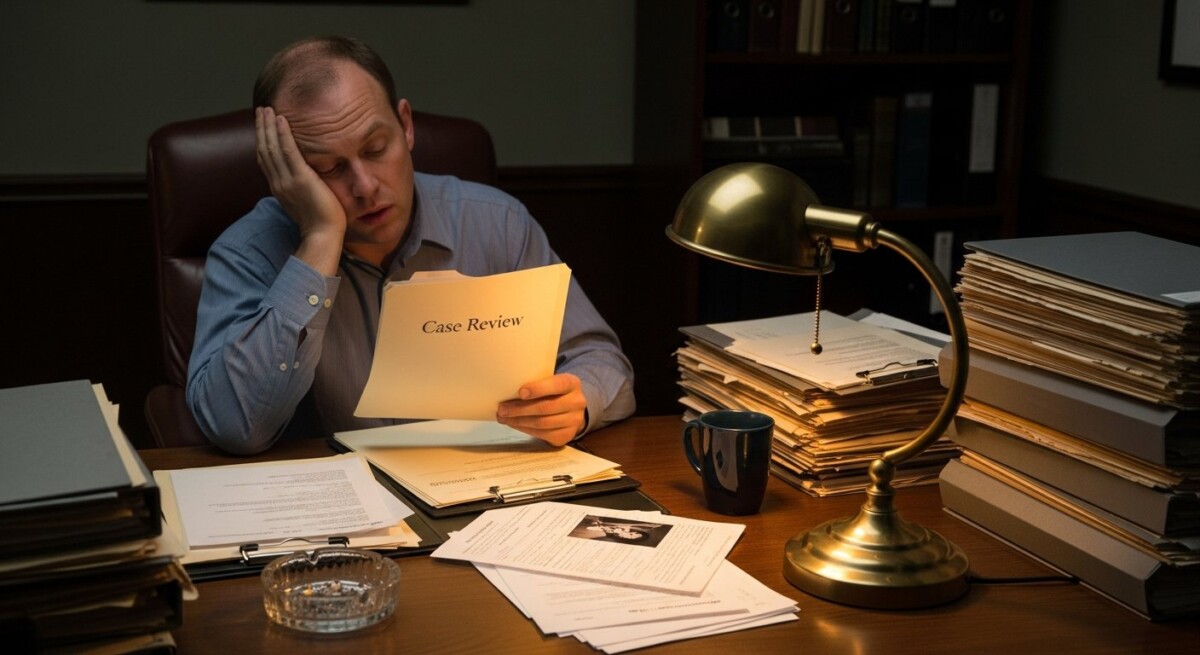
You have just been injured in an accident. Your medical bills are piling up. You are missing work. You feel certain that someone else is at fault. So you call a personal injury lawyer expecting them to jump at the chance to help. Instead, they politely decline your case. You are left confused and frustrated. Why would a lawyer turn away a potential payday? The truth is that experienced attorneys turn down far more cases than they accept. Understanding why personal injury lawyers reject cases can save you months of wasted effort and help you find the right attorney faster.
Most people assume that any injury automatically means a lawsuit. In reality, the legal system has strict rules about what makes a viable claim. Lawyers operate on a contingency fee basis, meaning they only get paid if you win. They cannot afford to take cases that are likely to lose or that would cost more to litigate than they could recover. This article walks through the eight most common reasons attorneys say no. If your case has been rejected, this guide will help you understand what went wrong and what you can do next.
Liability Is Unclear or Disputed
The single most common reason for rejection is a lack of clear liability. In personal injury law, liability means legal responsibility. You must prove that another party acted negligently and that their negligence directly caused your injuries. If the facts do not clearly point to someone else’s fault, the case becomes a gamble.
Lawyers assess liability by looking at police reports, witness statements, and physical evidence. If you were involved in a rear-end collision, liability is usually straightforward. But if you were merging lanes, speeding, or driving in bad weather, the other driver’s insurance company will argue that you were partially at fault. In states that follow comparative negligence rules, your compensation gets reduced by your percentage of fault. If you are found 50 percent or more at fault, you may recover nothing at all. Attorneys avoid these borderline cases because juries are unpredictable and insurance companies fight them hard.
Another tricky area is premises liability, such as slip and fall cases. You must prove that the property owner knew about a dangerous condition and failed to fix it. If you slipped on a wet floor without warning signs, the store may argue that the spill happened only moments before you fell. Without video footage or employee testimony, proving notice is extremely difficult. In our guide on do I have a personal injury case: a legal framework to know, we explain how attorneys evaluate liability before taking a case.
Insufficient Insurance Coverage
Even when liability is clear, the case may be worthless if the defendant has no insurance or very low policy limits. Personal injury lawyers look at the available insurance coverage before they look at your medical bills. This is a harsh reality that many injury victims do not consider.
Consider a scenario where a driver runs a red light and T-bones your car. You suffer a broken leg requiring surgery. The driver is clearly at fault. But that driver carries only the state minimum insurance of $15,000 per person. Your medical bills are already $50,000 and climbing. The lawyer can sue the driver personally, but if the driver has no assets, a judgment is uncollectible. The lawyer cannot spend $20,000 in litigation costs to chase a $15,000 policy. The math simply does not work.
Lawyers also check for umbrella policies, commercial insurance, and multiple vehicles. If the at-fault party has substantial assets or a high-value insurance policy, the case becomes attractive. But if the insurance limits are too low to cover your damages, most reputable firms will decline. They may refer you to a smaller firm that handles low-value cases, but even those firms are selective.
Minor Injuries With Low Damages
Personal injury cases are expensive to pursue. Filing fees, medical record retrieval, expert witness fees, and deposition costs can easily reach $10,000 or more before trial. Lawyers front these costs and only recoup them if they win. As a result, they need cases where the potential recovery justifies the investment.
Soft tissue injuries such as sprains, strains, and whiplash often fall into the low-damages category. If you were in a minor fender bender and your only injury is a sore neck that resolved in two weeks, your medical bills might be $2,000. Insurance companies typically offer $3,000 to $5,000 for these claims. After the lawyer deducts their one-third contingency fee and costs, the net recovery is too small to justify the effort.
Some lawyers take these cases in high volume, but experienced attorneys with strong reputations generally do not. They focus on cases involving broken bones, traumatic brain injuries, spinal cord damage, or permanent disfigurement. These cases generate the kind of damages that make litigation worthwhile. If your injuries are minor, you may need to handle the claim yourself or work with a smaller firm that charges lower fees.
Pre-Existing Conditions Complicate the Case
Insurance defense lawyers love pre-existing conditions. If you have a history of back pain, arthritis, or a prior injury to the same body part, the defense will argue that your current symptoms are not caused by the accident. They will dig through your medical records looking for any mention of similar complaints.
This does not automatically kill your case. The law says that defendants take their victims as they find them. If you had a weak back and the accident made it worse, you can still recover. But proving the aggravation requires expert medical testimony. Your doctor must be willing to testify that the accident caused a permanent worsening of your condition. Many doctors are reluctant to give that opinion, especially if your medical records show ongoing complaints before the accident.
Lawyers evaluate the strength of your medical evidence before accepting a case. If your pre-existing condition was severe and your accident was minor, the case becomes a battle of experts. That is expensive and risky. Many attorneys will pass on these cases unless the accident was catastrophic and the aggravation is clearly documented.
Statute of Limitations Has Expired
Every state sets a deadline for filing personal injury lawsuits. This is called the statute of limitations. In most states, you have two years from the date of injury to file a lawsuit. Some states give only one year for certain claims, such as those against government entities. If you miss the deadline, your case is forever barred.
Lawyers check the date of the accident immediately. If the deadline is approaching or has passed, they will almost always decline. There are narrow exceptions, such as the discovery rule for latent injuries, but these are difficult to prove. If you waited too long to call an attorney, you may have lost your right to sue.
There is also a practical consideration. Even if you still have a few months left, lawyers prefer cases with plenty of time. Building a strong case takes months. You need to gather evidence, depose witnesses, and negotiate with insurers. If the case is close to the deadline, the lawyer may feel rushed and decline. The best time to contact a lawyer is immediately after the accident, while evidence is fresh and deadlines are far away.
You Were Partially at Fault
As mentioned earlier, comparative negligence rules can reduce or eliminate your recovery. But even in states where you can recover with some fault, many lawyers are cautious. If you were speeding, texting, or violating traffic laws at the time of the accident, the defense will highlight your negligence.
Lawyers run a risk analysis. If you are 20 percent at fault, your recovery is reduced by 20 percent. That might still be acceptable. But if you are 40 percent at fault, the case becomes much less attractive. The defense will offer very little in settlement, knowing that a jury might find you equally at fault. Experienced attorneys know that juries can be harsh on plaintiffs who contributed to their own injuries. They prefer cases where the other party is clearly and overwhelmingly at fault.
This is especially true in pedestrian accidents, bicycle accidents, and motorcycle crashes. Insurers often argue that the injured person was not wearing a helmet, was jaywalking, or was riding without lights. These arguments can reduce the settlement significantly. If you were partially at fault, be honest about it with the lawyer. They may still take the case if the other party’s fault is much greater, but they need to know the full picture.
Lack of Medical Treatment or Gaps in Care
Insurance companies scrutinize your medical treatment history. If you waited two weeks after the accident to see a doctor, the defense will argue that you were not really injured. If you stopped treatment for a month and then went back, they will argue that the gap means your injuries resolved. These arguments are effective with juries.
Lawyers want clients who sought immediate medical attention and followed through with treatment. They want to see consistent medical records showing a clear link between the accident and your injuries. If you declined an ambulance at the scene, went home, and only saw a doctor after a friend suggested it, the case becomes harder to prove.
Another issue is failing to complete prescribed treatment. If your doctor recommended physical therapy three times a week but you only went twice, the defense will claim you were not serious about your recovery. Lawyers look for clients who are willing to follow medical advice and document their pain and limitations. If you have gaps in treatment or refused recommended procedures, many lawyers will decline your case. They know that insurance adjusters use these gaps to justify lowball offers.
If you are unsure whether your treatment history is strong enough, you can read our article on how to calculate compensation for a personal injury case to understand how medical records affect your claim value.
You Have Already Hired and Fired a Lawyer
This one surprises many people. If you have already hired a lawyer and then fired them, other lawyers may be hesitant to take your case. The previous lawyer may have a lien on the file for their time and costs. The new lawyer must negotiate with the old lawyer to split the fee. This creates complications that many attorneys prefer to avoid.
More importantly, firing a lawyer can be a red flag. Attorneys wonder why you left. Was it a personality conflict? Did you refuse to follow advice? Did you insist on an unrealistic settlement amount? If the previous lawyer dropped you as a client, that is an even bigger warning sign. Lawyers talk to each other, and reputations matter.
If you have already parted ways with a lawyer, be upfront about it. Explain why you left and what you are looking for in a new attorney. Some lawyers will still take the case if the facts are strong and the previous lawyer was a poor fit. But be prepared for more scrutiny. In our guide on can I change my personal injury lawyer during a case, we discuss the risks and steps involved in switching attorneys.
What You Can Do After a Rejection
Hearing no from one lawyer does not mean your case has no value. It means that particular lawyer did not see enough potential in it. You should seek a second opinion, and sometimes a third. Different firms have different risk tolerances, overhead costs, and areas of expertise.
Start by asking the rejecting lawyer for specifics. Was it a liability issue? Low insurance? Minor injuries? Knowing the reason helps you target the right type of firm. For example, if the issue was low insurance coverage, look for a lawyer who handles uninsured/underinsured motorist claims. If the issue was comparative fault, look for a lawyer who specializes in complex liability cases.
You can also take steps to strengthen your case. Continue your medical treatment. Document your pain in a daily journal. Gather any additional evidence, such as photos of the scene or contact information for witnesses. If your case was rejected because of a approaching deadline, file a pro se complaint to preserve your rights. Then hire a lawyer to take over.
Finally, consider whether your case is worth pursuing at all. If multiple lawyers have declined, it may be time to focus on your recovery rather than litigation. Not every injury leads to a lawsuit. That is a hard truth, but accepting it can save you years of frustration.
Frequently Asked Questions
Can I sue if my case was rejected by multiple lawyers?
You can always file a lawsuit on your own. However, if experienced lawyers have declined, it usually means the case has significant weaknesses. Proceeding without a lawyer is risky and rarely results in a better outcome.
Do lawyers reject cases because they are too busy?
Sometimes. Good lawyers are selective about their caseload. If a lawyer is already handling several large cases, they may decline smaller or weaker cases simply because they lack the bandwidth. That is a legitimate reason, and it does not mean your case is bad.
What should I ask a lawyer who rejects my case?
Politely ask for the specific reason. Common answers include unclear liability, low insurance, minor injuries, or statute of limitations issues. If the reason is something you can fix, such as a gap in medical treatment, address it before contacting another lawyer.
How long do I have to find a lawyer after an accident?
In most states, you have two years from the accident date for personal injury claims. However, claims against government entities may have deadlines as short as six months. Contact a lawyer as soon as possible to avoid missing the deadline.
Can a lawyer take my case on a partial contingency fee?
Some lawyers offer sliding fee arrangements for lower-value cases. You may also find lawyers who charge hourly but cap their fees. These options are less common, but they exist. Ask about fee structures during your initial consultation.
Final Thoughts on Case Rejections
Understanding why personal injury lawyers reject cases helps you approach the legal process with realistic expectations. Lawyers are business owners. They must evaluate risk, cost, and potential return before investing their time and money. If your case is rejected, it is rarely personal. It is a business decision based on the evidence, the insurance coverage, and the law.
Do not give up after one rejection. Seek a second opinion, strengthen your evidence, and be honest about your situation. If you are looking for an experienced attorney who carefully evaluates each case, find the best personal injury lawyer in Phoenix for motor vehicle accidents or contact us at 833-227-7919 to discuss your options. A qualified lawyer can help you determine whether your claim is worth pursuing and guide you through the next steps.