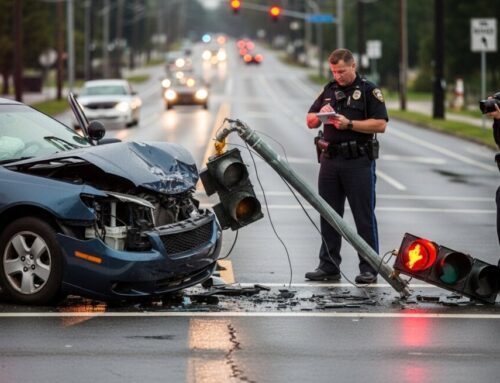
No Police Report After Accident? Can You Still Claim
You are sitting in your car after a fender bender, and the other driver says they will pay for the damage out of pocket. No police, no report, no fuss. But weeks later, their calls go unanswered, and your insurance company is asking for a police report that does not exist. If you have been asking yourself, “i had accident but no police report can i still claim,” the short answer is yes, you can. However, the path to compensation requires careful documentation, prompt action, and sometimes professional legal help.
Many drivers assume that without an official police report, their claim is dead on arrival. That is not true. Insurance companies and even courts accept other forms of evidence. The real challenge is proving what happened without that official record. This article walks you through every step of claiming after an unreported accident, from gathering alternative evidence to negotiating with adjusters and knowing when to call a lawyer.
Why Police Reports Matter in Accident Claims
A police report serves as an unbiased third-party account of the crash. Officers document skid marks, vehicle positions, witness statements, and sometimes even assign fault. For insurance adjusters, this report is a gold standard piece of evidence. It reduces the he-said-she-said element that makes claims difficult to process.
When you have no police report, the adjuster loses that neutral starting point. They must rely more heavily on your version of events, the other driver’s statements, and any physical evidence you can provide. This does not mean your claim is automatically denied. It simply means you must work harder to build a convincing case. Many successful claims are paid every day without a police report, especially in low-impact collisions, parking lot incidents, or situations where both parties initially agreed not to involve law enforcement.
The key difference is the burden of proof. With a police report, the adjuster has a ready-made factual foundation. Without one, you must construct that foundation yourself using photos, videos, witness contacts, and a clear timeline of events.
When Is a Police Report Required by Law?
State laws vary on when you must call the police after a crash. In most states, you are legally required to report an accident if:
- Someone is injured or killed
- Property damage exceeds a certain threshold (often $500 to $1,000 depending on the state)
- A driver appears intoxicated or unlicensed
- A driver leaves the scene (hit-and-run)
If your accident meets any of these criteria and you did not call the police, you may face legal penalties like a fine or license suspension. However, for minor fender benders with no injuries and minimal damage, many states do not require a report. In those cases, the lack of a police report is less of a legal problem and more of an evidence problem.
Even if you were not legally required to report the accident, your insurance company’s policy language may still require you to report the incident to them promptly. Delaying notification can give the insurer a reason to deny your claim, regardless of whether a police report exists.
Alternative Evidence That Strengthens Your Case
When you do not have a police report, your goal is to create a compelling paper trail that tells the story of the accident clearly. The following types of evidence can substitute for an official report and often carry significant weight with adjusters and juries.
Photographs and Video Footage
Your smartphone is your best friend after a crash. Photograph everything from multiple angles. Include wide shots showing both vehicles in the road, close-ups of damage to each car, skid marks on the pavement, debris patterns, traffic signs or signals, and weather conditions. If there is a nearby security camera or dashcam video, ask the owner or business for a copy immediately before the footage is overwritten.
Video evidence is even more powerful than photos. A 10-second clip showing the intersection, the approach of both vehicles, and the moment of impact can resolve a liability dispute instantly. If you have a dashcam, save the file in multiple locations. If you do not, consider installing one for future protection.
Witness Statements and Contact Information
Witnesses can provide the neutral perspective that a police report would have offered. At the scene, ask anyone who saw the crash for their name and phone number. Ask them to describe what they saw in their own words. If they are willing, record a short video statement on your phone or write down their account and have them sign it.
Do not rely on the other driver to provide witnesses. Gather your own independent contacts. Even a witness who saw the cars immediately after the crash can testify about the positions of the vehicles and the demeanor of the drivers.
Medical Records and Treatment Documentation
If you were injured, seek medical attention immediately, even if you feel fine. Adrenaline can mask pain for hours or days. Medical records create a direct link between the accident and your injuries. They also show the insurance company that you took your health seriously, which makes it harder for them to argue that your injuries are minor or unrelated.
Keep a pain journal documenting your symptoms daily. Note how the injury affects your work, sleep, and daily activities. This subjective evidence complements the objective medical records and helps quantify non-economic damages like pain and suffering.
Written Statements from Both Drivers
Immediately after the accident, write down everything you remember while it is fresh. Include the date, time, location, weather, direction of travel, what you were doing, and what the other driver was doing. If the other driver admitted fault at the scene, write that down verbatim.
Then, ask the other driver to provide a written statement as well. Even if they refuse, your own detailed account, combined with photos and witness statements, creates a strong narrative that an adjuster can follow.
How to File a Claim Without a Police Report
Filing a claim without a police report follows the same general process as any other claim, but you must be more proactive in presenting your evidence. Here is a step-by-step approach.
Step 1: Notify Your Insurance Company Promptly
Call your insurer as soon as possible, even if you are not sure you will file a claim. Most policies require prompt notification. When you call, explain that there is no police report and explain why (e.g., minor damage, both parties agreed not to call, police refused to respond). Provide the claim number and the name of the adjuster assigned to your case.
Step 2: Submit Your Evidence Package
Organize all of your evidence into a single package. This should include your photos, witness contact information, your written statement, medical records, and any repair estimates. Send everything to the adjuster in a single email or upload it through the insurer’s portal. Include a cover letter summarizing the accident and explaining why you believe the other driver was at fault.
Step 3: Be Prepared for a Liability Investigation
Without a police report, the adjuster will conduct their own investigation. They may call witnesses, review photos, and ask both drivers for recorded statements. Be honest and consistent. Do not speculate about things you do not remember. If you are unsure about a detail, say so. Inconsistencies are the fastest way to damage your credibility.
If the adjuster denies your claim, ask for the denial in writing and request a copy of their investigation notes. This gives you a roadmap for appeal or for building a case in court.
When You Need a Lawyer for a No-Police-Report Claim
While many small claims can be handled without an attorney, certain situations strongly favor legal representation. If the other driver disputes fault, if your injuries are serious, or if the insurance company is offering a low settlement, a lawyer can level the playing field. In our detailed guide on how a car accident injury lawyer can help you, we explain how attorneys gather evidence, negotiate with adjusters, and take cases to trial when necessary.
An experienced attorney knows how to build a case without a police report. They can hire accident reconstruction experts, subpoena cell phone records to prove distraction, and track down surveillance footage you might have missed. They also understand the tactics insurers use to undervalue claims and can push back effectively.
If you are considering legal help, many firms offer free consultations. You pay nothing upfront, and the lawyer takes a percentage of the settlement or verdict. This contingency fee structure means the attorney only gets paid if you do. For more on how legal representation can increase your payout, read about how a car accident attorney can help you maximize your recovery.
Statute of Limitations: Why Time Is Not on Your Side
Every state has a deadline, called a statute of limitations, for filing a personal injury lawsuit after an accident. These deadlines range from one to six years, depending on the state and the type of claim. If you miss the deadline, you lose your right to sue forever.
Without a police report, the clock starts ticking the day of the accident. Do not wait until the last minute. Evidence can disappear, witnesses can forget details, and insurance companies can become harder to negotiate with over time. Start your claim as soon as possible, even if you are still treating your injuries.
If you are unsure about the deadline in your state, consult a local attorney. They can tell you exactly how much time you have and help you preserve your rights.
Common Challenges in No-Police-Report Claims
Even with strong evidence, you may face pushback from the insurance company. Here are the most common challenges and how to handle them.
- Liability disputes: Without a report, the other driver may change their story. Your photos and witness statements become critical to proving fault.
- Delayed injury symptoms: Soft tissue injuries like whiplash often appear days after the crash. The insurer may argue the injury was caused by something else. Early medical documentation solves this.
- Low settlement offers: Adjusters know that claimants without police reports may feel desperate. Do not accept the first offer. Get a second opinion from a lawyer or a trusted repair shop.
Each of these challenges is surmountable with the right strategy. The key is to stay organized, document everything, and never accept a settlement that does not fully cover your damages.
Can You Sue Without a Police Report?
Yes, you can file a lawsuit without a police report. The lack of a report does not bar you from court. However, your attorney will need to present other evidence to prove the other driver’s negligence. In many ways, a lawsuit without a police report is like any other civil case where the plaintiff must prove their case by a preponderance of the evidence, meaning it is more likely than not that the defendant was at fault.
Your evidence package, witness testimony, and expert analysis can all be presented to a judge or jury. A skilled litigator knows how to weave these pieces into a convincing narrative. For a deeper look at the litigation process, our article on can a car accident lawyer maximize your payout explains how lawyers prepare for trial and negotiate settlements that reflect the true value of your case.
Special Considerations for Hit-and-Run Accidents
If the other driver fled the scene, you almost certainly have no police report (unless a witness called 911). In hit-and-run cases, your own insurance policy may cover your damages through uninsured motorist (UM) coverage. This coverage is designed for situations where the at-fault driver cannot be identified or has no insurance.
To file a UM claim, you must still report the accident to the police in most states. Even if the police do not find the other driver, the report creates a record that the accident occurred. Without that report, the insurer may deny your UM claim. If you are in a hit-and-run situation, call the police immediately, even if the damage seems minor.
Frequently Asked Questions
Can I still get compensation if I caused the accident and there is no police report?
Yes, but your compensation will be limited by your policy. If you have collision coverage, your insurance will pay for your vehicle repairs minus your deductible. If you have medical payments or personal injury protection (PIP), those cover your medical bills regardless of fault. You cannot sue the other driver if you were at fault, but your own insurance can still help.
What if the other driver refuses to give me their insurance information?
Call the police. In most states, drivers are legally required to exchange information after an accident. If they refuse, it is a crime. A police report will document their refusal, and you can use that to pressure their insurer or pursue a claim through your own uninsured motorist coverage.
How long do I have to report an accident to my insurance company?
Most policies require you to notify them within a reasonable time, often 24 to 48 hours. Check your policy for specific language. Even if you miss that window, report as soon as you can. Delayed reporting does not automatically void your coverage, but it gives the insurer a reason to investigate your claim more closely.
Will my insurance rates go up if I file a claim without a police report?
Possibly. Rate increases depend on your insurer’s policies and whether you were at fault. In no-fault states, your rates may not increase for a minor claim. In fault-based states, even a not-at-fault claim can lead to a premium hike. Ask your agent about your specific policy before filing if rate increases are a concern.
Can I use a dashcam video as evidence if I did not call the police?
Absolutely. Dashcam footage is excellent evidence. It provides an unbiased, timestamped record of the accident. Save the original file and make copies. Do not edit the footage, as that can undermine its authenticity. Present it to your insurance company along with your other evidence.
Final Thoughts on Claiming Without a Police Report
Having an accident with no police report is not the end of your claim. It is a hurdle, but one you can clear with the right evidence and a clear strategy. Start by documenting everything immediately, notify your insurer promptly, and consider consulting a lawyer if the claim involves significant injuries or a disputed liability. The legal system exists to help injured people recover, and it does not require a police report to do so. For those in California or other large metro areas, local expertise can be invaluable. Read our guide on how a motor vehicle accident lawyer Los Angeles can help you for location-specific advice on navigating claims without a report.
If you are feeling overwhelmed, remember that you do not have to go through this process alone. Many law firms offer free consultations to evaluate your case. They can tell you whether your claim is worth pursuing and what steps to take next. The most important thing is to act quickly, preserve your evidence, and never accept a settlement that does not fully compensate you for your losses.