
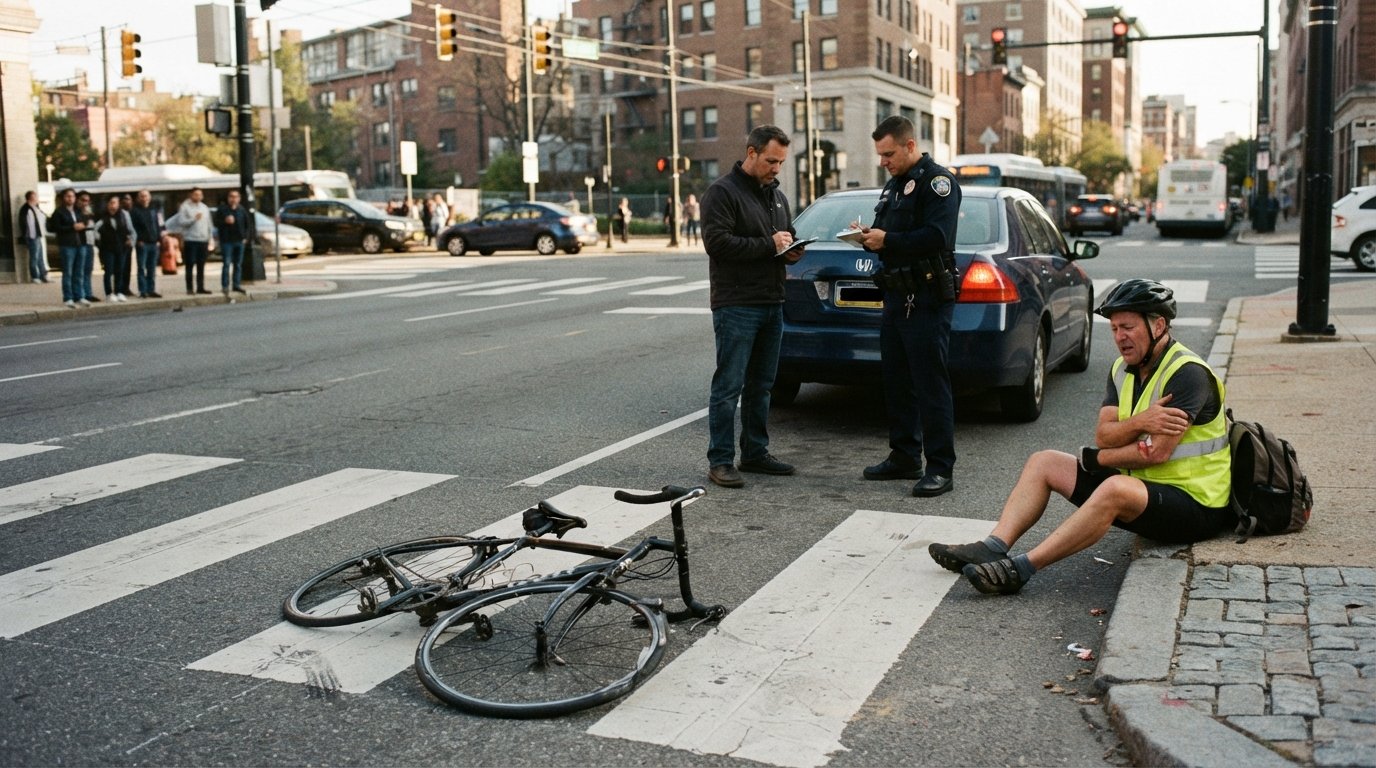
Bicycle Accident Liability in Pennsylvania: Who Is at Fault?
Fault in a Pennsylvania bike crash is rarely clear cut. Get a free case review to protect your recovery. Call (833)-279-1850 today.

By Rohan Verma
When a bicycle crash in Pennsylvania leaves you with injuries, medical bills, and a damaged bike, the first question everyone asks is simple: who caused it? The answer is rarely black and white. Pennsylvania law applies a fault system that can reduce your recovery if you share some responsibility, and insurance companies will use every detail of the crash to shift blame. Understanding how bicycle accident liability in Pennsylvania works is the first step toward protecting your rights and your financial recovery.
This guide breaks down the legal rules, common crash scenarios, insurance paths, and evidence you need after a cycling collision. Whether you were hit by a car, doored in a bike lane, or injured by a defective road condition, the information below will help you assess fault and decide what to do next. If you have already been hurt, you can also know your rights as a bicycle accident victim and learn how an attorney can evaluate your case for free.
How Pennsylvania Law Determines Fault in Bicycle Accidents
Pennsylvania follows a modified comparative negligence rule. Under 42 Pa.C.S. Section 7102, a plaintiff can recover damages even if they were partly at fault, as long as their share of responsibility is less than 51 percent. If you are 50 percent or less at fault, your total recovery is reduced by your percentage of fault. If you are 51 percent or more at fault, you recover nothing.
That rule matters enormously in bicycle cases. Drivers often claim the cyclist was in the wrong lane, ran a light, or was not visible. Even if a cyclist did make a mistake, they may still recover a reduced amount. For example, if a jury finds a driver 70 percent at fault and the cyclist 30 percent at fault for riding without a light, a $100,000 award becomes $70,000. The same logic applies in settlement negotiations, where insurers discount offers based on perceived fault.
Fault is not determined by who was injured or who was in the bigger vehicle. It is determined by duty, breach, causation, and damages. Every road user, including cyclists, owes a duty of reasonable care to others. A driver who fails to yield, speeds, or passes too closely breaches that duty. A cyclist who rides against traffic or ignores a signal may also breach it. The key is connecting the breach to the crash and the injuries.
Common Bicycle Crash Scenarios and Who Is Usually at Fault
Most bicycle accidents fall into a handful of recurring patterns. Each pattern carries its own liability analysis, and the facts of your case will determine how fault is allocated. The scenarios below are not automatic fault rules, but they show how Pennsylvania traffic law and negligence principles typically apply.
The Right Hook and the Left Cross
The right hook happens when a driver passes a cyclist and then turns right across the cyclist's path. The left cross occurs when an oncoming driver turns left in front of a cyclist. In both cases, the driver usually has a duty to yield to the cyclist who is proceeding straight or riding lawfully in the lane. Pennsylvania's vehicle code requires drivers to exercise care when turning and to yield to vehicles already in the intersection. If the cyclist was riding with traffic and had the right of way, the driver is typically at fault.
Defenses arise when the cyclist was riding on the wrong side of the road, running a red light, or riding without required lighting at night. Even then, comparative negligence may reduce rather than eliminate recovery. A detailed police report and witness statements are critical in these cases because the physical evidence often disappears quickly.
Dooring Accidents
Pennsylvania law prohibits opening a vehicle door into moving traffic. Under 75 Pa.C.S. Section 3705, a person must not open a door on a vehicle side available to moving traffic unless it is reasonably safe and can be done without interfering with traffic. When a driver or passenger opens a door into a cyclist's path, the person opening the door is usually at fault. Liability may extend to the vehicle owner or employer if the door was opened during a delivery or work task.
Cyclists can reduce their own risk by riding outside the door zone, but that does not excuse the person who opened the door. If the cyclist was riding illegally against traffic, a comparative fault argument may arise, but the door opener still bears significant responsibility.
Intersections, Signals, and Stop Signs
Intersection crashes often turn on who had the green light or who arrived first at a stop sign. Pennsylvania law treats bicycles as vehicles for most traffic purposes, so cyclists must obey signals and signs. A driver who runs a red light or fails to yield at a stop sign is usually at fault. A cyclist who does the same may be found partially or fully at fault.
Right-of-way disputes are fact-intensive. Surveillance video, traffic camera footage, and independent witnesses can make or break these cases. Without evidence, insurers may default to blaming the cyclist, which is why prompt investigation matters.
Rear-End Collisions and Passing Too Closely
Pennsylvania law requires drivers to pass cyclists with at least four feet of clearance. A driver who strikes a cyclist from behind or passes too closely has usually breached a statutory duty. Rear-end collisions are often the clearest liability cases because the following driver must maintain a safe distance and speed. However, if the cyclist swerved suddenly without signaling, a comparative fault defense may apply.
Road Hazards and Defective Conditions
Not every bicycle crash involves a car. Potholes, broken pavement, uneven utility covers, and debris can cause serious injuries. Liability may fall on a government entity or a private property owner, but these cases involve complex notice requirements and immunities. Pennsylvania law generally requires proof that the entity knew or should have known of the dangerous condition and failed to fix it. Claims against government entities have short deadlines and strict filing rules.
Pennsylvania Bicycle Laws That Affect Fault
Pennsylvania's vehicle code imposes specific duties on cyclists, and violating those duties can support a comparative fault defense. At the same time, the law grants cyclists rights that drivers must respect. Knowing the rules helps you evaluate whether you or the driver was at fault.
Key bicycle-specific rules include:
- Cyclists must ride with traffic, not against it, and should use a marked bike lane when one is available.
- Cyclists must obey traffic signals and signs, including stop signs and red lights.
- At night, bicycles must have a front light visible from at least 500 feet and a rear reflector or light.
- Cyclists must use hand signals when turning, though signals are not required if both hands are needed for control.
- Children under 12 must wear helmets, and all cyclists under 12 are subject to that requirement; adult helmet use is strongly recommended but not legally mandated.
These rules cut both ways. A driver who fails to yield to a cyclist in a bike lane is usually at fault, but a cyclist riding the wrong way in that same lane may share fault. Courts and insurers look at the totality of the circumstances, not a single rule violation.
Insurance Paths After a Pennsylvania Bicycle Accident
Pennsylvania is a choice no-fault state for auto insurance. That means drivers can choose between limited tort and full tort coverage. Limited tort restricts the right to sue for non-economic damages like pain and suffering unless the injury meets a serious injury threshold. Full tort preserves the right to sue for all damages. If you are hit by a car, the driver's policy is the primary source of recovery, but your own auto policy may also provide uninsured or underinsured motorist coverage, even though you were on a bicycle.
Homeowner's insurance can come into play in certain crashes. If a dog chased you into traffic, the dog owner's homeowner policy may respond. If a defective condition on private property caused the crash, the property owner's liability coverage may apply. However, homeowner policies often exclude claims arising from the use of motor vehicles, so auto coverage remains central in vehicle-involved crashes.
Uninsured and underinsured motorist coverage is especially important for cyclists. Pennsylvania requires insurers to offer UM/UIM coverage, and it can fill the gap when the at-fault driver has no insurance or low limits. Stacking may be available if you have multiple vehicles. Review your policy with an attorney to understand what coverage applies to a bicycle crash.
Health insurance, medical payments coverage, and personal injury protection may pay medical bills while liability is disputed. Be careful about giving recorded statements to any insurer before you understand your rights. A free case review can help you map out all available insurance sources and avoid mistakes that reduce your recovery.
Evidence to Gather at the Scene and After the Crash
The evidence you collect in the hours and days after a bicycle accident often determines the outcome. Pennsylvania's comparative negligence rule means every detail can affect your percentage of fault, so document everything you can.
At the scene, if you are physically able, take these steps:
- Call 911 and request police and medical assistance. A police report creates an official record of the crash.
- Photograph the scene, including vehicle positions, road conditions, traffic signals, bike damage, and your injuries.
- Collect contact information from the driver, witnesses, and any passengers. Ask witnesses what they saw in their own words.
- Note the time, weather, lighting, and any surveillance cameras nearby. Ask businesses to preserve footage.
- Do not admit fault or apologize. Even a polite "I'm sorry" can be used against you later.
After the crash, preserve your bicycle and gear without repairing or discarding them. Keep a pain journal that records your symptoms, medical appointments, and how the injuries affect daily life. Save receipts for medical care, transportation, and missed work. Request the police report and review it for errors. If the report misstates what happened, an attorney can help you correct the record with witness statements and physical evidence.
Medical documentation is just as important as scene evidence. Gaps in treatment are often used by insurers to argue that injuries were minor or unrelated. Follow your doctor's advice, attend all appointments, and document ongoing pain or limitations. If you cannot afford care, ask your attorney about medical liens or letters of protection that allow treatment while the case is pending.
How Comparative Fault Reduces Recovery in Practice
Comparative fault is not an all-or-nothing defense. It is a percentage allocation that directly reduces your compensation. Imagine a crash where the driver ran a red light but the cyclist was riding without a front light at dusk. A jury might assign 80 percent fault to the driver and 20 percent to the cyclist. If damages are $50,000, the cyclist recovers $40,000. That reduction is significant, but it is far better than a complete denial of the claim.
Insurers often use comparative fault as a negotiation tactic. They may offer a low settlement and claim the cyclist was partly responsible, hoping the injured person accepts less rather than risk a trial. An experienced attorney can counter those arguments with evidence, expert reconstruction, and a clear legal theory. In many cases, the threat of trial and a well-documented liability position leads to a fair settlement without litigation.
If you are considering a claim, keep in mind that Pennsylvania's statute of limitations for personal injury is generally two years from the date of the crash. Claims against government entities may require notice within six months. Missing a deadline can bar your claim entirely, so early investigation and legal advice are critical.
When to Seek a Free Case Review
Bicycle accident liability in Pennsylvania who is at fault is a question that often requires a fact-specific legal analysis. If you were injured, the insurance company is already building its defense. You should build yours. A free, no-obligation case review can help you understand your rights, identify all sources of recovery, and avoid mistakes that could reduce your settlement.
LegalCaseReview connects injured people with experienced personal injury attorneys through a patented selection process. The service is not a law firm and does not provide legal advice, but it can help you find a qualified lawyer who handles bicycle accident cases in Pennsylvania. You can request a free case evaluation and get clear answers about fault, insurance, and next steps. For readers who want to understand the broader legal process, LawyerCaseReview offers educational resources and attorney matching for personal injury and mass tort matters.
Do not wait until evidence disappears or deadlines pass. Whether you were hit by a car, injured by a road hazard, or involved in a dispute with an insurer, getting informed early is the best way to protect your recovery.