
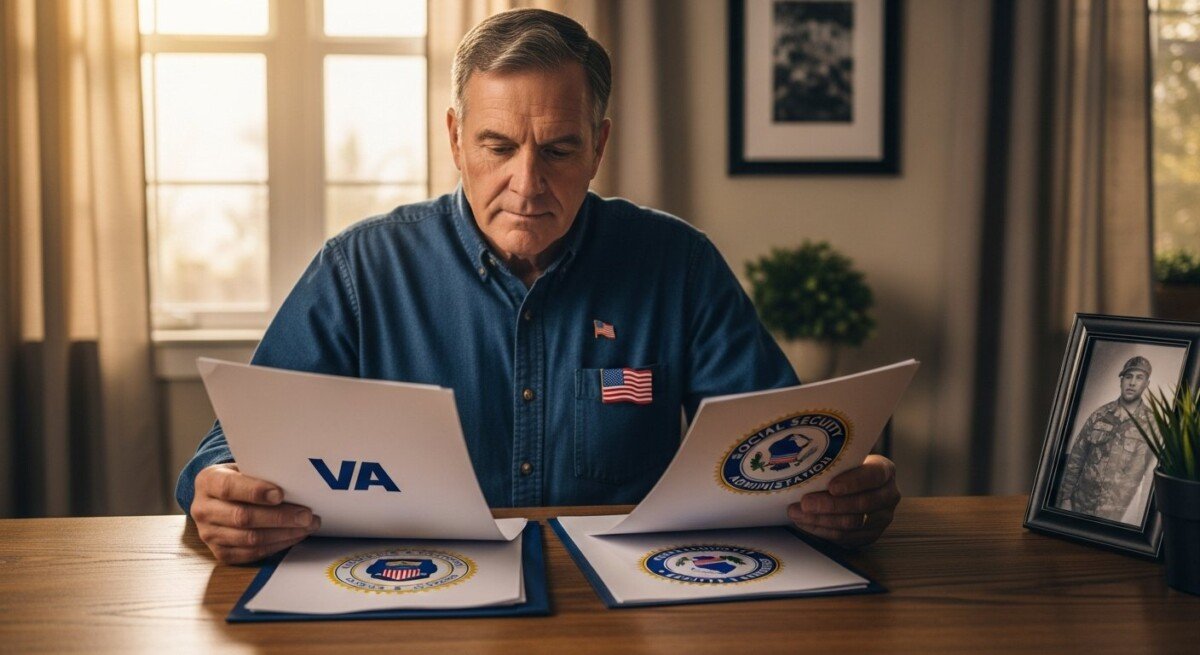
Can You Receive Both Social Security and VA Disability?
Yes, you can receive both Social Security and VA disability benefits concurrently. Call 833-227-7919 to understand how to maximize your eligible compensation.

By Cameron Stearns
For veterans navigating the complexities of disability benefits, a critical question often arises: can you get social security and va disability? The answer is a definitive yes. Veterans can, and often do, receive both Social Security Disability Insurance (SSDI) and U.S. Department of Veterans Affairs (VA) disability compensation concurrently. However, these are two entirely separate programs with distinct eligibility criteria, application processes, and governing rules. Understanding how they interact is essential for maximizing your entitled benefits and securing the financial stability you deserve after serving your country.
Understanding the Two Separate Systems
Before diving into the specifics of receiving both benefits, it’s crucial to understand that Social Security and the VA operate under different legal frameworks with separate purposes. VA disability compensation is a benefit paid to veterans who have a service-connected disability, meaning an injury or illness incurred or aggravated during active military service. The amount is based on a disability rating from 0% to 100%, in 10% increments, and is intended to compensate for the reduced earning capacity and quality of life resulting from service-connected conditions. It is not based on income or employment history.
Social Security Disability Insurance (SSDI), on the other hand, is an insurance program for workers. Eligibility is based on having a sufficient work history and paying Social Security taxes (FICA). The disability must be severe enough to prevent you from engaging in any “substantial gainful activity” (SGA) and is expected to last at least one year or result in death. The Social Security Administration (SSA) does not use percentage ratings. Instead, it makes a binary determination: you are either disabled under their rules or you are not. The benefit amount is calculated from your lifetime average earnings covered by Social Security. Because the programs are so different, qualifying for one does not guarantee approval for the other, though a VA rating can serve as supportive evidence.
How VA and Social Security Disability Benefits Interact
The most important fact for veterans is that receiving VA disability compensation does not reduce your SSDI benefits, and vice versa. The two benefits are fully concurrent. You can receive 100% VA disability and also receive your full SSDI monthly payment. This is a key distinction from other benefit programs, like Supplemental Security Income (SSI) or military retirement pay, where offsets may occur. The VA does not count SSDI as income, and the SSA does not count VA disability compensation as income when determining SSDI eligibility or payment amounts. This allows veterans with severe disabilities to layer these benefits for more comprehensive support.
While the monetary benefits do not offset, the evidence and determinations from one agency can influence the other. A VA disability rating, especially a 100% Permanent and Total (P&T) rating, can carry significant weight in an SSDI claim. The SSA is required to consider all evidence in your record, including VA medical records and disability decisions. However, they are not bound by the VA’s rating. The SSA uses its own strict medical and vocational criteria to make an independent determination. This is why a strong SSDI application must still meet SSA’s specific definition of disability. For many veterans, the process can be lengthy, and understanding the appeal process is vital if an initial claim is denied. Our resource on the Social Security Disability appeal process details the steps involved and how professional help can be critical.
Key Differences in Eligibility and Process
Successfully navigating both systems requires a clear understanding of their differing requirements. Below is a comparison of the core elements of each program.
- Governing Agency: VA disability is administered by the U.S. Department of Veterans Affairs. SSDI is administered by the Social Security Administration.
- Basis for Benefits: VA compensation requires a service-connected disability. SSDI requires a medically determinable disability that prevents substantial work, regardless of its origin.
- Financial Eligibility: VA has no income or asset limits. SSDI requires sufficient work credits earned through past employment.
- Disability Rating: VA uses a percentage rating system (0%-100%). SSA uses a binary “disabled” or “not disabled” determination.
- Effect of Age: Age is not a direct factor in VA ratings. Age is a crucial vocational factor in SSA determinations for individuals over 50.
- Benefit Amount Determinant: VA payment is based on disability rating, number of dependents, and special circumstances. SSDI payment is based on your lifetime average earnings.
These differences mean that a veteran might have a 70% VA rating for specific service-connected conditions but be denied SSDI if the SSA finds they can still perform some type of work. Conversely, a veteran with a non-service-connected condition like a severe back injury from civilian work might qualify for SSDI but not for VA compensation. The process of gathering medical evidence, completing forms, and meeting procedural deadlines can be daunting for both systems. Many veterans find that a lawyer can significantly speed up a Social Security case by ensuring it is thorough and compliant from the start.
Special Expedited Processing for Veterans
Recognizing the sacrifice of severely wounded veterans, the SSA has established expedited processing for certain disability claims. This is a crucial benefit for those who need support quickly. The SSA’s Wounded Warrior (WW) program fast-tracks the disability application for veterans who became disabled while on active military service on or after October 1, 2001, regardless of where the disability occurred. The key point is that the disability must have occurred during active duty. This program uses the same medical criteria as regular SSDI, but the application is flagged for priority handling, which can reduce waiting times from many months to a much shorter period.
To qualify for this expedited processing, you must have a VA compensation rating of 100% Permanent and Total (P&T). This rating is a strong indicator to the SSA that your condition is severe. While the VA’s P&T rating is compelling evidence, the SSA will still make its own decision. However, the combination of the WW program and a P&T rating often leads to a more streamlined approval. It is essential to inform the SSA that you are a veteran and provide your VA rating documentation upfront. This proactive step ensures your claim is routed correctly. For veterans facing financial hardship during the wait, exploring all options, including the possibility of a pro bono lawyer for SSDI, can provide essential support.
Strategic Considerations for Maximizing Benefits
Applying for both benefits is not merely about submitting forms, it’s a strategic process. Timing can be important. Some veterans apply for VA benefits first to establish a service connection and a disability rating, which can then be used as evidence in an SSDI claim. Others apply concurrently if their disability clearly prevents work. You should also be aware of potential interactions with other benefits. For instance, while VA and SSDI do not offset each other, receiving SSDI could affect needs-based programs like SSI or Medicaid due to income limits.
Furthermore, if you are receiving military retirement pay, you generally cannot receive VA compensation and retirement pay concurrently without a waiver (unless you are eligible for Concurrent Retirement and Disability Pay, CRDP). However, SSDI is separate and would not be affected by this rule. The landscape of benefits is complex, and a mistake can cost you thousands of dollars. Thorough documentation is as critical here as in any personal injury claim. Just as there is a detailed process for valuing claims in other legal areas, understanding the evidentiary standards for SSDI and VA claims is paramount. Meticulous medical records, consistent treatment history, and detailed statements about how your conditions affect your daily functioning and work capacity are the bedrock of a successful application for both benefit types.
Frequently Asked Questions
Will my VA disability pay reduce my Social Security retirement benefits? No. VA disability compensation is not counted as income and will not reduce your Social Security retirement benefits. You can receive both in full.
If I get SSDI, will the VA reduce my compensation? No. The VA does not count SSDI as income and will not reduce your VA disability compensation based on SSDI receipt.
Does a 100% VA disability rating guarantee SSDI approval? While it is very strong evidence, it does not guarantee approval. The SSA must still find you disabled under its own rules, which focus on the inability to perform any work. However, a 100% P&T rating typically leads to expedited and often favorable consideration.
Can I work while receiving both VA disability and SSDI? This is complex. SSDI has strict rules about “substantial gainful activity” (SGA). If you earn above the SGA limit (adjusted annually), you risk losing SSDI benefits. VA compensation has different rules, primarily that your earnings do not affect your rating, but if you engage in substantial gainful employment, it could challenge the premise that your service-connected conditions prevent gainful work, potentially during a future re-evaluation.
Should I use the same medical evidence for both claims? You should submit all relevant medical evidence to both agencies. However, tailor your application to each program’s focus. For the VA, emphasize the connection to service. For SSA, emphasize how your conditions, individually and in combination, prevent you from performing any job in the national economy.
Navigating the dual paths of VA and Social Security disability benefits is a challenging but surmountable task. The fundamental principle is that these benefits are designed to support different aspects of a veteran’s life and are fully compatible. By understanding the distinct rules, leveraging expedited processing where eligible, and building a meticulously documented case, veterans can secure the combined benefits they have earned through service and their work history. Seeking guidance from professionals experienced in both veterans’ law and Social Security disability law can be an invaluable step toward achieving financial stability and focus on health and well-being.