Claim Compensation After a Los Angeles Rear-End Crash
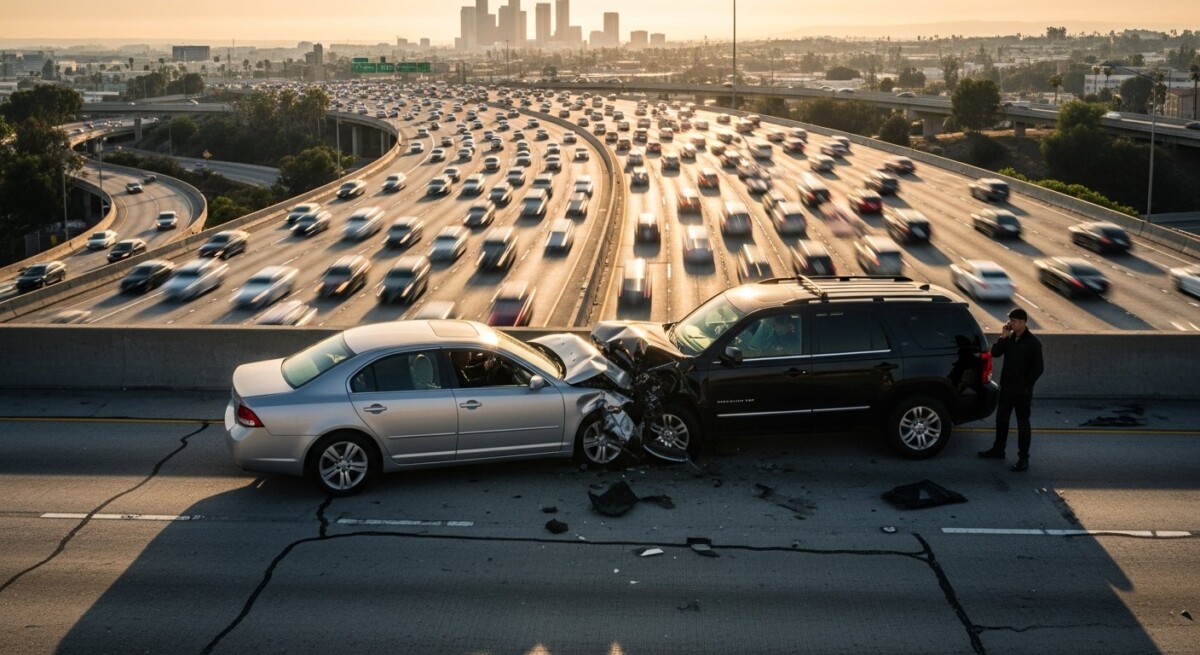
Being rear-ended in Los Angeles can leave you with a damaged vehicle, painful injuries, and significant financial strain. The immediate shock of the collision often gives way to confusion about what happens next. You might wonder if you can still pursue a claim, especially if you have some doubts about fault or if the other driver disputes what happened. The short answer is yes, you can still claim compensation after a rear-end collision in Los Angeles, but the process requires careful attention to California law and the specific facts of your crash. Understanding your rights and the steps to protect your claim can make the difference between recovering fully or being left with unpaid bills.
California follows a fault-based system for car accidents, which means the driver who caused the crash is responsible for the damages. In most rear-end collisions, the trailing driver is presumed to be at fault because they failed to maintain a safe distance or react in time. However, that presumption is not absolute. There are situations where the lead driver may share or even bear full responsibility. Whether you were the driver who was hit or the driver who did the hitting, you need to know how liability is determined and what evidence can support your case. This article walks through the key factors that affect compensation after a rear-end crash in Los Angeles, how to build a strong claim, and why professional legal guidance matters.
How Fault Works in Rear-End Collisions Under California Law
California law presumes that the driver who rear-ends another vehicle is negligent. This presumption comes from the basic duty of all drivers to operate their vehicles safely and to keep a proper lookout for hazards ahead. If you are the driver who was rear-ended, this legal presumption works in your favor. The other driver will have to overcome that presumption by showing that you did something unexpected or unreasonable that made the collision unavoidable.
For example, if you suddenly slammed on your brakes for no reason, or if your brake lights were not working, the other driver might argue that you contributed to the accident. California applies a rule called comparative negligence, which means that even if you are partly at fault, you can still recover compensation. Your award will be reduced by your percentage of fault. If you are found to be 20 percent responsible, your damages are cut by that amount. If you are more than 50 percent at fault, you cannot recover anything under California’s pure comparative negligence system. This makes it critical to gather evidence that shows the other driver was primarily or entirely at fault.
In our guide on claiming compensation after a Los Angeles rear-end collision, we explain how to document the scene and preserve key evidence. The more you can demonstrate that the trailing driver failed to brake in time, was speeding, or was distracted, the stronger your case becomes. Police reports, witness statements, and photos of the damage all play a role in establishing fault.
Types of Compensation You Can Pursue
If you are injured in a rear-end collision, you are entitled to seek compensation for both economic and non-economic damages. Economic damages cover actual financial losses that have a clear dollar value. These include medical expenses such as emergency room visits, hospital stays, surgery, physical therapy, prescription medications, and future medical care related to the accident. You can also recover lost wages if your injuries prevent you from working, as well as loss of earning capacity if your ability to earn income is permanently reduced. Property damage to your vehicle and any personal items inside the car is also recoverable.
Non-economic damages are more subjective but equally important. They compensate you for pain and suffering, emotional distress, loss of enjoyment of life, and loss of consortium if the accident affects your relationship with your spouse. Rear-end collisions often cause whiplash, soft tissue injuries, and spinal damage that can lead to chronic pain and lasting limitations. These injuries may not show up on X-rays immediately, but they can have a profound impact on your daily life. An experienced attorney can help you quantify these damages so that insurance companies take your claim seriously.
In some cases, you may also be eligible for punitive damages. These are rare and only apply when the other driver engaged in extremely reckless conduct, such as driving under the influence of alcohol or drugs, street racing, or intentionally causing the collision. Punitive damages are designed to punish the wrongdoer and deter similar behavior. While not common in standard rear-end accidents, they are worth discussing with your lawyer if the facts of your case involve egregious misconduct.
Common Challenges to Your Claim and How to Overcome Them
Insurance companies are businesses that aim to minimize payouts. Even in a clear rear-end collision, you may face pushback from the at-fault driver’s insurer. One common tactic is to argue that your injuries are pre-existing or not as serious as you claim. They may request your medical records from before the accident to look for evidence of prior neck or back problems. To counter this, make sure you seek medical attention immediately after the crash and follow your doctor’s treatment plan consistently. Gaps in treatment or delays in seeing a doctor can be used against you.
Another challenge is the dispute over the severity of the collision itself. Insurance adjusters sometimes argue that a low-speed impact could not have caused significant injuries. This is especially common in fender-bender rear-end collisions. However, even low-speed impacts can cause whiplash and soft tissue damage that takes weeks or months to heal. Having a medical professional document your injuries and link them directly to the accident is essential. Your lawyer can also work with accident reconstruction experts to demonstrate the forces involved in the crash.
A third obstacle is the statute of limitations. In California, you generally have two years from the date of the accident to file a personal injury lawsuit. If your claim involves a government entity, such as a city bus or a public works vehicle, the deadline is much shorter, often just six months. Missing these deadlines can bar you from recovering any compensation at all. That is why it is important to act promptly and consult with a lawyer as soon as possible after a rear-end collision.
Steps to Strengthen Your Claim Immediately After the Crash
What you do in the minutes and hours after a rear-end collision can significantly affect your ability to claim compensation. The first priority is always your safety and the safety of others. Move to a safe location if possible, and call 911 to report the accident and request medical assistance. Even if you feel fine, get checked by a doctor because adrenaline can mask pain and injuries may take hours or days to appear.
Next, exchange information with the other driver. Get their name, phone number, insurance company, policy number, and vehicle details. Do not discuss fault or apologize at the scene, as insurance companies may interpret your words as an admission of liability. Instead, focus on gathering evidence. Take photos and videos of the damage to both vehicles, the position of the cars, the road conditions, traffic signs, and any visible injuries. If there are witnesses, ask for their contact information and a brief statement about what they saw.
Report the accident to your own insurance company as well, even if you believe the other driver is at fault. Your policy likely requires you to notify them promptly. However, be careful about what you say to the other driver’s insurance adjuster. They may call you shortly after the crash and ask for a recorded statement. It is generally wise to decline until you have spoken with a lawyer. Adjusters are trained to ask questions that can be used to minimize your claim. A simple phrase like “I’m okay” or “I didn’t see them” can be twisted to suggest your injuries are minor or that you were distracted.
Here are key actions to take within the first 24 hours after a rear-end collision:
- Seek medical evaluation even if you feel no immediate pain.
- Document the accident scene with photos and video.
- Obtain a copy of the police report when it becomes available.
- Notify your insurance company but avoid giving a recorded statement until you have legal advice.
- Contact a Los Angeles car accident attorney to review your options.
Each of these steps builds a foundation for your claim. For instance, prompt medical care creates a record that links your injuries to the crash. Photos capture evidence that can disappear once cars are moved or repaired. And legal guidance ensures you do not accidentally harm your case before it even begins. For more on the specific challenges of severe injuries, see our article on finding the best spinal injury lawyer after a Los Angeles car crash, which covers how to handle complex medical issues in rear-end cases.
The Role of Insurance Coverage in Your Recovery
California law requires all drivers to carry liability insurance with minimum limits of $15,000 per person for bodily injury, $30,000 per accident, and $5,000 for property damage. These minimums are often insufficient to cover the full extent of damages in a serious rear-end collision. If the at-fault driver has only the state minimum, your claim may be limited to those amounts unless you have additional coverage of your own.
That is where uninsured and underinsured motorist coverage (UM/UIM) becomes critical. If you carry UM/UIM coverage on your own policy, it can step in when the other driver lacks adequate insurance. This coverage is optional in California, but it is highly recommended. In a rear-end collision where the at-fault driver is uninsured or underinsured, your UM/UIM policy can pay for medical expenses, lost wages, and pain and suffering up to your policy limits.
Another type of coverage to consider is MedPay or personal injury protection (PIP). While not required, MedPay can pay for medical bills immediately regardless of who is at fault. This can be a lifeline if you need treatment while your claim is being processed. Your attorney can review your insurance declarations page and identify all available coverage sources so that no potential recovery is overlooked.
When to Hire a Lawyer and What They Can Do for You
You do not have to hire a lawyer to file a claim after a rear-end collision, but doing so almost always improves your outcome. Insurance companies have teams of adjusters and attorneys working to protect their bottom line. Without legal representation, you are negotiating against professionals who handle these claims every day. A skilled Los Angeles car accident attorney levels the playing field. They can investigate the accident, gather evidence, calculate the full value of your damages, negotiate with insurers, and file a lawsuit if necessary.
Most personal injury lawyers work on a contingency fee basis, meaning they only get paid if you recover compensation. Their fee is typically a percentage of your settlement or verdict. This arrangement makes legal representation accessible even if you cannot afford upfront costs. When you meet with a lawyer for a free consultation, they will evaluate your case and explain the likely outcomes. If they believe your claim is strong, they will take it on and begin working to secure the maximum compensation available.
One of the biggest advantages of having a lawyer is that they handle all communication with insurance companies. This reduces your stress and prevents you from saying something that could hurt your claim. They can also identify hidden damages, such as future medical costs or loss of earning capacity, that you might not consider on your own. In cases involving permanent injuries or complex liability issues, a lawyer’s expertise is invaluable.
Frequently Asked Questions
Can I still claim compensation if I was partially at fault for the rear-end collision?
Yes. California’s comparative negligence rule allows you to recover compensation even if you were partially at fault. Your damages will be reduced by your percentage of fault. For example, if you are 20 percent at fault, you can recover 80 percent of your total damages. However, if you are more than 50 percent at fault, you cannot recover anything.
How long do I have to file a claim after a rear-end crash in Los Angeles?
You generally have two years from the date of the accident to file a personal injury lawsuit in California. If your claim involves a government vehicle, you have only six months to file an administrative claim. Missing these deadlines can permanently bar you from recovering compensation.
What if the other driver does not have insurance?
If the at-fault driver is uninsured, you can turn to your own uninsured motorist coverage (if you have it) to pay for your injuries and damages. You may also have MedPay or PIP coverage that can help with medical bills. An attorney can help you explore all available options.
Do I need to go to court to get compensation?
Most rear-end collision claims are resolved through settlement negotiations without ever going to trial. However, if the insurance company refuses to offer a fair settlement, your lawyer may recommend filing a lawsuit and taking the case to court. Having a lawyer prepared to litigate can strengthen your negotiating position.
How much is my rear-end collision claim worth?
The value of your claim depends on several factors, including the severity of your injuries, the cost of medical treatment, lost wages, pain and suffering, and the available insurance coverage. There is no fixed formula. An experienced attorney can evaluate your specific circumstances and give you a realistic estimate of what your case may be worth.
Being rear-ended in Los Angeles does not have to mean financial ruin. You have legal rights that can help you recover from the physical, emotional, and economic impact of the crash. The key is to act quickly, preserve evidence, and seek professional guidance. Whether you were stopped at a red light or slowing down for traffic, the law is designed to protect you when another driver fails to exercise reasonable care. With the right approach, you can still claim compensation after a rear-end collision in Los Angeles and move forward with your life.