How to Prove Fault in a Motor Vehicle Accident
After a car crash, the question of who caused the collision determines everything from insurance payouts to legal liability. Proving fault is not always straightforward, especially when both drivers tell different stories or when physical evidence seems contradictory. Understanding how to prove fault in a motor vehicle accident is essential for anyone seeking compensation for injuries, vehicle damage, or lost wages. The process requires gathering concrete evidence, understanding traffic laws, and presenting a clear narrative to insurers or a court. Without proper proof, you risk being denied compensation or even held partially responsible for a crash you did not cause.
This guide walks through the key evidence types, legal standards, and practical steps needed to establish liability after a collision. Whether you are dealing with a minor fender bender or a serious multi-vehicle crash, knowing what proof matters and how to collect it can make the difference between a fair settlement and a prolonged dispute.
Why Proving Fault Matters in Auto Accident Claims
Fault determines which insurance company pays for damages. In most states, the at-fault driver’s liability insurance covers the other party’s medical bills, property repairs, and other losses. Some states follow a no-fault system where each driver’s own insurance pays initial medical costs, but serious injuries still allow claims against the at-fault driver. In either system, proving fault directly impacts your ability to recover full compensation.
Insurance adjusters rely on proof of fault to decide claim payouts. If you cannot show clear evidence that the other driver caused the crash, the insurer may offer a low settlement or deny the claim entirely. In cases where both parties share blame, the amount you receive can be reduced by your percentage of fault. For example, if you are found 20 percent responsible, your compensation drops by that amount. This makes building a strong fault case critical from the very first moments after the accident.
Key Types of Evidence to Prove Fault
Collecting the right evidence immediately after a crash is the most important step in proving fault. Some evidence disappears quickly, such as skid marks on wet pavement or the memory of witnesses. The following types of evidence are most valuable when establishing liability.
Police Reports and Official Documentation
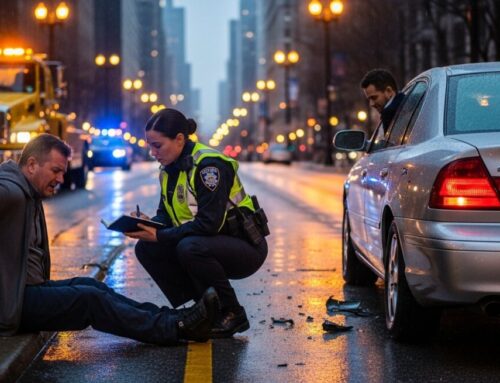
A police officer who arrives at the scene typically files an official accident report. This report often includes the officer’s opinion on who caused the crash, citations issued, and a diagram of the scene. Insurance companies and courts give significant weight to police reports because they come from a trained, impartial observer. However, police reports are not always conclusive. The officer may not have witnessed the crash themselves, and their conclusions can be challenged with other evidence. Request a copy of the report as soon as it becomes available, usually within a few days of the accident.
Photographs and Video Footage
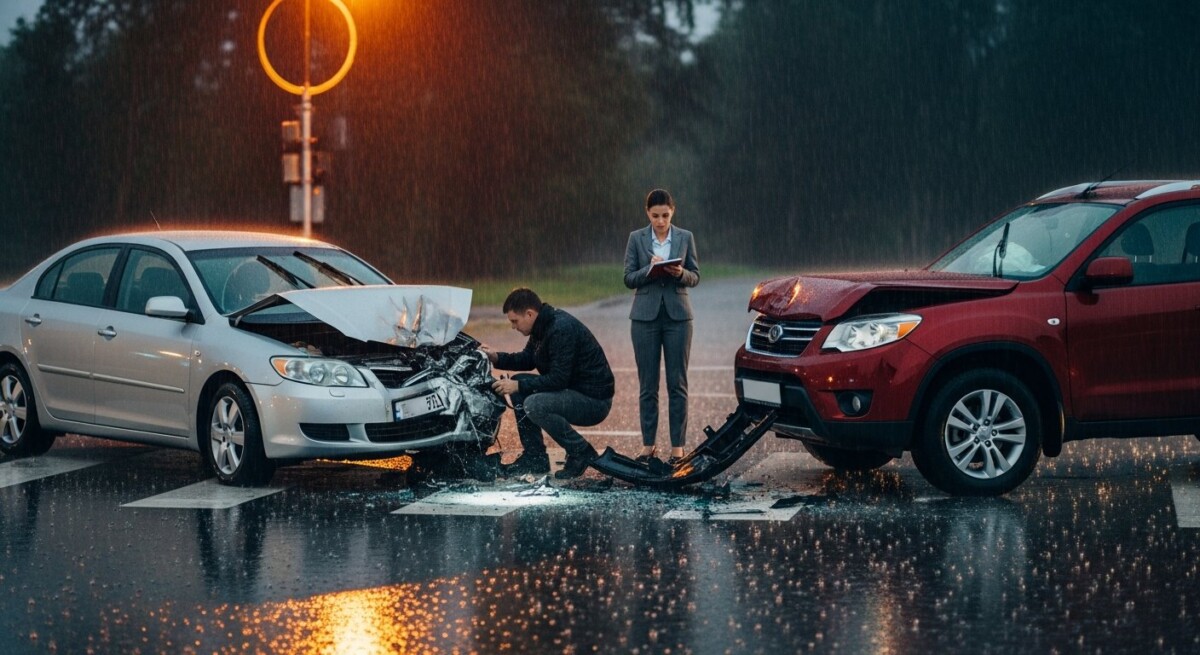
Visual evidence is among the most persuasive forms of proof. Take photos of the vehicles from multiple angles, showing damage, license plates, and the position of each car after the crash. Capture the surrounding area, including traffic signs, signals, road conditions, and weather. If there are skid marks, debris, or broken glass, photograph those as well. Video footage from nearby security cameras, traffic cameras, or dashboard cameras can provide an unbiased record of the crash. Ask local businesses if their cameras captured the incident and request a copy of the footage before it is overwritten. If you have a dashcam in your own vehicle, preserve the recording immediately.
Witness Statements
Bystanders, passengers, or other drivers who saw the crash can provide crucial testimony. Ask witnesses for their contact information and request a brief statement about what they observed. Witness statements are particularly valuable when they contradict the other driver’s version of events. Write down their accounts as soon as possible while details are fresh. If witnesses are unwilling to provide a written statement, ask if they will speak with your insurance company or attorney later.
Understanding Traffic Laws and Right of Way
To prove fault, you must show that the other driver violated a traffic law or acted negligently. Common violations that establish fault include running a red light, failing to yield, speeding, distracted driving, or driving under the influence. Each state has specific traffic codes that define legal behavior on the road. If the other driver was cited for a violation at the scene, that citation strengthens your claim. Even without a citation, you can argue that the other driver’s actions fell below the standard of care a reasonable person would exercise under similar circumstances.
Right-of-way rules are especially important in intersection collisions, left-turn accidents, and merging scenarios. For example, a driver making a left turn must yield to oncoming traffic. If they fail to do so and cause a crash, they are almost always at fault. Similarly, a driver who rear-ends another vehicle is typically presumed negligent because following too closely or failing to stop in time violates basic driving duties. However, there are exceptions, such as when the lead driver suddenly brakes without reason or has a broken taillight.
The Role of Negligence in Fault Determination
Negligence is the legal foundation of most fault determinations. To prove negligence, you must establish four elements: duty, breach, causation, and damages. The driver owed a duty to operate their vehicle safely. They breached that duty by acting carelessly or violating a law. That breach directly caused the accident and your injuries. Finally, you suffered actual damages such as medical expenses, lost income, or pain and suffering. Presenting evidence that supports each element helps build a compelling case.
Some states apply comparative negligence rules, which allow multiple parties to share fault. In pure comparative negligence states, you can recover damages even if you are 99 percent at fault, though your compensation is reduced by your share of blame. In modified comparative negligence states, you can only recover if you are less than 50 or 51 percent at fault, depending on the state. Understanding your state’s rules helps you evaluate how strong your fault claim needs to be.
If you suspect the other driver’s insurance company is acting unfairly, you should understand your rights. Our guide on proving bad faith insurance after a motor vehicle accident explains how to handle situations where the insurer unreasonably denies or delays your claim.
Steps to Take Immediately After a Crash
The actions you take in the minutes and hours after a collision directly affect your ability to prove fault. Follow these steps to preserve evidence and protect your claim.
- Check for injuries and call 911 to request medical help and police response. Even if injuries seem minor, seek medical evaluation because some injuries appear hours or days later.
- Do not move vehicles unless they block traffic or create a hazard. The final resting position of the cars provides important clues about the crash dynamics.
- Exchange information with the other driver, including name, phone number, insurance details, and license plate number. Do not discuss fault or apologize at the scene, as such statements can be used against you.
- Take photos and videos of the scene, vehicles, injuries, and surrounding environment. Capture multiple angles and close-ups of damage.
- Identify and speak with witnesses. Get their names and contact information before they leave the scene.
- Report the accident to your insurance company promptly. Provide them with the facts but avoid speculating about fault until you have gathered all evidence.
These steps create a foundation of evidence that supports your version of events. Even if you feel shaken or confused after the crash, following this checklist helps ensure you do not lose valuable proof.
How an Attorney Can Help Prove Fault
Proving fault often requires more than just photos and a police report. An experienced personal injury attorney can investigate the crash more thoroughly, obtain traffic camera footage, interview witnesses under oath, and work with accident reconstruction experts. Attorneys also understand the legal standards for negligence in your state and can calculate the full value of your damages, including future medical costs and lost earning capacity.
If you are considering legal representation, finding a lawyer who specializes in motor vehicle accidents is important. For example, residents of Arizona can find the best personal injury lawyer in Phoenix for motor vehicle accidents through LegalCaseReview’s directory. Similarly, those in Texas may benefit from consulting top motor vehicle accident lawyers in Houston who understand local traffic laws and court procedures.
In cases involving traumatic brain injuries or other severe harm, specialized legal help is critical. If you or a loved one suffered a head injury in a crash, a Dallas TBI lawyer after a motor vehicle accident can pursue compensation for extensive medical care and long-term rehabilitation needs.
Common Challenges in Proving Fault
Even with strong evidence, proving fault can be difficult. The other driver may lie about what happened, witnesses may be unreliable, or the physical evidence may be ambiguous. Insurance adjusters are trained to minimize payouts, and they may try to shift blame onto you. In hit-and-run cases, you may have no information about the other driver at all. Understanding these challenges helps you prepare for disputes and strengthens your resolve to seek professional help when needed.
Another challenge arises in multi-vehicle accidents where multiple drivers contributed to the crash. Determining each driver’s percentage of fault requires careful analysis of the sequence of events. Attorneys and accident reconstruction experts can piece together the chain of collisions and assign liability based on each driver’s actions. Without such expertise, you may end up bearing more blame than you deserve.
Frequently Asked Questions
What is the most important piece of evidence to prove fault?
There is no single most important piece of evidence, but video footage from dashcams or traffic cameras is highly persuasive because it provides an unbiased record. Police reports, photographs, and witness statements also carry significant weight. The best approach is to collect multiple types of evidence that together tell a clear story.
Can I prove fault without a police report?
Yes, but it is more difficult. Without a police report, you must rely on photographs, video footage, and witness statements to establish fault. Insurance companies may view claims without police reports with more skepticism, so gathering other strong evidence becomes even more important.
What if the other driver admits fault at the scene?
An admission of fault at the scene can be powerful evidence, but it is not always final. The other driver may later change their story or claim they were confused. Record any admission in writing or on video if possible, and include it in your evidence package. Do not rely solely on an oral admission.
How does my state’s fault system affect my claim?
Your state’s laws determine how fault is assigned and how compensation is calculated. In at-fault states, the negligent driver’s insurance pays for damages. In no-fault states, your own insurance covers medical costs up to a limit, but you can still sue the at-fault driver for serious injuries. Comparative negligence rules also vary by state and affect how much you can recover if you share blame.
How long do I have to file a fault claim after a crash?
Each state sets a statute of limitations for filing personal injury claims, typically ranging from one to six years. Missing this deadline can permanently bar you from recovering compensation. Consult with an attorney as soon as possible to ensure you meet all deadlines.
If you are unsure about your legal options after a crash, contacting a qualified attorney can clarify your rights. LegalCaseReview offers free consultations and case evaluations to help you understand your claim. Call us at 833-227-7919 to speak with a professional who can assess your situation and guide you through the process of proving fault and pursuing fair compensation.