
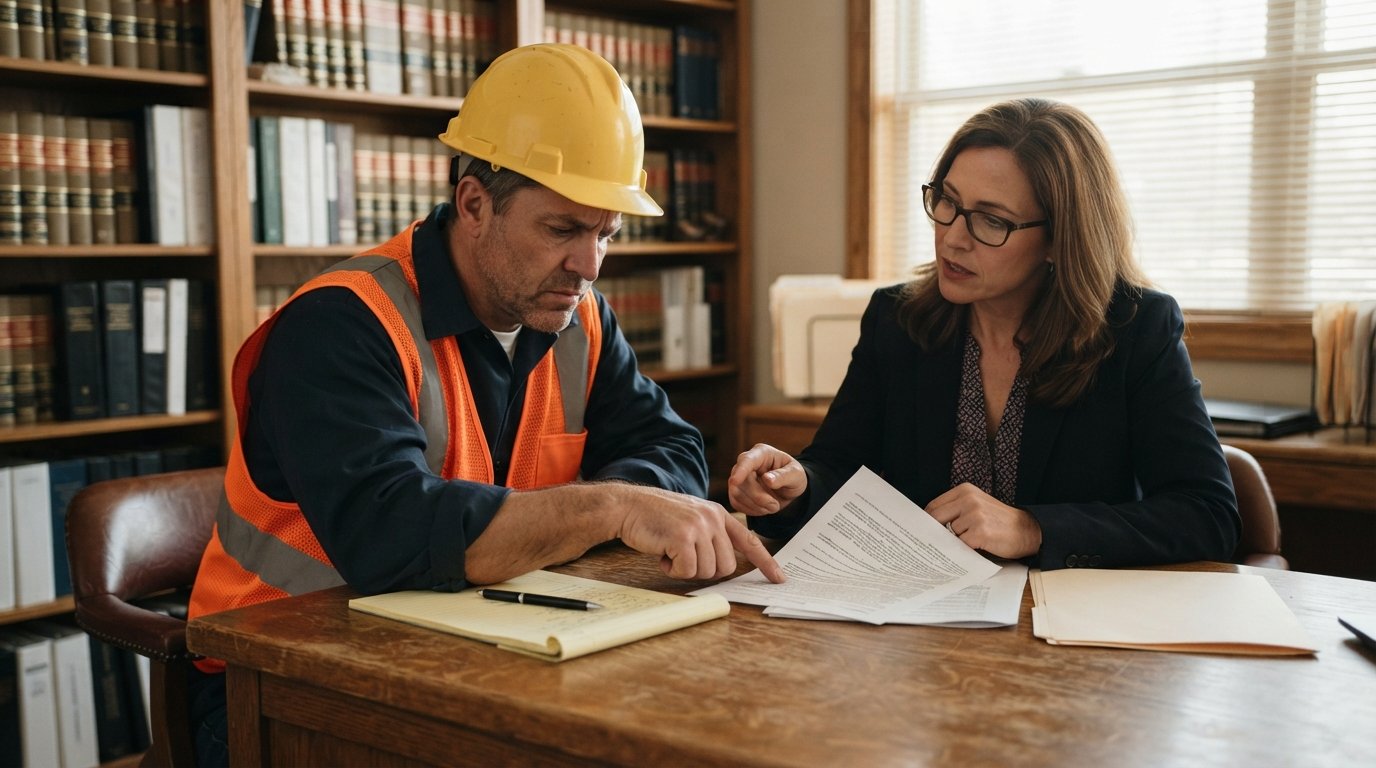
How Workers Compensation Affects a Third Party Injury Lawsuit
Workers compensation and third-party lawsuits can run together, but liens and deadlines matter. Call (833)-279-1850 for a free case review.

By Lenora West
You were hurt on the job, and the workers compensation checks are covering your medical bills and part of your lost wages. Then you learn that someone other than your employer may have caused the accident, a careless contractor, a driver who ran a red light, or the manufacturer of a defective machine. A question immediately comes to mind: can you still sue that third party, and how does workers compensation affect a third party injury lawsuit? The short answer is that you usually can pursue a third-party claim, but the workers compensation system does not simply step aside. It follows your recovery through liens, allocation rules, and repayment obligations that can significantly change what you ultimately keep.
Understanding this interaction before you sign anything or accept a quick settlement offer is critical. The rules vary by state, the facts of each accident matter, and the timing of your actions can determine whether evidence survives long enough to support a claim. This guide walks through the exclusivity rule, the third-party exception, common scenarios, lien mechanics, allocation disputes, and practical steps that protect your interests.
The Exclusivity Rule: Why Employers Are Usually Off the Hook
Workers compensation is a no-fault system. In exchange for giving up the right to sue an employer for negligence, injured workers receive defined benefits: medical care, wage replacement, and in some cases permanent disability payments. This bargain is known as the exclusivity rule, and it means that in most circumstances an employee cannot file a personal injury lawsuit against their own employer, even if the employer's carelessness caused the injury.
The exclusivity rule serves a public policy purpose. It keeps workplace injury disputes out of the courts, delivers benefits quickly, and spreads the cost of workplace injuries across the insurance system. For the injured worker, the trade-off is usually favorable in the short term because benefits arrive without the need to prove fault. The limitation becomes obvious when the injury is catastrophic and the statutory benefit schedule falls far short of what a jury might award in a negligence case.
That is where the third-party exception enters the picture. The exclusivity rule bars claims against the employer, but it does not immunize every other person or company that contributed to the accident. If a separate party's negligence played a role, the injured worker may have a civil claim against that party while continuing to receive workers compensation benefits. The two systems run on parallel tracks, but they intersect when money changes hands.
The Third-Party Exception: When You Can Sue Someone Else
The third-party exception allows an injured employee to bring a personal injury lawsuit against a party other than the employer or a co-employee. The classic example is a delivery driver who is rear-ended by a distracted motorist while making work deliveries. The driver receives workers compensation from the employer, and simultaneously pursues a negligence claim against the at-fault motorist. The employer's insurance pays benefits, and the third party's liability insurance responds to the civil claim.
Courts generally ask two questions when evaluating a third-party claim. First, is the defendant genuinely a third party, meaning someone outside the employment relationship? Second, did that third party owe a duty of care to the worker that was breached? If both answers are yes, the claim can proceed. The employer's status as a contributor to the injury does not automatically defeat the claim against a separate defendant, though the employer's comparative fault may become relevant to allocation.
This is where the practical value of a legal review becomes clear. A free case evaluation can clarify whether the facts support a third-party claim and whether the potential recovery justifies the cost and time of litigation. Resources such as GoFreeLegal connect injured people with attorneys who can assess these questions without an upfront fee.
Common Third-Party Scenarios in Work Injury Cases
Third-party claims arise in many workplace settings, and recognizing the pattern early helps preserve evidence. The following scenarios are among the most frequent sources of third-party liability.
- Motor vehicle accidents: A worker driving for the job is struck by a negligent driver, creating a claim against that driver and their insurer.
- Independent contractors and subcontractors: A contractor on a construction site creates a hazard that injures an employee of another company, giving rise to a claim against the contractor.
- Defective equipment and machinery: A manufacturer, distributor, or seller of a faulty product may face a products liability claim when the defect causes injury.
- Premises liability: A property owner or manager who fails to maintain safe conditions may be liable to a worker injured on the premises, depending on the state's rules.
- Toxic exposure: A supplier of hazardous chemicals or materials may bear responsibility for injuries caused by inadequate warnings or unsafe products.
Each scenario requires a different investigative approach. In a car accident case, the police report and vehicle data matter. In a products case, the machine itself must be preserved before it is repaired or discarded. In a construction case, contracts, site logs, and witness statements become central. The sooner an attorney is involved, the more likely that key evidence will be identified and protected.
How Workers Compensation Liens Attach to Third-Party Recoveries
When an injured worker receives workers compensation benefits and then recovers money from a third party, the workers compensation insurer generally has a right to be reimbursed from that recovery. This right is called a lien, and it exists to prevent double recovery at the expense of the insurance carrier that already paid benefits. The lien typically covers medical expenses and indemnity payments made on the worker's behalf.
The mechanics vary by state, but a few common principles apply. The carrier may assert a lien against the third-party settlement or judgment. In many states, the worker must provide notice of the third-party claim to the carrier. Some states allow the carrier to intervene in the lawsuit, while others require the worker to protect the carrier's interests. Failure to handle the lien correctly can expose the worker to personal liability for benefits already received.
Lien resolution is often negotiable. Carriers may reduce their lien to account for the worker's attorney fees and costs, and some states mandate a proportional reduction. A skilled attorney can sometimes negotiate a further discount, especially when the third-party recovery is modest relative to the total damages. Understanding how medical costs and liens interact with settlement planning is essential, and our guide on how a medical gap affects your injury settlement explains related timing issues that can influence the final number.
Joint and Several Liability and Allocation Disputes
Many work injuries involve multiple responsible parties, and that complexity affects how the third-party recovery is divided. Joint and several liability rules determine whether one defendant can be held responsible for the entire judgment when other defendants are partially at fault. Some states apply joint and several liability broadly, while others have abolished it or limited it to specific situations. The rule in your state can shape settlement strategy and trial risk.
Allocation disputes arise when the parties disagree about how much of the recovery should be attributed to the employer's role versus the third party's role. The employer or its carrier may argue that a portion of the settlement represents damages for which the employer is immune, such as past medical expenses already paid by workers compensation. The worker may argue that the recovery is primarily for pain and suffering and other damages the workers compensation system does not cover. Courts in many jurisdictions have developed formulas to resolve these disputes, but the outcomes are fact-specific.
These allocation fights matter because they directly affect lien repayment and the worker's net recovery. A settlement that looks generous on paper can shrink dramatically after the carrier asserts its share. Careful drafting of the settlement agreement, including how the release characterizes the damages, is therefore important. An experienced attorney can structure the resolution to minimize unnecessary leakage to the carrier while still satisfying legal obligations.
Why Acting Quickly Preserves Evidence for the Third-Party Claim
Evidence in a work injury case can disappear faster than most people expect. Surveillance video is often overwritten within days or weeks. Machinery may be repaired, sold, or scrapped. Witnesses change jobs and become harder to locate. Weather and site conditions change. For these reasons, the early phase of a third-party claim is often the most important phase.
An attorney can send preservation letters to potential defendants and insurers, request that video be retained, and arrange for inspection of equipment before it is altered. In products liability cases, the defective item itself may be the single most important piece of evidence, and once it is lost, the claim may become difficult or impossible to prove. Similarly, in construction accidents, site photographs, daily logs, and safety records can vanish when a project wraps up.
Acting quickly also protects against statute of limitations problems. Personal injury claims are subject to deadlines that vary by state and by the type of defendant. Missing a deadline generally bars the claim entirely, regardless of how strong the underlying facts may be. A prompt consultation gives you time to investigate, file before the deadline, and negotiate from a position of strength.
Practical Steps After a Work Injury Involving a Third Party
The following steps help protect both your workers compensation benefits and your third-party claim. They are general guidelines, not legal advice, and the specifics depend on your state's rules.
- Report the injury promptly to your employer and seek medical care. Delays can jeopardize benefits and create questions about causation.
- Document everything: photographs, witness names and contact information, equipment details, and the circumstances of the accident.
- Notify the workers compensation carrier of any third-party claim as required by state law, and keep records of all correspondence.
- Consult an attorney early to evaluate the third-party claim, preserve evidence, and coordinate lien issues before settlement discussions begin.
- Do not sign a release or settle with a third party without understanding how the settlement affects your workers compensation benefits and lien obligations.
Each step reinforces the others. Prompt reporting and documentation create the factual record that supports both claims. Early legal involvement ensures that the lien is handled correctly and that the settlement is structured to maximize your net recovery. A free case review with a qualified attorney is often the fastest way to understand where you stand and what deadlines apply.
Coordinating Benefits and Litigation Without Losing Ground
The interaction between workers compensation and a third-party lawsuit is not a reason to avoid one claim or the other. It is a reason to coordinate them carefully. Benefits can continue while the civil case proceeds, and the lien can usually be resolved at the end. The key is to avoid mistakes that give the carrier an advantage, such as settling the third-party claim without notifying the carrier or signing a broad release that inadvertently affects workers compensation rights.
State law governs most of these issues, so national generalizations have limits. Some states give the carrier a strong subrogation right; others allow more flexibility. Some states permit the worker to recover the full value of the third-party claim before the carrier is reimbursed; others apply different formulas. Because the details matter so much, a fact-specific review is essential before any major decision.
If you are facing this situation, gather your workers compensation records, medical bills, accident reports, and any correspondence from insurers. Then seek a confidential evaluation of your third-party claim. The earlier you act, the more options remain available, and the more likely you are to preserve the evidence that proves your case.