Injury Compensation After a Denver Car Accident: Legal Help
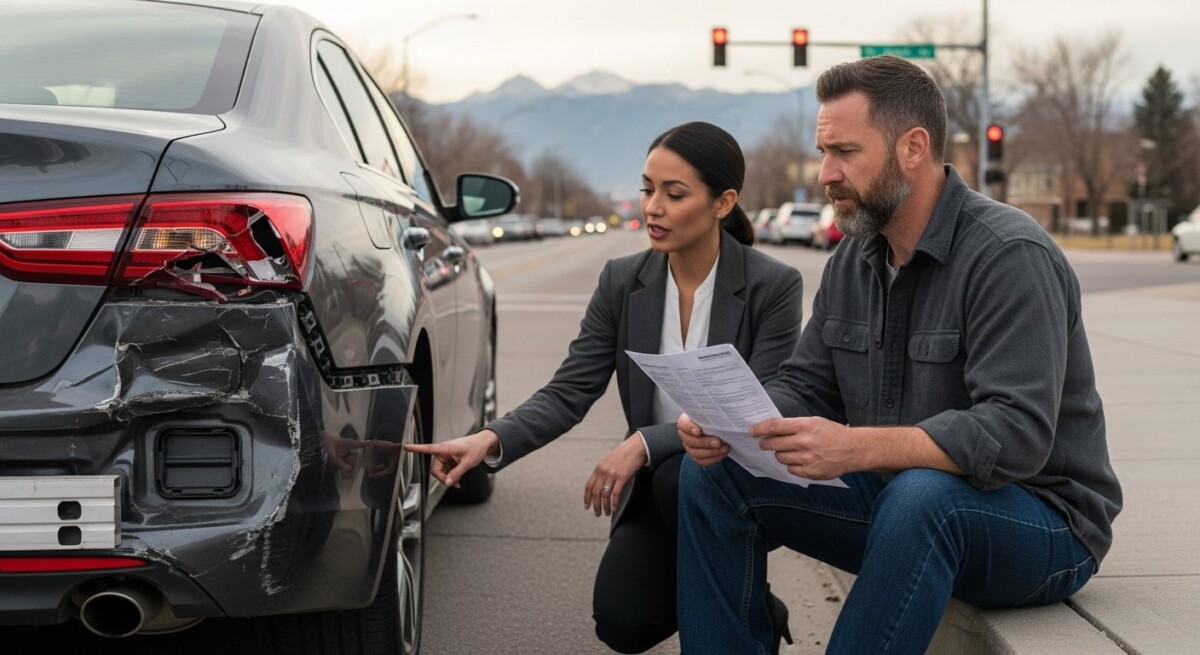
The moments after a car accident in Denver can feel chaotic and overwhelming. Between checking on passengers, exchanging information with the other driver, and speaking with responding police officers, the thought of securing financial recovery often feels distant. Yet the decisions you make in the days following the crash can significantly impact your ability to secure the compensation you need for medical bills, lost wages, and vehicle repairs. Colorado operates under a fault-based insurance system, which means the party responsible for causing the collision is financially liable for the resulting damages. Navigating this process alone, while managing injuries and recovery, creates substantial risk of accepting a settlement far below what your claim is worth.
This is where a skilled legal advocate becomes invaluable. A lawyer for injury compensation after a car accident in Denver serves as your guide through Colorado’s complex personal injury landscape. They handle the intricate paperwork, negotiate aggressively with insurance adjusters, and build a compelling case that demonstrates the full extent of your losses. According to data from the Colorado Division of Insurance, accident victims who retain legal representation typically receive settlements that are significantly higher, often three to five times more, than those who negotiate on their own behalf. This difference underscores the importance of having a professional who understands the tactics insurers use to minimize payouts.
When you work with a dedicated attorney, you are not just hiring someone to file forms. You are gaining a strategic partner who can investigate the accident scene, consult with medical experts, and calculate the true long-term cost of your injuries. This includes not only immediate expenses but also future medical care, ongoing therapy, and the diminished quality of life resulting from chronic pain or permanent disability. Insurance companies have teams of lawyers and adjusters working to protect their bottom line. You deserve a legal team that works just as hard to protect your financial future.
Why You Need a Lawyer for Injury Compensation After a Car Accident in Denver
Colorado law imposes a statute of limitations, generally giving you three years from the date of the accident to file a personal injury lawsuit. While this may seem like ample time, building a strong case takes considerable effort. Evidence must be preserved, witness statements must be collected, and medical records must be obtained. Insurance companies use this time to their advantage, often pressing victims to settle quickly before the full extent of their injuries is known. A common tactic involves offering a quick, lowball settlement that covers only immediate expenses, leaving you responsible for future medical costs that arise later.
An experienced lawyer understands these strategies. They will advise you against speaking to the at-fault party’s insurance company without representation and will handle all communications on your behalf. This prevents you from accidentally making statements that could be misinterpreted and used to devalue your claim. Furthermore, Denver’s unique traffic patterns, including the congested corridors of I-25 and I-70, often require a thorough reconstruction of the accident to determine liability accurately. Your attorney can work with accident reconstruction specialists to prove exactly how the collision occurred and who was at fault.
Consider the financial stakes involved in a typical injury claim. A simple soft tissue injury can result in thousands of dollars in medical bills, while more severe injuries requiring surgery can easily reach hundreds of thousands. Add to that the loss of earning capacity if you cannot return to work, and the potential value of your claim becomes substantial. An attorney will ensure that every element of your damage is documented and included in your demand package. They calculate your settlement value based on the totality of your losses, not just the visible damage to your vehicle.
Understanding Colorado’s Insurance Laws and Fault Rules
Colorado is a modified comparative negligence state. This means that your compensation can be reduced by the percentage of fault you bear for the accident. For example, if you are found to be 20% at fault for a collision, your total settlement will be reduced by 20%. However, if you are found to be 50% or more at fault, you are barred from recovering any compensation at all. This rule makes it critical to have a lawyer who can challenge any attempt by the insurance company to shift blame onto you. They will gather evidence, such as traffic camera footage and police reports, to establish that the other driver was primarily responsible.
Another critical aspect of Colorado law is the coverage requirements for drivers. All drivers must carry a minimum of $25,000 in bodily injury liability coverage per person and $50,000 per accident. While this is the legal minimum, it is often insufficient to cover the costs of a severe accident. If the at-fault driver has minimal coverage, your attorney may need to explore other avenues for recovery, such as your own uninsured or underinsured motorist coverage (UM/UIM). Adding UM/UIM coverage to your policy is optional in Colorado, but it can be a lifesaver if you are hit by a driver with inadequate insurance.
Navigating these insurance layers requires a deep understanding of policy language and legal precedent. A lawyer for injury compensation after a car accident in Denver will meticulously review all applicable policies to identify available coverage limits. They will also ensure that you meet all deadlines for filing a claim under your own policy, which can differ from the statute of limitations for a lawsuit. Missing a deadline to file a UM/UIM claim with your own insurer can result in losing that coverage entirely, leaving you with unpaid medical bills.
Calculating the True Value of Your Injury Claim
One of the most significant mistakes accident victims make is underestimating the value of their claim. They may look at their current medical bills and lost wages and assume that is the total amount they should demand. However, a comprehensive claim looks forward, not just backward. You are entitled to compensation for the full scope of your injuries, which includes future medical expenses. If your doctor recommends ongoing physical therapy or a future surgery, the cost of those procedures must be included in your demand.
Non-economic damages, such as pain and suffering, emotional distress, and loss of enjoyment of life, also form a substantial part of your claim. These damages are subjective and can be difficult to quantify without legal experience. Insurance adjusters will often use complex algorithms to calculate these damages, typically multiplying your economic losses by a certain factor. However, these formulas are designed to benefit the insurer, not you. An experienced attorney knows how to present a compelling narrative to a jury or an adjuster that justifies a higher multiplier based on the severity of your pain and the impact on your daily life.
To build this case, your lawyer will gather evidence that goes beyond a simple bill. They may ask you to keep a daily pain journal, document how your injuries affect your ability to sleep, exercise, or play with your children. They may also hire expert witnesses, such as economists, to testify about your lost earning capacity. This is particularly important if your injuries prevent you from returning to your previous occupation or force you into a lower-paying role. The goal is to create a detailed picture of your losses that leaves no room for the insurance company to argue that your settlement should be minimal.
Here are the key components that a Denver attorney will evaluate when determining your claim’s value:
- Economic Damages: Current and future medical expenses, rehabilitation costs, lost wages, and loss of earning capacity.
- Non-Economic Damages: Physical pain, mental anguish, loss of consortium, and permanent impairment or disfigurement.
- Property Damage: Cost to repair or replace your vehicle, plus compensation for any personal property lost in the crash.
- Punitive Damages: In rare cases where the at-fault driver acted with extreme recklessness or malice, additional damages may be awarded to punish the wrongdoer.
After compiling this comprehensive assessment, your attorney will prepare a formal demand letter to the insurance company. This letter outlines the facts of the case, the evidence of liability, and the total amount of damages you are seeking. This is the starting point for negotiations. Insurance companies will almost always respond with a counteroffer that is significantly lower than your demand. Your lawyer will counter their offer, using evidence and legal precedent to justify your position. This back-and-forth negotiation can take weeks or even months, but having a professional negotiator ensures that you do not settle for less than you deserve.
What to Do Immediately After a Car Accident in Denver
Your actions in the immediate aftermath of a collision can have a lasting impact on your case. While you may be shaken up, there are several critical steps you should take to protect your health and your legal rights. First and foremost, check yourself and your passengers for injuries. Even if you feel fine, the adrenaline rush from the accident can mask pain. It is always advisable to seek medical attention within 24 hours of the crash, as some injuries, such as whiplash, may not manifest symptoms immediately. A delay in treatment can be used by the insurance company to argue that your injuries were not serious or were not caused by the accident.
If it is safe to do so, move your vehicle to the side of the road and call the police. A police report provides an official record of the accident, including the officer’s observations and any citations issued. This report is a valuable piece of evidence for your claim. While waiting for the police, exchange information with the other driver, including their name, contact details, insurance information, and license plate number. Take photographs of the scene, including the damage to all vehicles, the position of the cars, and any skid marks or debris on the road. These photos can be crucial in reconstructing the accident.
When you speak with the police, stick to the facts. Do not speculate about what happened or admit fault, even if you think you might have contributed to the accident. Statements like “I didn’t see them” or “I’m so sorry” can be used against you later to establish comparative negligence. Once the police have finished their investigation, contact a lawyer for injury compensation after a car accident in Denver before you speak to any insurance adjuster. Your attorney will handle the insurance communications, ensuring that you do not inadvertently jeopardize your claim. For more context on how legal representation impacts the outcome of these cases, you can review our analysis in the best accident lawyers for injury claims guide.
Dealing with Insurance Adjusters and Settlement Offers
Insurance adjusters are trained negotiators whose primary goal is to resolve claims for as little money as possible. They may appear friendly and sympathetic, but their job is to protect the insurance company’s profits. They will likely call you shortly after the accident to get a recorded statement. You are not obligated to provide this statement, and doing so without legal counsel is rarely in your best interest. The adjuster may ask questions designed to elicit admissions of fault or downplay the severity of your injuries. Politely decline to speak with them and refer all inquiries to your attorney.
When an initial settlement offer arrives, it is almost always far too low. The adjuster is testing the waters to see if you will accept a quick payout. Accepting this offer waives your right to seek any additional compensation in the future, even if you later discover that your injuries are more severe than initially diagnosed. Once you sign a release, the case is closed. Your attorney will review any settlement offer and advise you on whether it is fair. They will negotiate for a higher amount, presenting the evidence of your damages to justify the increased demand.
The negotiation process requires patience and a strong stomach for conflict. Insurance companies often use delay tactics, hoping that financial pressure will force you to accept a lower offer. They may argue that your injuries are pre-existing or that you could have recovered faster if you had followed a different treatment plan. Your lawyer will counter these arguments with medical records and expert testimony. They are prepared to take your case to trial if the insurance company refuses to offer a fair settlement. The willingness to litigate is often the strongest leverage you have in negotiations.
While most cases settle out of court, preparing for trial is an essential part of your attorney’s job. They will file a lawsuit if necessary, which formally begins the litigation process. During discovery, both sides exchange evidence and take depositions. This process can be lengthy and complex, but it often motivates the insurance company to increase their settlement offer. In our experience, the best outcomes are achieved when the insurance company knows that your attorney is not afraid to take the case to a jury. If you are looking for guidance on this process, many clients find our mass tort litigation resource helpful for understanding how large-scale injury claims are managed.
Frequently Asked Questions
How much does it cost to hire a lawyer for a car accident case?
Most personal injury lawyers in Denver work on a contingency fee basis. This means you pay no upfront costs. Your attorney only gets paid if they successfully recover compensation for you. The fee is typically a percentage of the final settlement or court award, usually around 33% to 40%. This arrangement allows you to access high-quality legal representation without worrying about hourly billing rates.
How long will my car accident case take to resolve?
The timeline varies significantly depending on the complexity of the case. A straightforward claim with clear liability and moderate injuries can settle in a few months. However, cases involving severe injuries, disputed liability, or multiple parties can take a year or more. Your attorney will keep you informed of the progress and work to resolve your case as efficiently as possible without sacrificing the value of your claim.
What happens if the at-fault driver has no insurance?
If the at-fault driver is uninsured, you may still have options. Your own uninsured motorist (UM) coverage can step in to pay for your injuries. If you do not have UM coverage, your attorney may need to pursue a lawsuit directly against the driver to recover damages from their personal assets. This can be a more difficult process, which is why having an experienced attorney is vital in these situations.
Can I claim for pain and suffering in Colorado?
Yes, Colorado law allows for the recovery of non-economic damages, including pain and suffering. However, the state has caps on these damages in medical malpractice cases, but not for general car accidents. Your attorney will work to quantify your pain and suffering based on the severity of your injuries and their impact on your life. For a broader understanding of how these claims are structured, you can read our Pennsylvania auto accident legal help article, which covers similar principles of injury law.
Your Next Steps Toward Recovery
The path to financial recovery after a Denver car accident does not have to be walked alone. The legal system is complex, and insurance companies are formidable opponents. By securing a lawyer for injury compensation after a car accident in Denver, you are making a strategic investment in your future. Your attorney will handle the legal burden, allowing you to focus on what matters most: healing from your injuries. They will work to ensure that your medical bills are paid, your lost wages are recovered, and you are compensated for the pain you have endured.
Before you sign any documents or accept a settlement offer, it is in your best interest to seek professional guidance. Most reputable firms, including those we recommend, offer a free initial consultation. This allows you to discuss the details of your case and understand your legal options without any financial obligation. For more insights into selecting the right representation, our guide on best accident lawyers for injury claims in 2025 provides a detailed comparison of top firms. Taking this step can be the difference between a minimal payout and the full compensation you are entitled to under the law.
Act quickly to protect your rights. Evidence can disappear, and witness memories fade. Contact a qualified legal professional today to schedule your free case evaluation. The consultation is confidential, and you are under no obligation to hire anyone. However, the information you gain will empower you to make an informed decision about how to proceed with your claim. Your financial well-being depends on the choices you make now, so choose to have a dedicated advocate in your corner.