
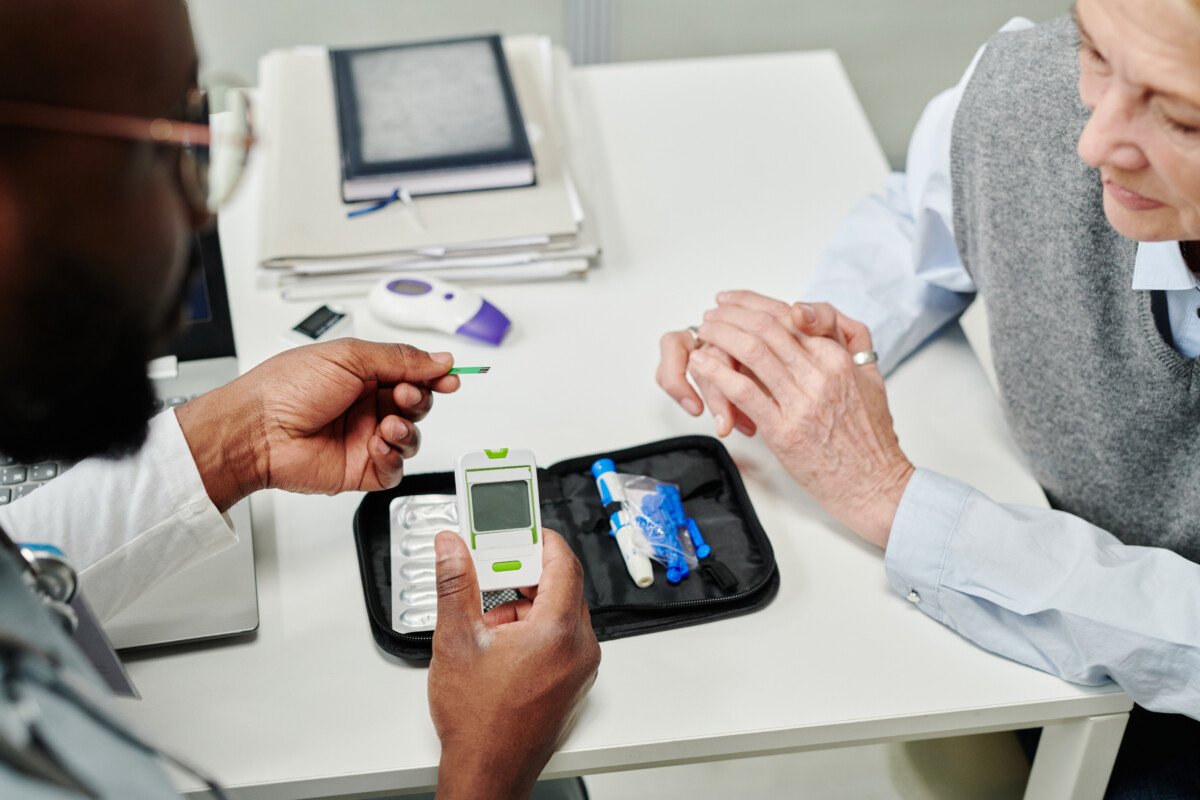
Is Diabetes a Disability for Social Security Benefits?
Learn if diabetes complications qualify for Social Security disability benefits. For expert guidance on your claim, call 833-227-7919.

By Sophia Bennett
Navigating the Social Security Disability Insurance (SSDI) or Supplemental Security Income (SSI) application process with diabetes can be a complex and often frustrating journey. Many people ask, “is diabetes a disability for social security?” The answer is not a simple yes or no. While a diabetes diagnosis alone is rarely sufficient for approval, the severe complications and functional limitations it causes can absolutely qualify as a disability under Social Security Administration (SSA) rules. Understanding the critical distinction between the diagnosis and its disabling effects is the key to building a successful claim.
The SSA’s Definition of Disability
The Social Security Administration operates under a strict legal definition of disability. To be approved for benefits, you must prove you have a medically determinable physical or mental impairment that has lasted, or is expected to last, for at least 12 continuous months or result in death. Crucially, this impairment must prevent you from engaging in any “substantial gainful activity” (SGA). This means you cannot perform the work you did before, and you cannot adjust to other types of work due to your medical condition. The SSA evaluates your residual functional capacity (RFC), which is an assessment of what you can still do physically and mentally despite your limitations. This evaluation is central to every claim, including those involving diabetes. For a broader look at how the SSA’s rules may evolve, consider reading about potential 2026 Social Security Disability changes and what they mean.
How Diabetes Is Evaluated by Social Security
Diabetes mellitus is evaluated not as a single condition but through the lens of the organ systems it damages. The SSA uses its “Blue Book,” a manual of listed impairments, to determine if a condition is severe enough to automatically qualify. Diabetes is referenced in multiple listings under the complications it causes. Your medical evidence must document that your diabetes is severe and has resulted in specific, measurable complications that meet or equal the criteria of one of these listings. Merely having high blood sugar levels or requiring insulin injections is typically insufficient. The focus is on the functional impact.
Common Diabetic Complications That May Qualify
The disabling potential of diabetes lies in its secondary conditions. Here are the primary complications the SSA scrutinizes, organized by the Blue Book listings they fall under.
- Diabetic Neuropathy: This nerve damage, often in the extremities, is evaluated under Listing 11.14 (Peripheral Neuropathy). You must demonstrate significant and persistent disorganization of motor function in two extremities, resulting in sustained disturbance of gross and dexterous movements, or gait and station. This means severe difficulty walking, using your hands, or both.
- Diabetic Retinopathy and Vision Loss: Damage to the blood vessels in the retina is evaluated under Listing 2.00 (Special Senses and Speech). Qualification requires vision that cannot be corrected better than 20/200 in your better eye, or a significant visual field limitation.
- Cardiovascular Disease: Heart problems like coronary artery disease or peripheral arterial disease caused by diabetes are evaluated under Listing 4.00 (Cardiovascular System). This requires specific medical findings like stress test results or catheterization reports showing severe impairment.
- Chronic Kidney Disease (Nephropathy): Kidney failure requiring regular dialysis or a kidney transplant is evaluated under Listing 6.00 (Genitourinary Disorders). This condition often meets the listing requirements directly.
- Diabetic Foot Ulcers and Amputations: Under Listing 1.20 (Amputation), the amputation of a limb due to diabetic complications can qualify. Even without amputation, chronic, non-healing ulcers that cause severe walking limitations are considered under musculoskeletal listings.
Beyond these specific listings, the SSA must consider the combined effect of all your impairments, even if no single one meets a listing. For instance, mild neuropathy combined with vision problems and fatigue may together reduce your RFC to a point where you cannot work.
The Critical Role of Medical Evidence
Your claim lives and dies by the quality of your medical records. A doctor’s note stating “patient is disabled” is not enough. The SSA needs objective, longitudinal evidence that paints a clear picture of your limitations. Essential documentation includes detailed treatment notes from your endocrinologist, primary care physician, and specialists (cardiologist, neurologist, ophthalmologist, podiatrist). These notes should detail your symptoms (pain, numbness, blindness, fatigue), clinical findings (A1C levels, foot exam results, ejection fraction, nerve conduction studies), and your prescribed treatment regimen (insulin type and dosage, medications, diet, need for assistive devices like a cane). Hospitalization records for diabetic ketoacidosis (DKA), severe hypoglycemic episodes, or surgeries are powerful evidence. A detailed statement from your treating physician about your functional limitations (a “Residual Functional Capacity” form) can be invaluable, especially if your case is assessed at a hearing.
The Application Process and Potential Strategies
The path to benefits is often long. It begins with an initial application, which has a high denial rate. If denied, you must request reconsideration. The next critical step is a hearing before an Administrative Law Judge (ALJ), where the approval rate increases significantly. You have the right to legal representation at all stages, and having an attorney familiar with SSA procedures is highly advisable. Given the complexity, many applicants wonder about other benefit interactions, such as can you collect disability and Social Security at the same time. A key strategy is to frame your claim around your inability to function in a work setting. Instead of leading with “I have diabetes,” focus on “I cannot stand for more than 15 minutes due to neuropathic foot pain and ulcers,” or “I have unpredictable hypoglycemic episodes that would make operating machinery or driving unsafe.” Document how your daily activities are limited: difficulty preparing meals due to vision loss, inability to manage personal care due to numbness in your hands, or the need for frequent, unscheduled breaks.
Frequently Asked Questions
Can I get disability if my diabetes is controlled with insulin?
Control is a positive health outcome, but in the SSA’s view, it can work against a claim. The administration may argue that if your condition is well-controlled with treatment, it is not disabling. You must prove that despite adherence to your prescribed regimen (insulin, diet, etc.), you still experience severe complications or functional limitations that prevent work.
Does Type 2 diabetes qualify differently than Type 1?
No. The SSA does not differentiate between Type 1 and Type 2 diabetes for qualification purposes. The evaluation is based solely on the severity of the complications and functional limitations caused by the disease, regardless of the type.
What if my complications don’t exactly match a Blue Book listing?
Most claims are approved not because they “meet” a listing, but because a medical-vocational allowance is granted. This means the SSA agrees your RFC, age, education, and work experience prevent you from adjusting to any other work. This is where a strong RFC assessment from your doctor is crucial.
Can I work part-time and still apply?
You can apply, but earning above the SGA limit (which changes annually) will likely result in a denial. The SSA will assess whether your work activity shows you are capable of substantial gainful activity. It’s a complex calculation, and earnings near the limit require careful analysis.
Are Social Security disability benefits protected from creditors?
Generally, yes. SSDI and SSI benefits have strong protections against most types of garnishment by private creditors. However, there are specific exceptions, such as for certain federal debts, child support, or alimony. For a detailed explanation of these protections, our article on can Social Security Disability benefits be garnished provides essential information. It is also important to understand that in specific legal contexts, such as settling a lawsuit, questions like can Social Security Disability be garnished for a lawsuit have nuanced answers that depend on the type of benefit and the nature of the debt.
Successfully securing Social Security disability benefits for diabetes is a challenging process that demands a well-documented, complication-focused approach. It requires translating a chronic medical diagnosis into a clear narrative of functional impairment that aligns with the SSA’s rigid criteria. By thoroughly gathering medical evidence, strategically framing your limitations, and understanding the legal pathways, you can build a compelling case that demonstrates how diabetes has become a disabling condition in your life.