Legal Help for Truck Accidents in San Francisco
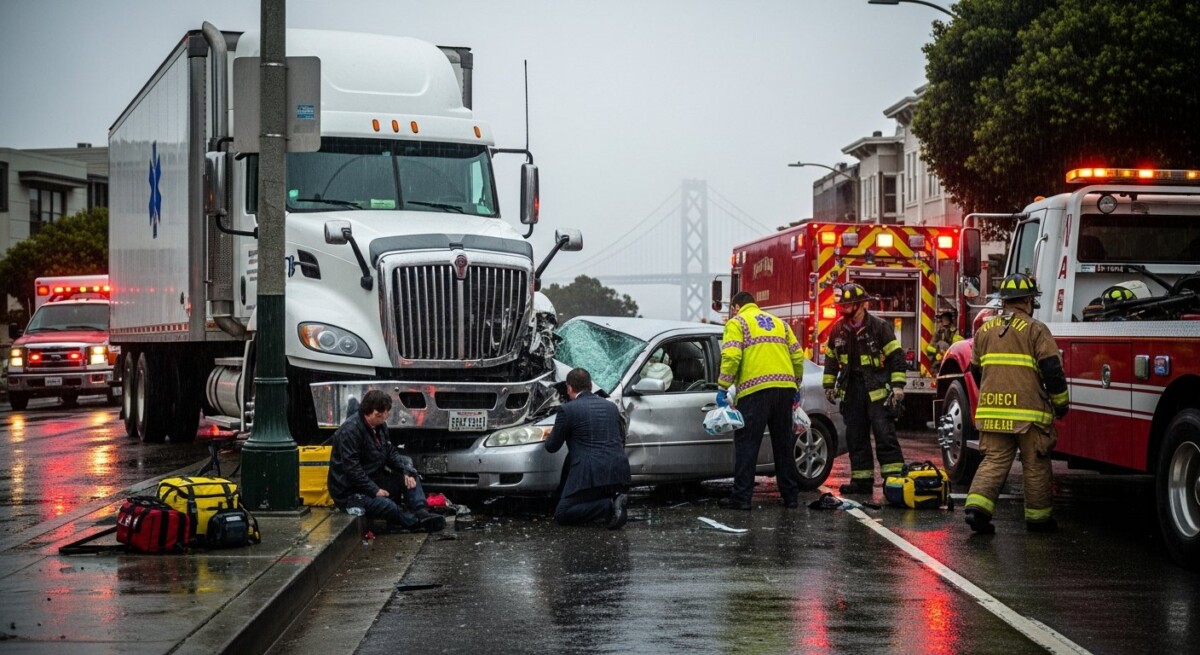
San Francisco’s congested streets, steep hills, and dense traffic create a high-risk environment for commercial truck accidents. When a semi-truck, delivery truck, or box truck collides with a smaller vehicle, the consequences are often catastrophic. Victims face mounting medical bills, lost wages, and complex insurance claims. Navigating the aftermath of such a crash requires professional legal help for truck accidents in San Francisco. This article explains what you need to know about liability, evidence, and compensation, and how an experienced attorney can protect your rights.
Truck accidents differ significantly from standard car crashes. Federal regulations govern truck driver hours of service, vehicle maintenance, and cargo loading. Violations of these rules can shift liability to the trucking company, the driver, or even the manufacturer. Without a thorough investigation, critical evidence may disappear, and insurance adjusters may pressure you into a lowball settlement. Understanding your legal options is the first step toward fair recovery.
Why Truck Accidents Require Specialized Legal Representation
Commercial trucks weigh up to 80,000 pounds, compared to a typical passenger car at 4,000 pounds. The sheer force of a collision leads to severe injuries: traumatic brain injuries, spinal cord damage, fractures, and internal bleeding. These injuries often require long-term medical care, rehabilitation, and time away from work. Insurance companies representing trucking firms have deep resources and aggressive legal teams. They will try to minimize your claim or blame you for the crash.
An attorney who focuses on truck accident cases understands the unique legal landscape. They know how to subpoena electronic logging devices (ELDs), black box data, and driver logs. They can identify violations of the Federal Motor Carrier Safety Regulations (FMCSR). They also know how to calculate the full value of your damages, including future medical expenses, lost earning capacity, and pain and suffering. In our guide on San Francisco truck accident lawyer for serious injuries, we outline the specific steps to build a strong case.
Common Causes of Truck Accidents in San Francisco
Truck accidents rarely have a single cause. Instead, they result from a combination of factors. Identifying these causes is essential for establishing liability. Common contributing factors include:
- Driver fatigue: Truck drivers often face pressure to meet tight delivery schedules. Driving beyond the legal 11-hour daily limit leads to slowed reaction times and impaired judgment.
- Distracted driving: Using a phone, eating, or adjusting navigation systems while operating a large vehicle increases crash risk dramatically.
- Improper maintenance: Brake failures, tire blowouts, and steering defects are frequently linked to inadequate inspections or deferred repairs.
- Overloaded or unbalanced cargo: Exceeding weight limits or failing to secure loads properly can cause rollovers or loss of control on San Francisco’s steep grades.
- Drug or alcohol impairment: Some drivers use stimulants to stay awake, then crash due to microsleep episodes or intoxication.
Each cause points to different liable parties. A driver’s fatigue may implicate the trucking company for scheduling violations. A tire blowout may lead to a claim against the tire manufacturer or the maintenance shop. A thorough investigation by your attorney will uncover all responsible entities.
Liability in Truck Accident Cases
Determining who is at fault in a truck accident can be complex. Multiple parties may share liability:
- The truck driver: If the driver was speeding, distracted, or violating hours-of-service rules, they may be directly responsible.
- The trucking company: Employers can be held vicariously liable for their drivers’ negligence under the legal doctrine of respondeat superior. Additionally, if the company failed to properly train, supervise, or retain competent drivers, it may face direct liability.
- The vehicle manufacturer: Defective brakes, tires, or steering systems can lead to product liability claims against the manufacturer.
- The cargo loader: If improper loading caused the truck to become unstable, the loading company or shipper may be at fault.
- Government entities: In rare cases, poorly designed roads or missing signage may contribute to the crash. Claims against public agencies have strict deadlines and require special procedures.
Your attorney will conduct a detailed investigation, including preserving physical evidence, interviewing witnesses, and reviewing electronic data. They will also consult accident reconstruction experts to build a compelling case. For a deeper look at how fault is determined in similar scenarios, see our article on How to Find the Best Lawyer for Hit-and-Run Accidents in San Francisco.
Key Evidence in Truck Accident Claims
Preserving evidence is critical in truck accident cases. Unlike car crashes, where evidence may be limited, truck accidents generate a wealth of data. Key pieces of evidence include:
- Electronic logging device (ELD) data: These devices record driving hours, speed, and location. They can reveal if the driver exceeded legal limits.
- Black box data: The truck’s event data recorder (EDR) captures information seconds before and during the crash, such as brake application, steering angle, and speed.
- Driver logs and dispatch records: Paper or digital logs show the driver’s schedule and may reveal falsified entries.
- Maintenance records: Inspection reports and repair invoices can show if the truck was properly maintained.
- Dashcam footage: Many trucks have outward-facing cameras that record the road ahead. This footage can provide clear evidence of how the crash occurred.
- Police reports: Officers at the scene often note contributing factors, citations issued, and witness statements.
An experienced attorney knows how to issue preservation letters to prevent the trucking company from destroying or overwriting this data. They will also subpoena records from third parties, such as the trucking company’s corporate headquarters or the ELD provider. Acting quickly is essential because some data is automatically overwritten after a short period.
Calculating Damages After a Truck Accident
Victims of truck accidents are entitled to compensation for both economic and non-economic damages. Economic damages include quantifiable financial losses:
- Medical expenses: Hospital stays, surgeries, medications, physical therapy, and future medical care.
- Lost wages: Income lost during recovery and reduced earning capacity if you cannot return to your previous job.
- Property damage: Repair or replacement of your vehicle and other personal property.
- Out-of-pocket costs: Transportation to medical appointments, home modifications, and assistive devices.
Non-economic damages compensate for intangible losses:
- Pain and suffering: Physical pain and emotional distress resulting from the accident.
- Loss of enjoyment of life: Inability to participate in hobbies, sports, or family activities.
- Loss of consortium: Impact on your relationship with your spouse or partner.
In some cases, punitive damages may be awarded if the defendant’s conduct was particularly reckless, such as driving under the influence or knowingly using defective equipment. These damages are not tied to your losses but are meant to punish the wrongdoer and deter similar conduct.
The Legal Process: What to Expect
Filing a truck accident claim involves several stages. Understanding the process can help you feel more prepared:
- Initial consultation: You meet with an attorney, who evaluates your case and explains your rights. Most firms offer free consultations and work on a contingency fee basis, meaning you pay nothing unless they recover compensation.
- Investigation: Your attorney gathers evidence, interviews witnesses, and consults experts. They also send preservation letters and subpoenas to protect key data.
- Demand letter: Once the investigation is complete, your attorney sends a demand letter to the insurance company outlining your damages and requesting a specific settlement amount.
- Negotiation: The insurance company may respond with a counteroffer. Your attorney negotiates aggressively to secure a fair settlement. If negotiations fail, your case may proceed to litigation.
- Filing a lawsuit: If a settlement cannot be reached, your attorney files a complaint in civil court. The discovery phase begins, during which both sides exchange evidence and take depositions.
- Trial or settlement: Most cases settle before trial, but if a fair offer is not made, your attorney will present your case to a jury. A verdict may result in compensation for your damages.
Throughout this process, your attorney handles all communication with insurance adjusters and defense lawyers. This allows you to focus on your recovery. For more information on the types of compensation available, read our guide on San Francisco Car Accident Lawyer for Injury Compensation.
Statute of Limitations for Truck Accidents in California
California law imposes a strict deadline for filing personal injury lawsuits. Under California Code of Civil Procedure Section 335.1, you generally have two years from the date of the accident to file a claim. However, if the accident resulted in a wrongful death, the deadline is two years from the date of death. Claims against government entities, such as a city or county, have a much shorter window: you must file a government claim within six months of the incident. Missing these deadlines can bar you from recovering any compensation.
There are exceptions that may extend or shorten the deadline. For example, if the injured person is a minor or lacks mental capacity, the statute may be tolled (paused). If the defendant leaves the state, the clock may also pause. Given these complexities, it is vital to consult an attorney as soon as possible after the accident.
Frequently Asked Questions
How much does it cost to hire a truck accident lawyer?
Most truck accident lawyers work on a contingency fee basis. You pay no upfront fees. Instead, the attorney receives a percentage of the settlement or verdict, typically 33% to 40%. If your case is unsuccessful, you owe nothing for legal fees. This arrangement makes legal representation accessible to everyone, regardless of financial situation.
What should I do immediately after a truck accident?
First, seek medical attention for any injuries, even if they seem minor. Then, call the police and report the accident. Exchange information with the truck driver, but do not discuss fault or admit responsibility. Take photos of the scene, including vehicle damage, road conditions, and any visible injuries. Finally, contact a truck accident attorney before speaking to any insurance adjuster.
Can I still recover compensation if I was partially at fault?
Yes. California follows a pure comparative negligence rule. Under this rule, you can recover damages even if you were 99% at fault, but your compensation is reduced by your percentage of fault. For example, if you are found 20% responsible and your damages total $100,000, you would receive $80,000. An attorney can help minimize the percentage of fault assigned to you.
How long does a truck accident case take to resolve?
The timeline varies widely. Simple cases may settle in a few months, while complex litigation can take one to three years. Factors that affect the timeline include the severity of injuries, the number of liable parties, and whether the case goes to trial. Your attorney can give you a more accurate estimate based on the specifics of your case.
To learn more about how an attorney can help with serious injuries, see our detailed resource on Legal Help for Truck Accidents in San Francisco.
Truck accidents can turn your life upside down. Between medical appointments, insurance calls, and financial stress, you need someone in your corner. A skilled attorney handles the legal heavy lifting while you focus on healing. They investigate the crash, negotiate with insurers, and fight for the full compensation you deserve. If you or a loved one has been injured in a truck accident in San Francisco, do not wait. Legal help for truck accidents in San Francisco is available to guide you through every step of the process. Contact a qualified attorney today to discuss your case and take the first step toward recovery. Call 833-227-7919 for a free consultation.