
T Bone Motor Vehicle Accident: Avoid Common Mistakes
A T bone motor vehicle accident often causes severe injuries due to minimal side protection. Understanding fault, evidence collection, and legal options is critical for securing fair compensation after such a crash.

By Katelin Chan
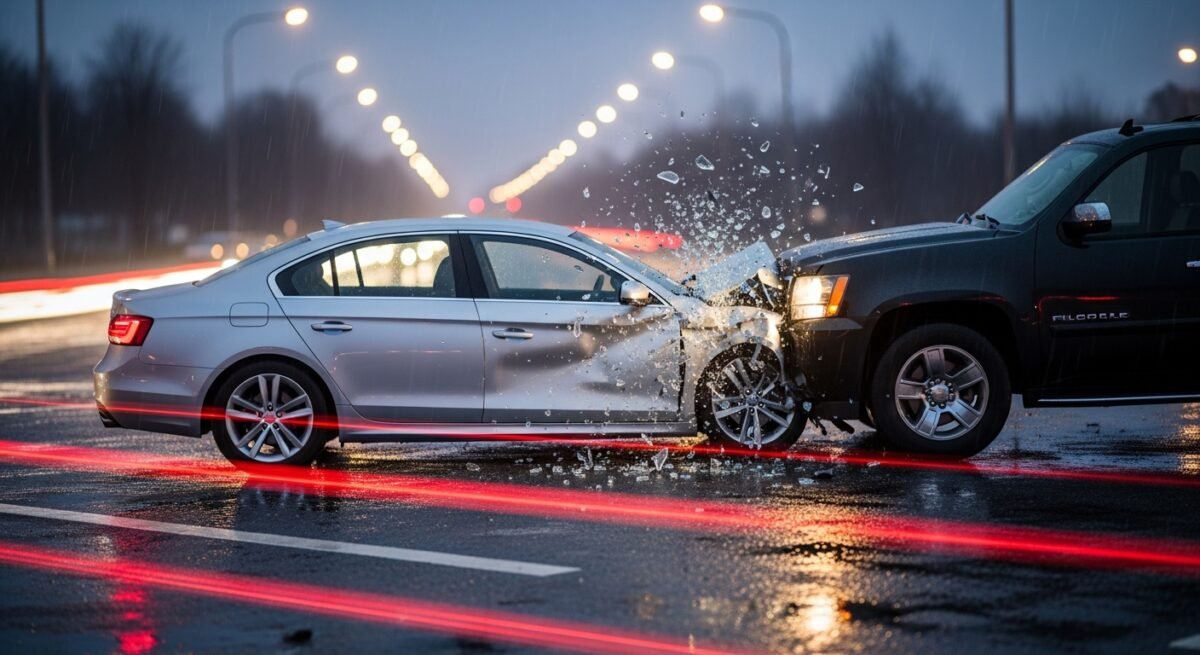
A sudden impact from the side, the shattering of glass, and the violent jolt of your body—a T bone motor vehicle accident is one of the most frightening and dangerous collisions on the road. Also known as a side-impact or broadside crash, this type of accident occurs when the front of one vehicle strikes the side of another, forming a “T” shape. Unlike front or rear collisions, the side of a vehicle offers significantly less protective crumple zone, placing occupants directly in the path of the intruding force. The physics of a T bone collision create unique and often severe consequences, making it essential to understand the complexities of fault, the common severity of injuries, and the critical legal case considerations that follow.
The Mechanics and Common Causes of Side-Impact Collisions
The danger of a T bone accident stems from its mechanics. The side doors and panels of a car are structurally weaker than the reinforced front and rear ends. When a vehicle is struck from the side, there is minimal material to absorb the energy before it transfers to the passenger compartment. This direct energy transfer is a primary reason why side-impact crashes have a higher likelihood of resulting in serious or fatal injuries, even at relatively lower speeds compared to head-on collisions. The point of impact is also closer to the occupants, leaving little room for protective deflection.
Understanding the typical causes is key to both prevention and establishing liability in a subsequent legal case. The overwhelming majority of T bone accidents happen at intersections and are rooted in one driver’s failure to yield the right-of-way. This failure can manifest in several specific, negligent actions. A driver may run a red light or blatantly ignore a stop sign, entering an intersection when they clearly do not have the right to proceed. Alternatively, a driver might make an improper left turn across oncoming traffic, misjudging the speed or distance of approaching vehicles. Even a failure to properly observe traffic signals or yield signs before proceeding can lead to a devastating broadside crash. In each scenario, one party’s violation of traffic laws becomes the central point for determining fault.
Severe Injuries Associated with T Bone Crashes
The types of injuries sustained in a T bone motor vehicle accident are often catastrophic due to the proximity of the impact to the body. Unlike the controlled deceleration of a frontal crash with airbags, side impacts can cause violent, multidirectional motion and direct intrusion into the passenger space.
Head and brain injuries are extremely common, as occupants’ heads can strike the window, door frame, or even another passenger. This can result in concussions, traumatic brain injuries (TBI), and skull fractures. The neck and spine are also vulnerable to severe trauma. The sideways whipping motion can cause debilitating cervical spine injuries, herniated discs, and even spinal cord damage, which may lead to partial or complete paralysis.
Torso injuries are particularly prevalent because the side door directly impacts the occupant’s side. This can lead to broken ribs, a collapsed lung (pneumothorax), and severe internal organ damage to the spleen, liver, or kidneys. The pelvis and lower extremities are also at high risk from both the intruding door and the console or dashboard. These injuries are not only life-altering but also lead to extensive medical treatment, long-term rehabilitation, and significant financial burdens, which become central to a personal injury legal case.
Determining Liability and Comparative Negligence
Establishing who is at fault, or liable, is the cornerstone of any legal case following a T bone accident. While the driver who failed to yield right-of-way is often primarily at fault, insurance companies will conduct a thorough investigation. They will examine police reports, traffic camera or surveillance footage, witness statements, and data from vehicle event data recorders (EDRs, or “black boxes”) to reconstruct the events.
However, fault is not always absolute. Many states operate under comparative or contributory negligence laws. This means that if the driver who was struck is found to be partially responsible—for example, if they were speeding or distracted as they entered the intersection—their final compensation could be reduced by their percentage of fault. For instance, if a jury awards $100,000 in damages but finds the victim 20% at fault for speeding, the recovery would be reduced to $80,000. This nuanced analysis of fault is a critical reason why legal representation is vital; an experienced attorney can counter unfounded claims of shared negligence and fight to preserve your full claim value.
The Critical Role of Evidence in Your Claim
Building a strong claim for compensation after a T bone motor vehicle accident hinges on the evidence collected at the scene and in the immediate aftermath. The moments following a crash are chaotic, but what you do can profoundly impact your legal case. First, if you are able, call 911 to ensure police and medical help are dispatched. A formal police report is an official, third-party record of the incident that includes the officer’s initial assessment of fault, which carries significant weight.
While waiting for authorities, if it is safe to do so, use your smartphone to document everything. Take comprehensive photographs and videos from multiple angles, capturing vehicle positions, damage, skid marks, traffic signals, and any visible injuries. Obtain contact information from any witnesses; their unbiased accounts can be invaluable later, especially if the other driver changes their story. Seek immediate medical attention, even if you feel “okay.” Adrenaline can mask serious symptoms, and a prompt medical record creates a direct link between the accident and your injuries, which is essential for your claim. Keep a detailed journal of your pain, limitations, and recovery process, and preserve all medical bills, repair estimates, and proof of lost wages.
Navigating Insurance and Legal Recovery
Dealing with insurance companies after a serious T bone accident is a complex process. The at-fault driver’s insurer will aim to minimize their payout. They may quickly offer a settlement that seems attractive but often falls far short of covering the full extent of your current and future medical costs, lost earning capacity, property damage, and non-economic damages like pain and suffering.
To navigate this process and maximize recovery, a structured approach is necessary. First, report the accident to your own insurance company, but be cautious in your discussions with the other driver’s insurer. Do not provide a recorded statement or sign any releases without legal counsel. An experienced personal injury attorney can handle all communications, conduct an independent investigation, consult with medical and accident reconstruction experts to fully value your claim, and negotiate aggressively on your behalf. If a fair settlement cannot be reached, your attorney will be prepared to file a lawsuit and take your legal case to trial. The key steps in this process include:
- Immediate post-accident documentation and medical care.
- Consultation with a personal injury attorney to understand your rights.
- Thorough investigation and evidence gathering by your legal team.
- Calculation of a comprehensive demand that includes all future needs.
- Skilled negotiation with insurance adjusters.
- Litigation and trial preparation if a fair settlement is not offered.
Given the severe injuries typical in T bone collisions, your claim may include substantial damages beyond immediate bills. Future medical care, such as surgery or physical therapy, loss of future earnings if you cannot return to your previous job, and compensation for permanent disability or disfigurement are all critical components. An attorney understands how to project these future costs and fight for a settlement or verdict that truly makes you whole, rather than simply closing a file quickly for the insurance company’s benefit.
The aftermath of a T bone motor vehicle accident is a challenging journey of physical recovery and legal complexity. The forces involved often lead to life-changing injuries, and the process of securing fair compensation is fraught with obstacles. By understanding the causes, prioritizing evidence collection, and seeking experienced legal guidance, you can protect your rights and build the strongest possible foundation for your recovery, both in health and in securing the financial resources necessary for your future.
FAQs: T-Bone Motor Vehicle Accident
Q: What is a T-bone motor vehicle accident?
A: A T-bone accident occurs when the front of one vehicle crashes into the side of another, forming a “T” shape at the point of impact. It is also called a side-impact collision.
Q: What are common causes?
A: T-bone accidents often happen at intersections when a driver runs a red light, fails to yield, or misjudges another vehicle’s speed.
Q: What injuries are common in T-bone accidents?
A: Side-impact collisions can result in serious injuries, including broken bones, head trauma, internal injuries, and whiplash.
Q: Who is typically at fault?
A: Fault is usually assigned to the driver who violated traffic rules, such as running a stop sign or red light, but insurance investigations determine liability.
Q: How can I protect myself legally and medically after a T-bone accident?
A: Seek immediate medical attention, document the scene and damages, gather witness information, and report the accident to your insurance company.
Final Thoughts
T-bone motor vehicle accidents can be severe and cause serious injuries. Understanding the common causes, taking prompt medical action, and properly documenting the incident can help protect your health and your legal rights. Always drive cautiously at intersections to reduce the risk of side-impact collisions.
Take the first step toward justice—visit LegalCaseReview.com or call 📞 (833) 670-8682 for your free case review today!