
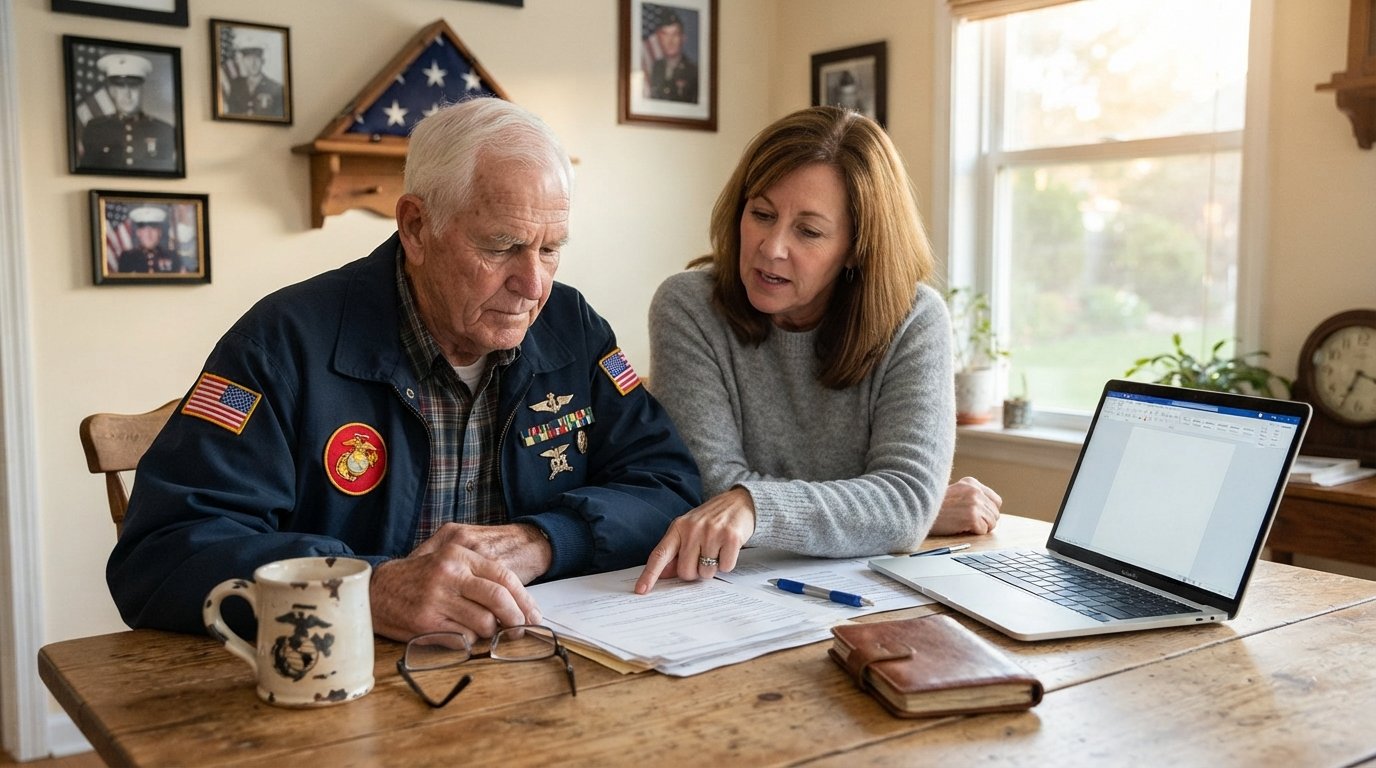
Veterans Camp Lejeune Water Claim Deadline 2026
Veterans Camp Lejeune water contamination claim deadline 2026 is approaching. Get a free case review to protect your right to compensation. Call 8332791850.

By Lenora West
Marine Corps veterans, their families, and civilian workers who spent time at Camp Lejeune between August 1, 1953, and December 31, 1987, may have a path to compensation that did not exist just a few years ago. The Camp Lejeune Justice Act of 2022 opened the door for those who were exposed to contaminated drinking water at the base to file a federal claim, even if they never filed a previous lawsuit. Now, with the veterans Camp Lejeune water contamination claim deadline 2026 approaching, the window to act is narrowing, and thousands of potential claimants are still deciding whether they qualify and how to move forward.
Understanding who qualifies, what the deadline actually means, and how the claims process works can make the difference between recovering compensation for serious health conditions and losing the right to file entirely. This guide breaks down the key facts veterans and family members need to know as the 2026 cutoff gets closer, including practical steps to protect a claim before time runs out.
What Is the Camp Lejeune Water Contamination Claim?
Camp Lejeune, a sprawling Marine Corps base in North Carolina, supplied drinking water to service members, their families, and civilian employees for decades. Between the 1950s and the late 1980s, that water was contaminated with industrial solvents and other volatile organic compounds, including trichloroethylene (TCE), tetrachloroethylene (PCE), benzene, and vinyl chloride. These chemicals are linked to cancers, Parkinson's disease, and other serious health conditions.
For years, veterans exposed at Camp Lejeune could not sue the federal government for injuries tied to the contaminated water because of certain legal barriers. The Camp Lejeune Justice Act, signed into law in August 2022, removed those barriers for a limited time. It allows qualifying individuals to file a federal tort claim against the United States for harm caused by exposure to the contaminated water. That law is the backbone of the veterans Camp Lejeune water contamination claim deadline 2026 that now drives so much urgency.
The claims are handled through the Department of the Navy's Office of the Judge Advocate General, often referred to as the Navy JAG. Claimants must first file an administrative claim, and if it is denied or not resolved within a set period, they may be able to pursue the matter in federal court. The process is separate from VA disability benefits, although many veterans pursue both.
Who Qualifies to File Before the 2026 Deadline?
Not everyone who lived or worked at Camp Lejeune automatically qualifies. The law sets specific residency, employment, and timing requirements, and the claim must be tied to a health condition linked to the contaminated water. In general, a claimant must have spent at least 30 days at Camp Lejeune between August 1, 1953, and December 31, 1987, and must have been diagnosed with one of the recognized conditions associated with the contamination.
Certain groups are more likely to qualify than others. Veterans who were stationed at the base, family members who lived in base housing, and civilian contractors or employees who worked at Camp Lejeune during the covered period all fall within the likely claimant pool. The law also applies to surviving family members in some circumstances, such as a spouse or child who lived on base and developed a related illness.
Commonly recognized conditions linked to Camp Lejeune water contamination include:
- Adult leukemia and other blood cancers
- Bladder, kidney, and liver cancer
- Non-Hodgkin's lymphoma and multiple myeloma
- Parkinson's disease and other neurological conditions
- Birth defects and miscarriages linked to exposure during pregnancy
Because the list of qualifying conditions is specific and the evidence required can be detailed, many claimants find it helpful to have their case reviewed before filing. A free case review can clarify whether a diagnosis, service record, or family history meets the current criteria under the law.
Why the 2026 Deadline Matters
The Camp Lejeune Justice Act includes a statute of limitations that limits how long claimants have to file. Under the law, claims generally must be filed within two years of the date the act was enacted, which places the primary filing deadline in August 2024 for many claimants. However, the broader veterans Camp Lejeune water contamination claim deadline 2026 reflects the extended timeline many claimants face as administrative claims move through the Navy JAG process and into federal court.
What that means in practice is that the window is not open indefinitely. Claimants who wait too long may find that their administrative claim is time-barred, or that the court window has closed. Even when a claim is filed on time, delays in processing can push resolution well into 2026 and beyond, which is why early action matters.
There are several reasons the 2026 timeframe is significant:
- Administrative claims filed with the Navy JAG must be resolved or denied before a federal lawsuit can proceed, and that process can take many months.
- Federal courts have set scheduling orders that may consolidate or expedite certain Camp Lejeune cases, creating practical deadlines for claimants.
- Evidence can degrade over time, including medical records, service documentation, and witness recollections.
- Congress could revise the law, but no one can rely on future changes to extend the current deadline.
For anyone who believes they qualify, treating the 2026 timeframe as a hard stop rather than a soft target is the safer approach. Filing early preserves options and reduces the risk of missing a procedural step.
How the Claims Process Works
The Camp Lejeune claims process involves several stages, and understanding them can help claimants avoid unnecessary delays. The first step is typically an administrative claim filed with the Navy JAG. This filing includes details about the claimant's time at Camp Lejeune, the medical condition involved, and supporting documentation.
If the Navy does not resolve the claim within six months, or if it denies the claim, the claimant may then file a lawsuit in the U.S. District Court for the Eastern District of North Carolina. That court has been handling a large volume of Camp Lejeune cases, and many have been consolidated for pretrial proceedings. Settlement negotiations may occur at any point, and some cases resolve before trial.
A typical path looks like this:
- Gather service records, medical records, and proof of residency or employment at Camp Lejeune.
- File an administrative claim with the Navy JAG within the applicable deadline.
- Wait for the Navy's response, or for the six-month period to lapse.
- If unresolved, file a federal lawsuit in the Eastern District of North Carolina.
- Participate in discovery, mediation, or trial as the case proceeds.
Each stage has its own requirements and timelines. Missing a step, or filing incomplete paperwork, can set a claim back by months. LegalCaseReview provides free case evaluations and can help connect claimants with attorneys experienced in mass tort and federal claims, which is often the most efficient way to navigate this process.
It is also worth noting that the claims process is separate from VA disability compensation. Veterans can pursue VA benefits for conditions related to Camp Lejeune water contamination while also filing a claim under the Camp Lejeune Justice Act. The two paths use different evidence standards and serve different purposes.
Common Mistakes That Can Sink a Claim
Even claimants with strong cases can run into trouble if they make avoidable mistakes. One of the most common is waiting too long to file. Because the veterans Camp Lejeune water contamination claim deadline 2026 is tied to a legal timetable, delay can be fatal to a claim, no matter how strong the underlying facts are.
Another frequent issue is incomplete documentation. Claims require proof of presence at Camp Lejeune during the covered period, plus medical evidence linking a diagnosed condition to the contamination. Missing service records, gaps in medical history, or unclear residency details can slow a claim or lead to a denial. Claimants who file without legal help sometimes submit paperwork that does not meet the Navy's requirements and then have to start over.
Common pitfalls include:
- Filing after the administrative deadline has passed
- Submitting a claim without medical records that support the diagnosis
- Failing to document time spent at Camp Lejeune
- Ignoring correspondence from the Navy JAG or the court
- Accepting a low settlement offer without understanding the full value of the claim
Avoiding these mistakes usually comes down to preparation and timing. Reviewing a claim with an experienced attorney before filing can catch problems early, when they are still fixable. For claimants who are unsure where to start, a free consultation through FreeLegalCaseReview can provide a clear picture of eligibility and next steps.
What Compensation May Be Available
Compensation in Camp Lejeune cases can cover a range of losses, depending on the claimant's situation. Economic damages may include past and future medical expenses, lost wages, and loss of earning capacity. Non-economic damages may include pain and suffering, emotional distress, and loss of enjoyment of life. In cases involving wrongful death, surviving family members may be able to recover additional damages.
The value of a claim depends on factors such as the severity of the condition, the claimant's age and health history, the strength of the evidence linking the condition to Camp Lejeune water, and the specific damages documented. There is no single formula, and settlements have varied widely. Some claims resolve through negotiation, while others proceed to trial.
Because the process can be complex and the stakes are high, many claimants choose to work with an attorney who handles mass tort and federal claims. LegalCaseReview's free case evaluation service is designed to help claimants understand their options without upfront cost. In our guide on missing a claim deadline, we explain how missed timelines can affect legal rights, which is a useful parallel for anyone watching the Camp Lejeune deadline.
Steps to Take Now
For veterans and family members who believe they may qualify, the most important step is to act well before the veterans Camp Lejeune water contamination claim deadline 2026 arrives. Waiting reduces options and increases the risk of missing a required filing. A structured approach can help claimants stay organized and avoid common errors.
Start by gathering key documents, including DD-214 forms, service records, base housing records, medical records, and any proof of employment at Camp Lejeune. Next, confirm the diagnosis and its connection to the contaminated water. Then, consider having a free case review to confirm eligibility and map out the filing timeline. Finally, file the administrative claim as early as possible and keep copies of everything submitted.
LegalCaseReview offers a free, confidential case evaluation and a patented attorney selection process that connects claimants with experienced legal professionals. The service is designed to be a straightforward starting point for anyone who needs clarity on a Camp Lejeune claim. With the 2026 deadline approaching, taking these steps now can protect the right to seek compensation later.
The Camp Lejeune water contamination claims represent a rare opportunity for veterans and families to seek accountability for harm that went unaddressed for decades. The deadline is real, the process is detailed, and the time to prepare is now.