
What Do DUI Blood Test Results Mean for My Case?
A DUI blood test result is not the end of your case. See how collection, storage, and lab errors can change what the number means for your defense.

By Austin Faherty
A DUI blood test result is often the most powerful piece of evidence in a drunk driving prosecution, and it is also the piece most likely to be misunderstood by the person it targets. When a blood draw comes back at 0.14 or 0.19, many people assume the case is over and that no defense exists. That assumption is wrong far more often than most drivers realize. The number on the lab report does not automatically equal guilt, and it does not automatically lock in a conviction. Understanding what DUI blood test results actually mean for your case requires looking at how the sample was collected, how it was stored, how it was tested, and how the law in your state treats the result. This guide walks through each of those layers so you can ask sharper questions, spot real weaknesses, and make informed decisions alongside a defense attorney.
How a DUI Blood Test Result Is Produced
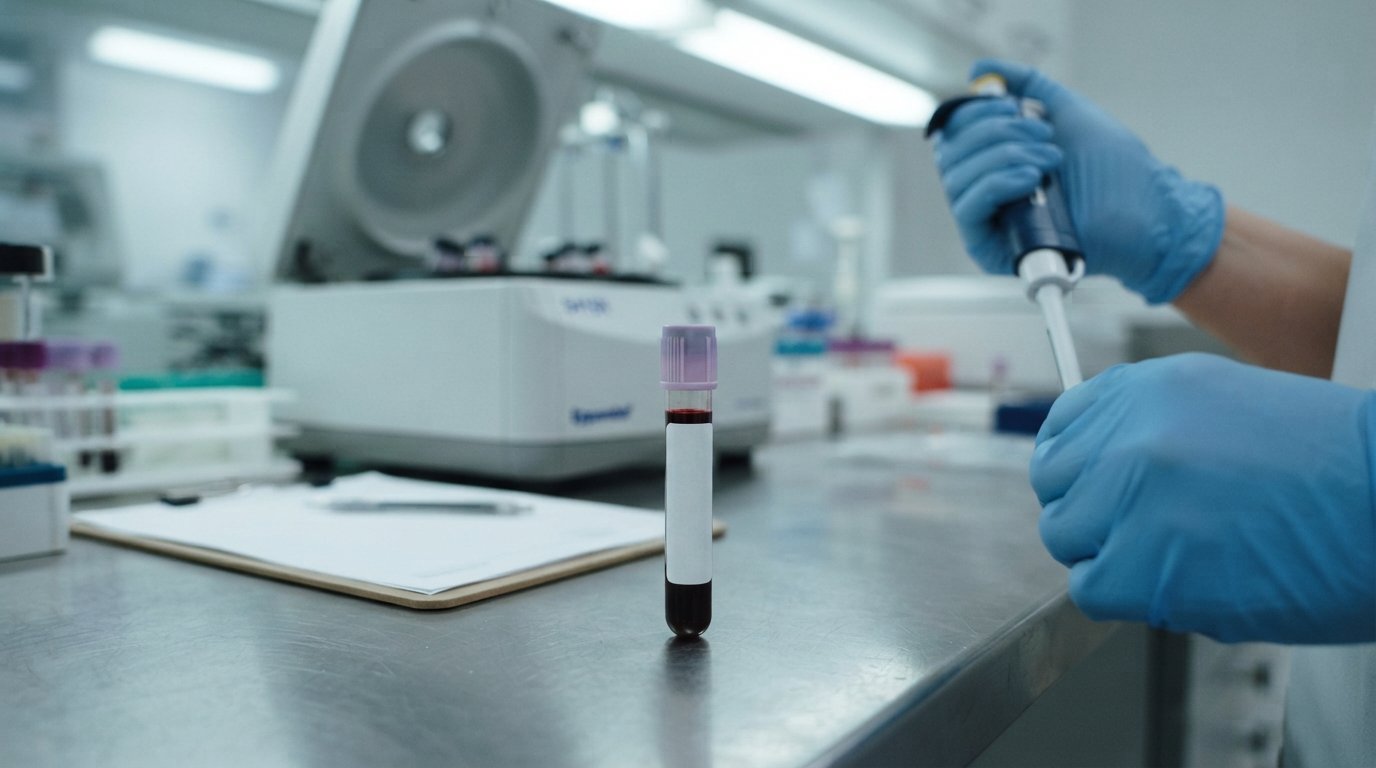
Most drivers picture a blood test as a single, clean measurement: a nurse draws blood, a machine prints a number, and that number is final. The reality is a chain of events, and every link in that chain can be challenged. The process typically begins with a traffic stop, an officer's suspicion of impairment, a request for a chemical test, and either a voluntary submission or a forced draw under implied consent laws. From the moment the needle goes in, the sample becomes evidence, and evidence has rules.
After collection, the vial is labeled, sealed, stored, and transported to a laboratory. At the lab, a technician runs the sample through a testing method such as headspace gas chromatography or an enzymatic assay. Each of those steps involves human decisions: which vial was used, whether a preservative and anticoagulant were present, how long the sample sat before refrigeration, whether the seal stayed intact, and how the instrument was calibrated that day. A result of 0.09 produced by a sloppy process is not the same as a result of 0.09 produced by a clean one.
This matters because DUI prosecutions rest on the reliability of the number, not just its existence. Defense attorneys routinely examine the blood draw kit, the chain of custody form, the lab's standard operating procedures, and the technician's certifications. If any of those elements are missing or contradictory, the weight of the result can drop sharply. For a broader look at how charge levels interact with evidence in one state, our guide on Alabama DUI felony or misdemeanor explains how the same blood alcohol number can trigger very different consequences depending on the surrounding facts.
What the Number Actually Tells You (And What It Does Not)
The most common threshold in the United States is 0.08 percent blood alcohol concentration for adult drivers, with lower limits for commercial drivers and drivers under 21. A result at or above that threshold usually supports a per se DUI charge, meaning the prosecution does not have to prove you felt drunk, only that your blood alcohol was over the limit while you were driving. A result below the threshold does not automatically end the case, because prosecutors can still pursue an impaired driving theory based on officer observations, field sobriety tests, and dash camera footage.
What the number does not tell you is whether the testing method was accurate for your specific sample. Blood alcohol concentration can be affected by collection technique, the use of an alcohol swab before the needle, fermentation in a poorly preserved sample, and even the lab's choice of testing protocol. Some labs report a measurement with a margin of error, and a result of 0.081 sits very differently than a result of 0.15 when that margin is applied. A skilled attorney will look at the reported value, the lab's uncertainty range, and the chain of custody together before deciding how to attack or negotiate.
There is also the question of rising versus falling alcohol. In some cases, a driver's blood alcohol was still climbing when the sample was taken, which can matter if the prosecution must prove the level at the time of driving rather than at the time of testing. The difference of a few minutes can move a case from above the limit to below it. These are not loopholes; they are legitimate scientific and legal issues that courts have recognized for decades.
Common Weak Points in Blood Test Evidence
Because blood evidence passes through so many hands, it offers more potential challenges than a breath test. Defense lawyers tend to focus on a handful of recurring problem areas, and knowing them helps you evaluate whether your own case has room to maneuver.
- Chain of custody gaps: Missing signatures, unsealed vials, or unexplained time gaps between collection and testing can undermine the prosecution's ability to prove the sample is yours and unaltered.
- Collection errors: Using an alcohol-based swab, drawing from a non-sterile site, or failing to invert the vial properly can introduce contamination or clotting that skews results.
- Storage and transport problems: Samples that sit warm for too long or freeze improperly can ferment, artificially raising the measured alcohol level.
- Lab procedure and calibration issues: Outdated calibration records, untrained technicians, or deviations from written protocols create openings for a reliability challenge.
- Margin of error and rounding: A result of 0.079 rounded up to 0.08, or a value inside the lab's uncertainty range, can be argued as insufficient to prove a per se violation.
Each of these issues is fact-specific. A chain of custody problem that sinks one case may be harmless in another because the defense must show that the gap actually affected reliability. That is why blanket advice about blood tests is unreliable, and why an individualized review of the lab packet and police report is the only way to know what you are facing.
Your Options After You See the Result
Once you have the lab report in hand, the next step is deciding how to respond. The right path depends on the strength of the evidence, the jurisdiction, your prior record, and what you want to protect, such as a commercial driver's license or a professional license. In general, defendants and their attorneys weigh a small set of options.
- Challenge the stop or the draw: If the officer lacked reasonable suspicion for the traffic stop or probable cause for the arrest, or if the blood draw violated consent rules, suppression may remove the result entirely.
- Challenge the science: A defense expert can attack the lab's methods, calibration, or handling, sometimes reducing the weight of the result enough to support a plea to a lesser charge.
- Negotiate a reduction: Where the evidence is strong but the facts are sympathetic, prosecutors may agree to a reduced charge, a diversion program, or a plea that avoids mandatory minimums.
- Go to trial: If the result is borderline or the procedure was flawed, trial may be the best route to an acquittal or a hung jury.
Timing matters enormously. Many jurisdictions impose short deadlines for filing suppression motions and for requesting the lab records you need to build a challenge. Waiting until the first court date to start gathering documents can cost you the ability to raise issues that were available earlier. A defense attorney who handles DUI cases regularly will know the local rules, the local labs, and the local prosecutors, which can shape strategy in ways that generic advice cannot.
How Blood Results Affect Charges, Penalties, and Pleas
The same blood alcohol number can lead to very different outcomes depending on the state, the driver's age, the driver's license class, and whether anyone was injured. A first offense at 0.09 in one county may resolve with a fine, a short license suspension, and an education program. A second offense at 0.19 in the same county may carry jail exposure, an ignition interlock requirement, and a much longer suspension. Elevated results, sometimes called aggravated DUI, often trigger enhanced penalties that a lower result would not.
Because the stakes scale with the number, the value of challenging a blood result also scales. Shaving a reported 0.11 down to a value inside the lab's margin of error, or excluding the test entirely on a chain of custody issue, can move a case from mandatory jail to a probationary disposition. That is why the lab report is not just a fact to accept; it is a document to interrogate.
If you are also dealing with related civil or administrative consequences, such as an insurance claim or a license hearing, the blood result may surface in those proceedings too. An experienced attorney can coordinate the criminal defense strategy with the administrative and civil sides so that statements or admissions in one forum do not damage your position in another. For readers who want to understand how a free case evaluation works before retaining counsel, FreeLegalCaseReview offers a confidential way to connect with attorneys who handle DUI and related matters.
Questions to Ask Before You Decide Anything
You do not need a law degree to ask useful questions about your blood test. You need a short list that forces the important issues into the open. The next time you speak with an attorney or review your file, work through these prompts and write down the answers.
- When and where was the sample collected, and who drew it?
- What preservative and anticoagulant were in the vial, and was the vial within its expiration date?
- How long was the sample stored, at what temperature, and who had access to it?
- What testing method was used, and what is the lab's stated margin of error for that method?
- Was the instrument calibrated and maintained according to the manufacturer's requirements?
- What are the deadlines for filing motions or requesting discovery in my jurisdiction?
Answers to those questions often reveal whether you have a technical challenge, a negotiation opportunity, or a case that needs to be resolved quickly to limit collateral damage. They also give you a realistic sense of cost and timeline, which matters when you are deciding how much to invest in fighting the charge.
Why Legal Guidance Beats Guesswork
DUI blood test results sit at the intersection of chemistry, procedure, and criminal law. A result that looks devastating on its face may be vulnerable, and a result that looks minor may still support a conviction under an impairment theory. The only way to know which situation you are in is to have someone review the actual documents: the police report, the blood draw kit records, the chain of custody form, the lab's procedures, and the calibration logs. That review is not something a generic internet search can perform for you.
LegalCaseReview is an educational resource and attorney matching platform, not a law firm, and the information here is not legal advice. What the platform does offer is a free, confidential case evaluation and a patented selection process that helps individuals find qualified attorneys in their area, including DUI defense and related practice areas. If you are facing charges and want to understand your options before a court date forces the issue, starting with a no-obligation review is a practical first step. It costs nothing to ask, and the answers you get may change how you approach the entire case.