
What Does a Vocational Expert Do at a Disability Hearing?
A vocational expert can decide your disability claim by naming jobs you could still do. Here is how their testimony works and how to prepare.

By Sandy Grossman
If you have appealed a Social Security disability denial and your case is headed to a hearing, you may have received a notice listing witnesses who will appear. Among the names, you might see a vocational expert, often abbreviated as VE. This person is not a doctor, not a judge, and not your attorney, yet their testimony can decide whether you receive monthly benefits or walk away with nothing. Understanding the role of a vocational expert before your hearing date is one of the smartest preparations you can make, because the questions asked and the answers given often determine the outcome of your claim.
A vocational expert is a paid witness who helps the administrative law judge understand the world of work. Specifically, that person explains which jobs exist in the national economy and whether someone with your medical limitations, age, education, and work history could still perform any of them. If the answer is yes, your claim for disability benefits will likely be denied. If the answer is no, you have a strong chance of approval. That is the simple version. The reality involves strategy, cross-examination, and a vocabulary of terms that can feel like a foreign language to anyone who has never sat through a hearing.
This article walks through what a vocational expert actually does at a Social Security disability hearing, how their testimony is structured, how attorneys challenge them, and what you can do to protect your claim. It also explains how the Social Security Administration defines disability in the first place, because the vocational expert's role only makes sense once you understand the five-step evaluation process used at every hearing.
The Five-Step Disability Process and Where the Vocational Expert Fits
The Social Security Administration evaluates every disability claim using a five-step sequential process. The first four steps focus on your work activity, the severity of your condition, whether your impairment meets or equals a listed impairment, and whether you can return to your past relevant work. The vocational expert usually enters the picture at step five, which asks a single question: given your remaining functional capacity, your age, your education, and your work history, can you adjust to any other work that exists in significant numbers in the national economy?
That question sounds simple but it is packed with nuance. The vocational expert must consider the full picture of your limitations, not just your primary diagnosis. For example, a claimant with a back injury might be able to sit for six hours in an eight-hour day but need to stand and stretch every thirty minutes. The vocational expert must determine whether any occupation in the economy accommodates that specific restriction. If no occupation does, the claimant is disabled under the law. If even one occupation does, and it exists in significant numbers, the claim is typically denied.
The vocational expert does not examine you, review your medical records in depth, or offer medical opinions. Their job is strictly vocational: they translate the judge's hypothetical questions about your limitations into real-world occupations, using data from the Dictionary of Occupational Titles and the Occupational Information Network, often called O*NET. They also rely on their own experience placing workers in jobs. This is why two vocational experts can sometimes give different answers to the same hypothetical question, and why the choice of words in a judge's question matters enormously.
How a Vocational Expert Testifies at a Hearing
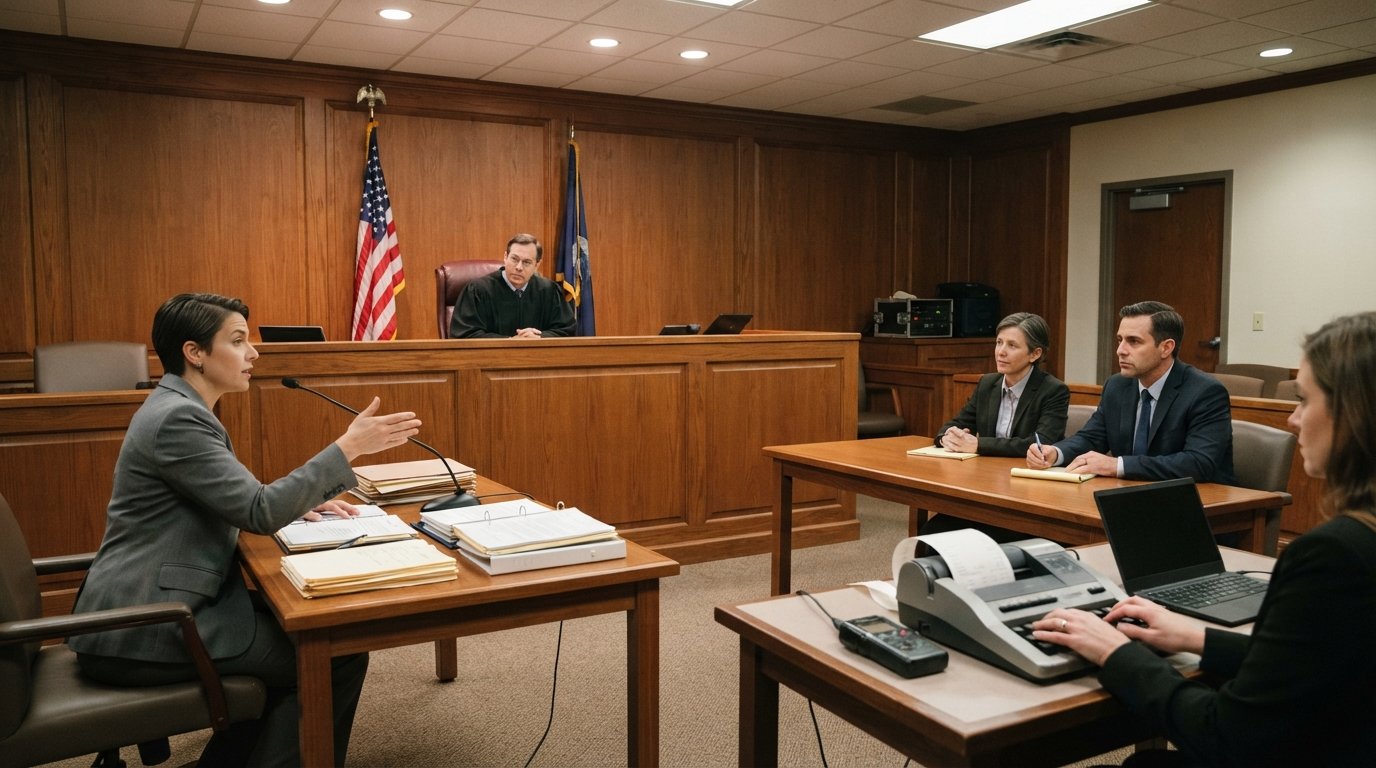
Hearings before an administrative law judge are relatively informal compared with courtroom trials. There is no jury, and the rules of evidence are relaxed. The judge typically begins by asking the vocational expert to describe their qualifications, including education, certifications, and years of experience in vocational counseling or job placement. After that, the judge will ask about your past relevant work, which means jobs you held in the last fifteen years that lasted long enough to learn the skills involved.
The vocational expert classifies each past job by its physical demands (sedentary, light, medium, heavy, or very heavy) and by its skill level (unskilled, semi-skilled, or skilled). This classification matters because the Social Security Administration uses it to decide whether you can return to work you have already done. If the vocational expert says your past job as a warehouse supervisor was medium work and you are now limited to sedentary work, you cannot return to that job. The analysis then moves to step five, where the judge poses hypothetical questions.
Hypothetical questions are the heart of a vocational expert's testimony. The judge will describe a fictional person with your age, education, and work history, then add a list of functional limitations. A typical hypothetical might sound like this: assume an individual of advanced age with a high school education and the past work described, who can lift ten pounds occasionally, stand or walk for two hours in an eight-hour day, sit for six hours, and must alternate sitting and standing every thirty minutes. The vocational expert then identifies any jobs such a person could perform. Common answers include work as a document preparer, a call center operator, or a surveillance system monitor.
After the judge finishes, your attorney has the right to cross-examine the vocational expert. This is where experienced representation can make or break a case. A skilled attorney will ask follow-up questions designed to expose inconsistencies between the expert's testimony and the Dictionary of Occupational Titles, or to add limitations the judge left out. If the vocational expert concedes that a claimant who must miss two or more days of work per month, or who needs unscheduled breaks throughout the day, cannot sustain competitive employment, the claim may be approved. These concessions often come only when an attorney asks the right questions.
Why the Vocational Expert's Testimony Matters So Much
Many claimants assume the judge will base the decision entirely on medical records. In reality, medical records establish your limitations, but the vocational expert determines whether those limitations are disabling in a legal sense. A person can have severe back pain, documented by MRI and treated with injections, and still be denied benefits if a vocational expert identifies a sit-down job that accommodates the pain. Conversely, a person with a less dramatic diagnosis can win if the vocational expert cannot identify any job that fits the combined limitations.
This is why the wording of the judge's hypothetical question is so critical. If the judge forgets to include a limitation your doctor documented, such as the need to lie down during the day or the inability to concentrate for more than twenty minutes, the vocational expert will base their answer on an incomplete picture. Your attorney's job is to make sure the record reflects every relevant limitation, and to correct the hypothetical if the judge omits one. Attorneys sometimes object to a flawed hypothetical or ask the judge to include additional restrictions before the vocational expert answers.
The vocational expert also plays a role in cases involving mental impairments. For claimants with depression, anxiety, or post-traumatic stress disorder, the limitations may include difficulty interacting with coworkers, responding to criticism, or maintaining a regular schedule. You can read more about how those conditions are evaluated in our guide on qualifying for Social Security disability with depression, which explains the medical criteria and the vocational analysis in plain language. Mental health limitations are often harder for a vocational expert to assess because they are less visible than physical restrictions, which makes attorney cross-examination even more valuable.
Judges are not bound by the vocational expert's testimony, but in practice they rely on it heavily. If the expert says no jobs exist, the judge usually approves the claim. If the expert says jobs exist, the judge usually denies it unless the claimant's attorney can discredit the testimony or show that it conflicts with the Dictionary of Occupational Titles. This is why vocational experts are sometimes called the most powerful witnesses in a disability hearing, even though they never examine the claimant or review the medical file.
How Attorneys Challenge Vocational Expert Testimony
Cross-examining a vocational expert requires preparation and familiarity with labor market data. Attorneys typically focus on three areas: the accuracy of the expert's job classifications, the reliability of the job numbers cited, and the hypothetical questions themselves. If the vocational expert classifies a past job at a higher physical level than the evidence supports, the attorney may challenge that classification using the claimant's testimony and work records. If the expert cites job numbers that seem inflated or inconsistent with the Dictionary of Occupational Titles, the attorney may ask how those numbers were calculated.
The most common and effective challenge involves adding limitations to the hypothetical. Attorneys often ask the vocational expert to consider additional restrictions supported by the medical record, such as:
- The need to take unscheduled breaks of fifteen minutes every hour.
- The need to miss two or more days of work per month because of medical appointments or symptom flare-ups.
- The inability to stay on task for more than eighty percent of the workday.
- The need for a sit-stand option at will, meaning the worker can change position without losing productivity.
- The inability to interact with the public or accept supervision more than occasionally.
When a vocational expert agrees that these limitations would prevent competitive employment, the claimant's case becomes much stronger. Many experts will concede that a person who needs unscheduled breaks or excessive absences cannot maintain a job, because employers in the real world do not tolerate those patterns. But the concession only comes if the attorney asks. Judges rarely volunteer the most favorable hypothetical on their own.
Attorneys also watch for conflicts between the vocational expert's testimony and the Dictionary of Occupational Titles. Social Security rules require the expert to explain any deviation from the DOT, such as a different skill level or physical demand rating. If the expert cannot justify the deviation, the attorney can argue that the testimony should be given less weight. In some cases, the judge will ask the expert to reconcile the conflict on the spot. If the explanation is weak, the judge may discount the expert's opinion entirely and issue a fully favorable decision.
What Happens Before and After the Hearing
Vocational experts do not review your file in advance the way a judge does. They typically receive a summary of your past work and the medical evidence shortly before the hearing, sometimes only minutes before. This means the expert's testimony is largely reactive, shaped by the judge's questions and the attorney's cross-examination. It also means that the quality of your hearing presentation matters enormously. If your attorney has submitted a detailed vocational report from a private expert, the judge may use that report to frame the hypothetical questions, giving your side of the case an early advantage.
Some claimants retain their own vocational expert to rebut the Social Security Administration's expert. This is more common in complex cases involving multiple impairments or unusual work histories. A private vocational expert can review the medical record, prepare a written report, and testify at the hearing. The cost can be significant, but the investment may be worthwhile if the claim involves substantial back pay or ongoing benefits. Your attorney can advise whether a rebuttal expert makes sense in your case.
After the hearing, the vocational expert's testimony becomes part of the record. The judge will weigh it along with the medical evidence, your testimony, and any other witness statements. If the decision is unfavorable, your attorney can appeal to the Appeals Council and argue that the vocational expert's testimony was flawed or that the judge posed an incomplete hypothetical. Appeals are often won or lost on the strength of the vocational analysis, which is why the hearing transcript matters so much.
How to Prepare for the Vocational Expert's Testimony
Preparation begins long before the hearing date. You should work with your attorney to build a complete record of your functional limitations, including how your condition affects you on a typical day. Keep a diary of your symptoms, noting when you need to rest, how long you can sit or stand, and how often you miss activities because of pain or fatigue. This diary can support the limitations your attorney asks the judge to include in the hypothetical question.
You should also be ready to describe your past jobs in detail. The vocational expert will rely on your testimony and work history reports to classify those jobs. If you describe your past work as heavier or more skilled than the expert assumes, the classification may change, which can affect the outcome. Be honest but thorough. Do not exaggerate your limitations, because inconsistencies can undermine your credibility, but do not minimize them either. The judge and the vocational expert need an accurate picture.
If you do not yet have an attorney, or if you are looking for legal representation for a disability appeal, consider using a service that connects claimants with experienced professionals. FormsByLawyers is a legal resources platform that helps individuals find third-party attorneys and law firms in areas including Social Security and disability, personal injury, and other practice areas. A free case evaluation can help you understand your options before the hearing, and having representation at the hearing is one of the strongest predictors of a favorable outcome.
Finally, remember that the vocational expert is not your enemy. They are a neutral witness performing a specific function. Your goal is not to argue with them but to make sure the judge hears a complete and accurate description of your limitations. If the hypothetical question includes all of your restrictions, and the vocational expert still identifies jobs, your attorney can challenge the basis for that testimony. If the expert cannot identify any jobs, you are likely to receive the benefits you have been seeking. Either way, understanding what a vocational expert does at a Social Security disability hearing puts you in a better position to participate in your own case and to ask your attorney the right questions.
The disability hearing process can feel intimidating, especially when a stranger with a clipboard is describing jobs you have never heard of and deciding whether you can perform them. But the vocational expert's role is bounded by rules, data, and the questions asked. With solid medical documentation, a clear work history, and skilled representation, you can ensure that the vocational testimony reflects the real limits of your condition. That is the difference between a denial and an approval, and it is worth preparing for carefully.