What if Both Drivers Are at Fault in Accident? Legal Guide
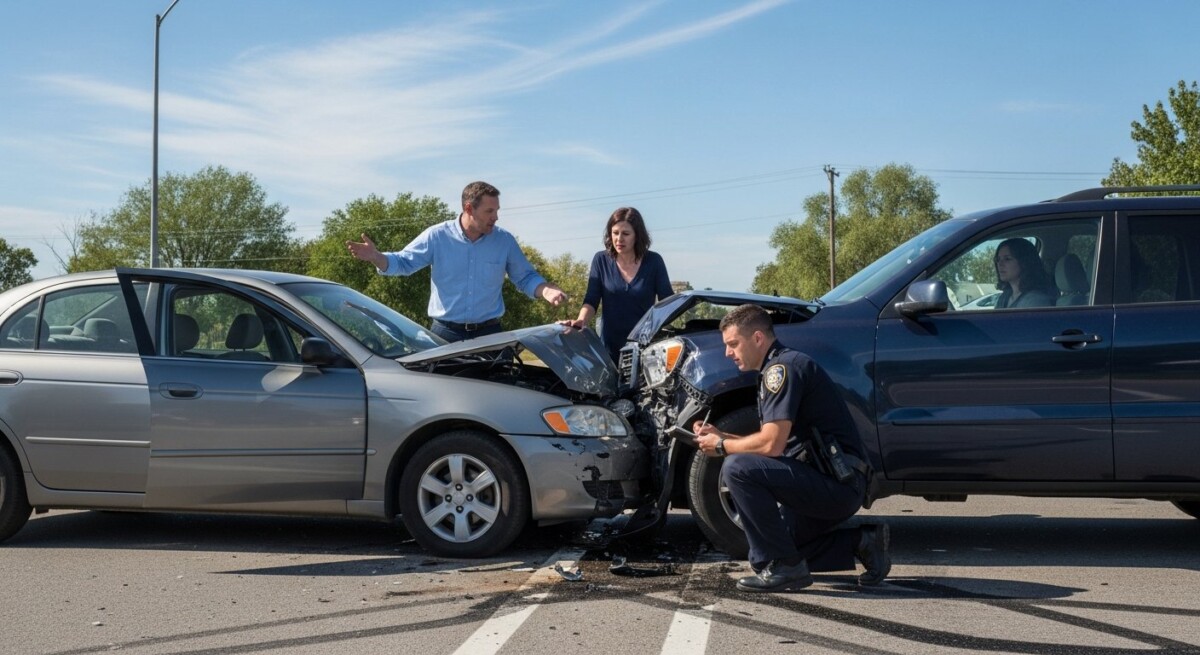
After a car crash, the first question is usually about fault. But what if both drivers are at fault in accident scenarios? It happens more often than you might think. A rear-end crash may seem clear cut, but what if the lead driver had brake lights out? A left-turn collision might look obvious, yet the other car could have been speeding. Shared fault changes everything about how your claim is handled, how much you can recover, and what happens in court.
This guide explains how comparative negligence works, what it means for your settlement, and how to protect your rights when the insurance company tries to shift blame onto you. If you are dealing with a disputed fault situation, a legal consultation can make a significant difference in the outcome. The attorneys at Legal Case Review specialize in helping injury victims navigate these complex claims.
Understanding Comparative Negligence Rules
Most states use one of two systems to handle accidents where both drivers share blame: pure comparative negligence or modified comparative negligence. Under pure comparative negligence, you can recover damages even if you are 99 percent at fault, though your award is reduced by your percentage of fault. Under modified comparative negligence, you can only recover if you are 50 percent or less at fault in most states, or 49 percent or less in a few others.
For example, if your total damages are $100,000 and you are found 30 percent at fault, you would receive $70,000 under both systems. But if you are 60 percent at fault, pure comparative states still award you $40,000, while modified comparative states give you nothing. This distinction is critical when evaluating whether to settle or fight a claim.
What About No-Fault States?
In no-fault states like Florida and New York, your own insurance pays for medical bills regardless of fault. However, serious injury claims can still go outside the no-fault system. In those cases, comparative negligence rules still apply to pain and suffering and other non-economic damages. For instance, in a serious injury claim in Florida, your degree of fault directly reduces your potential recovery.
Understanding your state’s specific rules is essential. An experienced local attorney can tell you exactly how your state treats shared fault and what it means for your case.
How Insurance Companies Determine Fault Percentage
Insurance adjusters use police reports, witness statements, photos, and state traffic laws to assign fault. They look for violations like running a red light, speeding, or improper lane changes. They also consider less obvious factors like weather conditions, vehicle maintenance, and whether either driver was distracted. The goal is to assign each driver a percentage of fault that reflects their contribution to the crash.
This process is not always fair. Insurers are businesses, and they want to minimize payouts. They often use questionable tactics to inflate your fault percentage, which directly reduces the amount they have to pay you. Common strategies include misinterpreting traffic laws, ignoring evidence that helps you, or pressuring you into giving a recorded statement that can be twisted against you.
You need to be careful with what you say after an accident. Avoid admitting fault, even saying “sorry” can be used against you. Stick to the facts when speaking with police and your insurance company, and consider consulting a lawyer before giving a formal statement.
Gathering Evidence to Minimize Your Fault
When fault is disputed, evidence is your best defense. The more evidence you have, the harder it is for the insurance company to inflate your fault percentage. Start by taking photos of the damage to both vehicles, the surrounding area, traffic signals, and any skid marks. Get the contact information of every witness and ask them what they saw.
Dashcam footage is becoming increasingly important in fault disputes. If you have a dashcam, preserve the footage immediately. If a nearby business or home has security cameras, ask for the footage before it is overwritten. Police body cameras and traffic cameras can also provide crucial evidence.
Here are key pieces of evidence that can help reduce your fault percentage:
- Vehicle damage patterns that show the exact point of impact and angle of collision.
- Electronic data from your car’s event data recorder, which can show speed, braking, and steering inputs.
- Phone records proving the other driver was texting or on a call at the time of the crash.
- Maintenance records showing your vehicle was in good condition and not a contributing factor.
After gathering this evidence, you should be ready to present a clear narrative of what happened. This narrative should align with the physical evidence and traffic laws. A skilled attorney can help you build this narrative and negotiate with the insurance company from a position of strength.
Negotiating a Settlement When Fault Is Shared
When both drivers are at fault, settlement negotiations become more complex. The insurance company will use your fault percentage as leverage to offer a lower amount. They might say your claim is worth $50,000, but because you are 40 percent at fault, they will only pay $30,000. You need to challenge both the total value and the fault percentage.
Your best approach is to independently evaluate your damages. Calculate all medical bills, lost wages, and future treatment costs. Add an amount for pain and suffering based on the severity of your injuries. Then, present a counter-offer that reflects a lower fault percentage and a higher total value. This is where the advice of a personal injury attorney becomes invaluable.
Legal Case Review can connect you with attorneys who have deep experience in accident legal representation. They know how to counter the adjuster’s arguments and push for a fair settlement. When the stakes are high, having an advocate who understands the nuances of comparative negligence can be the difference between a lowball offer and a fair recovery.
Filing a Lawsuit When Fault Is Contested
If settlement negotiations fail, your case may go to trial. In most personal injury cases, a jury determines fault percentages. Each side presents its evidence and witnesses, and the jury decides who is responsible and by how much. This process is unpredictable, which is why many cases settle before trial, but sometimes litigation is the only path to fair compensation.
Before filing a lawsuit, be aware of the statute of limitations in your state. This is a deadline for filing your claim, and missing it means losing your right to sue. The deadline varies by state and type of claim, but it is typically between one and three years from the date of the accident. An attorney can confirm the exact deadline for your situation.
Litigation also involves depositions, discovery, and potentially expert witnesses who can testify about accident reconstruction or the value of your injuries. This is a costly and time-consuming process, but it can be necessary if the insurance company refuses to make a reasonable offer. In our guide to vehicle accident defense, we explain how a strong legal strategy can protect your rights even in the most complex cases.
Special Rules for Multiple Vehicles and Commercial Drivers
When more than two vehicles are involved, the fault analysis becomes even more complicated. For example, if Driver A rear-ends Driver B, pushing them into Driver C, there may be multiple liability layers. Driver A might be primarily at fault for the initial impact, but Driver B could be at fault for following too closely. Insurance companies will analyze each collision separately and assign percentages accordingly.
Commercial truck accidents add another layer of complexity. The truck driver may share fault, but the trucking company can also be liable if they violated safety regulations, failed to maintain the vehicle, or pressured the driver to exceed legal driving hours. In these cases, you may need to pursue claims against multiple parties to recover your full damages.
States like Florida have specific rules and protections for accident victims, and our resources on vehicle accident claims in Florida can help you understand the local landscape. Whether you are dealing with a simple two-car collision or a multi-vehicle pileup, consulting with a knowledgeable attorney is the safest path forward.
Frequently Asked Questions
What happens if I am 50% at fault in a car accident?
In most modified comparative negligence states, you can still recover damages if you are 50 percent at fault, but your recovery is reduced by half. In a few states like Colorado, the threshold is 50 percent, meaning you can recover if you are 49 percent or less at fault. In pure comparative states like California, you can recover even if you are 99 percent at fault.
Does my insurance premium go up if I am partially at fault?
Yes, it likely will. Insurance companies view you as a higher risk after any at-fault accident, even if you were only 10 percent responsible. The exact increase depends on your insurer, your driving history, and the severity of the accident. Some insurers offer accident forgiveness programs that prevent a rate increase for the first accident.
Can I sue the other driver if I was partially at fault?
Yes, you can, but your recovery will be reduced by your percentage of fault. If you are 30 percent at fault and the other driver is 70 percent at fault, you can sue them for your damages, but you will only collect 70 percent of what a jury awards you.
How long do I have to file a claim if both drivers are at fault?
The statute of limitations varies by state. In most states, you have between one and three years from the date of the accident to file a personal injury lawsuit. If you are filing a claim against a government entity, the deadline is often much shorter, sometimes as little as six months.
What if the other driver doesn’t have insurance?
If the other driver is uninsured or underinsured, your own uninsured/underinsured motorist coverage may pay for your damages. This coverage protects you when the at-fault driver lacks adequate insurance. You should check your policy to confirm your coverage limits.
Protecting Your Rights After a Shared-Fault Accident
Being involved in an accident where you share fault can feel overwhelming, but you still have rights and options. The most important steps are to seek medical care immediately, document everything about the accident, and avoid speaking with the other driver’s insurance company without legal advice. If you are contacted by an adjuster, refer them to your attorney.
Remember that the insurance company is not on your side. Their goal is to pay you as little as possible. You need someone who is solely focused on your interests. At Legal Case Review, we connect you with experienced attorneys who understand how to handle these nuanced cases. They can help you gather evidence, negotiate with insurers, and if necessary, take your case to trial. Do not wait, your time to act may be limited. Contact us today to get the legal support you need.