Who Is Liable in a Multi Car Accident? Fault Rules
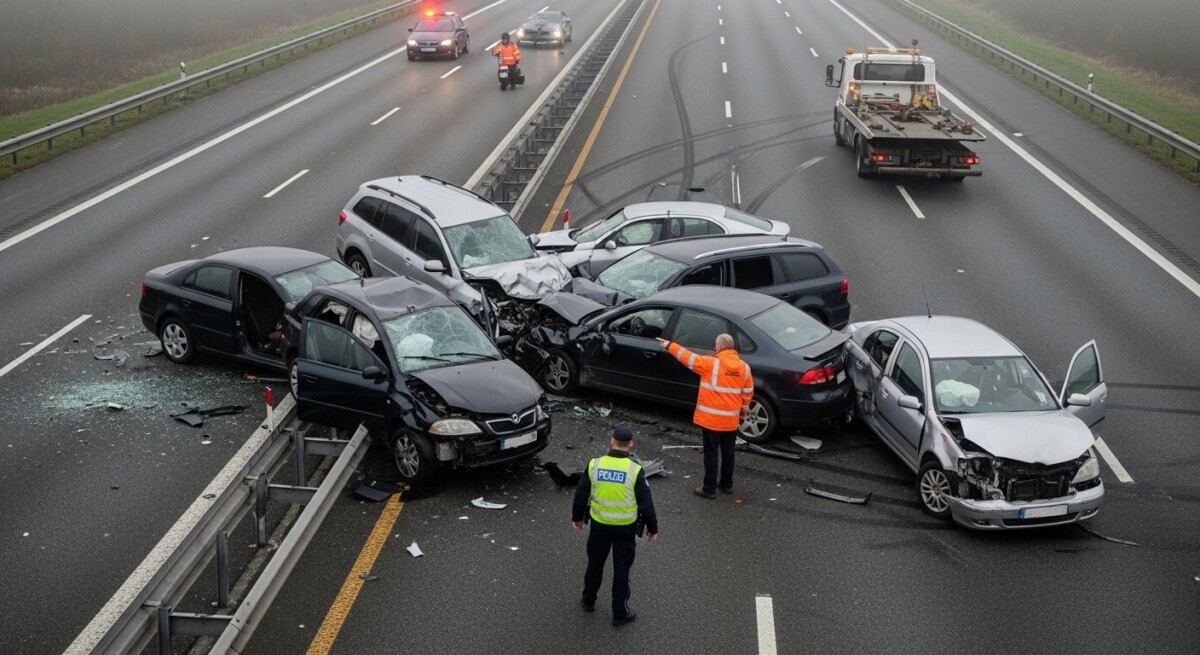
Multi car accidents, often called chain reaction or pileup collisions, create a web of legal and financial complications. When three, five, or even twenty vehicles are involved, determining who is liable in a multi car accident becomes a complex puzzle. Unlike a simple two car collision where fault is often clear, a pileup can involve multiple drivers who each contributed to the crash in different ways. If you have been injured in one of these events, understanding how liability works is the first step toward protecting your right to compensation. This article explains the legal principles that govern fault in multi vehicle crashes, how insurance companies investigate them, and what you can do to strengthen your claim.
In most states, liability in a multi car accident is not a single, all or nothing determination. Instead, fault is typically allocated among multiple drivers based on their degree of negligence. This system, known as comparative negligence, means that each party can bear a percentage of responsibility. For example, one driver may be 40% at fault for following too closely, while another is 60% at fault for an unsafe lane change. Your financial recovery is then reduced by your own percentage of fault. Because of this, a thorough investigation is critical to minimize your share of liability and maximize your settlement.
The Chain Reaction Problem: Who Started It vs. Who Made It Worse
The central difficulty in a multi car accident is separating the initial cause from the subsequent collisions. The driver who triggered the first crash may not be the only party responsible for your injuries. Imagine a scenario where Car A rear ends Car B, and then Car C plows into Car B from behind. Car A caused the initial impact, but Car C may have failed to maintain a safe following distance, making Car C liable for the second impact that caused additional injuries. In legal terms, each collision in the chain can be treated as a separate event, with its own set of liable parties.
Insurance adjusters and accident reconstruction experts will examine the physical evidence, including skid marks, vehicle damage patterns, and data from event data recorders (black boxes). They will also review witness statements and police reports. The goal is to determine the sequence of events and identify every negligent action that contributed to the crash. This process can take weeks or even months, especially in severe pileups involving multiple injuries and extensive property damage.
The law generally holds that a driver who had a clear opportunity to avoid a collision but failed to do so may bear liability. For instance, if Car C had time to brake but was distracted by a phone, Car C could be found negligent for failing to avoid the rear end collision. On the other hand, if Car C had less than a second to react, their liability may be reduced or eliminated. This is why detailed evidence is so important in these cases.
Common Causes and How They Affect Liability
Multi car accidents often share common causes, and each cause points to a specific type of negligence. Understanding these can help you identify which parties may be at fault in your case. Here are the most frequent causes and their typical liability implications:
- Rear end collisions: The driver in the rear is almost always presumed negligent, as they have a duty to maintain a safe following distance.
- Sudden lane changes: The driver who cuts off another vehicle without signaling or checking blind spots is typically at fault.
- Speeding or reckless driving: A driver exceeding the speed limit or weaving through traffic creates a foreseeable risk of a pileup.
- Weather related hazards: While weather is not a person, a driver who fails to slow down for rain, ice, or fog may be found negligent for not adjusting to conditions.
- Mechanical failures: If a vehicle’s brakes fail due to poor maintenance, the driver or the repair shop may be liable.
In some cases, a government entity may share liability if a poorly designed roadway, missing traffic signal, or lack of proper signage contributed to the accident. However, claims against public agencies are subject to strict notice requirements and limited time windows, so you should consult an attorney quickly if this is a possibility.
Another layer of complexity is the role of commercial vehicles. If a tractor trailer or delivery truck is involved, the trucking company, the driver, and even the vehicle manufacturer could be potential defendants. Federal regulations require truck drivers to follow hours of service rules, and violations can create a presumption of negligence. In our guide on average compensation for a car accident in Detroit, we explain how commercial involvement can influence settlement values.
How Comparative Negligence Works in Practice
Most states use a version of comparative negligence to allocate fault in multi vehicle accidents. There are two main types: pure comparative negligence and modified comparative negligence. In pure comparative states, you can recover damages even if you are 99% at fault, though your award is reduced by your percentage of fault. In modified comparative states, you are barred from recovery if you are 50% or more at fault (some states use a 51% threshold).
For example, suppose you are stopped at a red light and a car rear ends you, pushing you into the vehicle ahead. The police may find that the rear driver is 80% at fault, but they might also say you are 20% at fault for stopping too close to the car in front. If your total damages are $100,000, your recovery would be reduced to $80,000. This is why even a small percentage of fault can significantly reduce your compensation.
Insurance companies are known to aggressively shift blame to minimize their payouts. They may argue that you contributed to the accident by following too closely, braking suddenly, or failing to take evasive action. To protect your claim, you need an experienced attorney who can counter these arguments with evidence and expert testimony. A lawyer can also negotiate with multiple insurers, which is essential in a multi car accident where several policies may be involved.
Insurance Coverage in Multi Car Pileups
Liability in a multi car accident also depends on the insurance coverage available. Each driver’s policy provides a limit of liability, and in a pileup, the total damages may exceed those limits. For example, if the at fault driver has a policy limit of $50,000, but your medical bills alone are $75,000, you may need to pursue claims against other drivers who share fault, or rely on your own uninsured/underinsured motorist (UM/UIM) coverage.
UM/UIM coverage is crucial in multi car accidents because it can step in when the at fault driver lacks adequate insurance. Some states require UM/UIM, while others offer it as optional coverage. If you have this coverage, your own insurer may pay for damages that exceed the at fault driver’s policy limits. However, your insurer will likely try to reduce their payout by arguing that you were partially at fault, so you must be prepared to fight for your rights.
In cases involving multiple at fault drivers, each insurer may attempt to point the finger at the others to avoid paying. This can lead to delays and lowball settlement offers. An attorney can coordinate with all insurers, file claims on your behalf, and if necessary, file a lawsuit against all negligent parties. This approach ensures that you have the best chance of recovering the full compensation you deserve.
Steps to Take Immediately After a Multi Car Accident
What you do in the immediate aftermath of a pileup can have a lasting impact on your claim. Here are the critical steps to protect your health and your legal rights:
- Seek medical attention right away, even if you feel fine, as some injuries like whiplash or internal bleeding may not appear for days.
- Call the police and ensure a formal accident report is filed, as this report will be a key piece of evidence.
- Exchange contact and insurance information with all drivers involved, and get contact details from witnesses.
- Take photos of the scene, including all vehicles, license plates, and any skid marks or debris.
- Do not admit fault or apologize, as these statements can be used against you later.
- Report the accident to your insurance company, but do not provide a recorded statement without consulting an attorney.
Following these steps can help preserve evidence and prevent you from making mistakes that could hurt your case. After you have received medical treatment, you should promptly consult with a lawyer who specializes in multi vehicle accidents. They can handle communication with insurers and begin an independent investigation to establish liability.
The importance of legal representation cannot be overstated. In a multi car accident, you are often dealing with multiple insurance companies, each with their own adjusters and lawyers. A skilled attorney levels the playing field and works to maximize your settlement. They can also help you understand the true value of your claim, which includes not only medical bills and lost wages, but also pain and suffering, and future care costs. For more insight on how settlements are calculated, see our article on average settlement for non-injury car accidents.
When to Hire a Lawyer and What to Expect
You should consider hiring an attorney as soon as possible after a multi car accident, especially if you have suffered injuries or if the accident involves multiple vehicles. A lawyer can conduct a thorough investigation, hire accident reconstruction experts, and negotiate with insurers on your behalf. They can also file a lawsuit if a fair settlement cannot be reached. Most personal injury attorneys work on a contingency fee basis, meaning they only get paid if you win, so there is no upfront cost.
During your initial consultation, the lawyer will review the facts of your case, assess the potential liability of each party, and give you an honest evaluation of your claim. They will also explain the legal process, including the statute of limitations, which is the deadline for filing a lawsuit. Missing this deadline can bar your claim entirely, so it is critical to act quickly. If you are in Chicago, you can refer to our list of best car accident attorneys in Chicago for top rated legal representation.
In addition to proving liability, your lawyer will document your damages thoroughly. This includes gathering medical records, obtaining wage verification, and consulting with doctors about your long term prognosis. They will also consider the emotional toll of the accident, such as anxiety or post traumatic stress disorder, which can be part of your non economic damages. The goal is to build a compelling case that reflects the full extent of your losses.
The Role of Accident Reconstruction Experts
In complex multi car accidents, accident reconstruction experts are often essential. These professionals use physics, engineering principles, and computer simulations to recreate the crash sequence. They analyze vehicle damage, tire marks, and debris patterns to determine the speed and position of each vehicle at impact. Their findings can be presented in court to support your version of events.
Experts can also challenge the claims of other drivers or insurance companies. For example, if another driver claims you suddenly braked for no reason, an expert can show that you had a legitimate reason to slow down based on traffic conditions. This kind of evidence can be the difference between winning and losing your case. Your attorney will know when to bring in such experts and how to use their testimony effectively.
It is worth noting that accident reconstruction is not always necessary. In simpler cases where fault is clear, such as a rear end collision at a stop light, the evidence may be straightforward. However, in a pileup involving multiple impacts, an expert can unravel the sequence of events and help the jury understand who is responsible for each injury. This is why hiring a lawyer with access to these resources is so important.
Frequently Asked Questions
Can I be held liable even if my car was pushed into another vehicle?
Yes, you can be held partially liable if you contributed to the accident, such as by following too closely. However, if your car was pushed into the vehicle ahead by a rear end collision, you may not bear any fault. The key is whether you had time to react and maintain a safe gap. An attorney can help prove that you were not negligent.
What if the at fault driver has no insurance?
If the at fault driver is uninsured, your own uninsured motorist (UM) coverage can pay for your damages. In some states, you may also have coverage through your health insurance or personal injury protection (PIP). A lawyer can help you navigate these options and ensure you receive the maximum available compensation.
How long do I have to file a lawsuit after a multi car accident?
The statute of limitations varies by state, but it is typically two years from the date of the accident. However, there are exceptions, such as if the at fault party is a government entity, in which case the deadline may be much shorter. Consult an attorney immediately to avoid missing the deadline.
Will my insurance rates go up if I am not at fault?
Not necessarily. Many states prohibit insurers from raising rates for not at fault accidents. However, if you are found partially at fault, your rates may increase. It is best to have an attorney negotiate to minimize your fault percentage, which can protect your insurance premiums.
Understanding Your Claim’s Value
The value of your claim in a multi car accident depends on the severity of your injuries, the extent of property damage, and the degree of fault assigned to you. Economic damages include medical expenses, lost income, and future earning capacity. Non economic damages cover pain and suffering, loss of enjoyment of life, and emotional distress. In cases of gross negligence or intentional misconduct, punitive damages may also be awarded, though they are rare in auto accidents.
Insurance companies often use computer algorithms and historical data to calculate settlement offers, which are frequently lower than what your claim is worth. This is why it is crucial to have independent representation. An attorney can present your case in a way that highlights the full impact of the accident on your life, which can lead to a higher settlement. For instance, if you have suffered a severe spinal injury, you may require lifelong medical care, and your claim should reflect that. Our article on best car accident lawyer for spinal injuries in Los Angeles offers insights into how such claims are handled.
Additionally, multiple at fault parties can mean multiple insurance policies are available to pay your claim. This can increase your total recovery, but it also complicates the process. Your lawyer will know how to allocate damages among the defendants and their insurers to maximize your payout.
Dealing with the aftermath of a multi car accident is overwhelming, but you do not have to face it alone. LegalCaseReview connects you with experienced attorneys who understand the complexities of pileup cases. Our patented selection process matches you with top rated lawyers in your area, and you can get a free case evaluation. With the right legal team, you can focus on your recovery while they fight for the compensation you deserve.
Remember, liability in a multi car accident is not always obvious. Even if you feel you were not at fault, insurance companies may try to shift blame. By taking the right steps and seeking professional legal advice, you can protect your rights and secure the financial support you need to move forward.