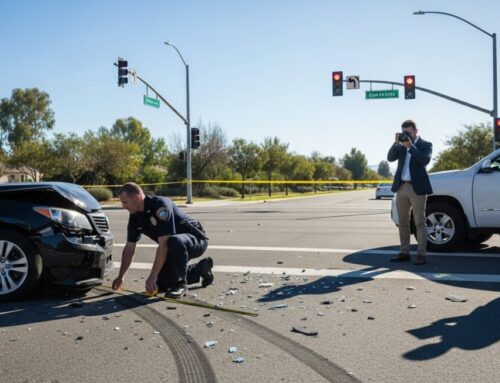
50% At Fault Accident: What Happens Next

Imagine this: you are stopped at a four-way stop, and another driver rolls through their stop sign. You both enter the intersection at the same time, and the collision is unavoidable. The police arrive, take statements, and the insurance companies start investigating. A few weeks later, you receive a letter that changes everything: the insurer has determined that you are 50% at fault for the accident. What does that mean for your claim, your medical bills, and your ability to recover damages? It is a common question, and the answer depends on the state you live in, the type of insurance you carry, and the specific facts of your case.
In this article, we will explain exactly what happens if you are 50% at fault accident, including how comparative negligence rules apply, what it means for your settlement, and the practical steps you should take to protect your rights. We will also look at real-world examples, the role of insurance adjusters, and when it makes sense to hire an attorney. By the end, you will have a clear roadmap for navigating this complex situation.
Understanding Fault in a Car Accident
Fault is not a simple binary. In the aftermath of a crash, insurance adjusters, police officers, and sometimes juries must allocate a percentage of blame to each party. This process is known as comparative negligence. It recognizes that multiple factors often contribute to a collision: one driver may have been speeding, while the other failed to signal a lane change. In many cases, both drivers bear some responsibility.
When an insurer determines that you are 50% at fault, it means that, in their estimation, you are equally responsible for the accident. This determination is not arbitrary. It is based on evidence such as police reports, witness statements, traffic camera footage, vehicle damage patterns, and the physical laws of motion. The adjuster weighs each factor and assigns a percentage. If you disagree with their assessment, you have the right to challenge it, but you will need to present compelling evidence.
Your ability to recover compensation after a 50% fault finding hinges on the legal doctrine your state follows. There are three main systems: contributory negligence, pure comparative negligence, and modified comparative negligence. Each has a different threshold for recovery, and knowing which one applies to you is the first step in evaluating your claim.
State Laws: Who Can Recover at 50% Fault?
The United States is divided into different legal frameworks for handling fault. The most common is modified comparative negligence, which is used by about 30 states. Under this system, you can recover damages as long as you are not more than 50% at fault. If you are exactly 50% at fault, you can still recover, but your compensation is reduced by your percentage of fault. This is good news: in a modified comparative negligence state, a 50% fault finding does not bar recovery. You are still eligible for damages, just halved.
However, there is a critical nuance. Some states, such as Colorado and Illinois, have a 50% threshold, meaning you can recover if you are 50% or less at fault. Other states, like New York and California, use a 51% threshold, which means you are barred from recovery only if you are more than 50% at fault. In practice, an exact 50% split usually allows recovery in most states, but the application can vary.
In contrast, a handful of states, including Alabama and Virginia, follow pure contributory negligence. This is the most restrictive system: if you are even 1% at fault, you cannot recover any damages from the other driver. In those states, a 50% fault finding would completely bar your claim. If you live in a contributory negligence state, your options are limited, and you should consult an attorney immediately to explore exceptions like the last clear chance doctrine.
Finally, a few states, such as Arizona and Alaska, use pure comparative negligence. This allows you to recover damages even if you are 99% at fault, though your recovery is reduced by your fault percentage. In a pure comparative state, a 50% fault finding means you can recover 50% of your total damages.
How a 50% Fault Finding Affects Your Settlement
When you are 50% at fault, your settlement is calculated by first determining the total value of your damages. This includes medical expenses, lost wages, property damage, and pain and suffering. Then, that total is multiplied by your percentage of fault, which is 50%. For example, if your total damages are $20,000, you would be eligible to receive $10,000 from the other driver’s insurance, assuming they are insured and the coverage is sufficient.
But there is a catch: the other driver’s insurance company is also adjusting their claim. They may argue that your damages are less than you claim, or that your percentage of fault should be higher. The negotiation process becomes a battle of percentages and valuations. Insurance adjusters are trained to minimize payouts, and a 50% fault finding gives them a strong bargaining position. They know that many claimants are frustrated and willing to accept a lower offer.
Here is a practical example. Suppose you are in a rear-end collision, but the other driver claims you stopped suddenly for no reason. The adjuster determines you are 50% at fault because you may have been distracted. Your medical bills total $15,000, lost wages are $3,000, and pain and suffering is valued at $7,000, for a total of $25,000. The at-fault driver’s insurer offers $12,500, which is half of $25,000. If you accept, you are responsible for the remaining $12,500, which may come out of your own pocket.
To protect your recovery, you need to gather strong evidence to challenge the 50% finding. This can include dashcam footage, witness statements, and accident reconstruction expert testimony. In our guide on warning signs your lawyer is not fighting for you, we explain how to ensure your legal representation is pushing back against unfair assessments.
The Role of Your Insurance Company
Your own insurance policy also plays a significant role. If you have collision coverage, your insurer may pay for your vehicle repairs regardless of fault, but they will then seek reimbursement from the other driver’s insurer through a process called subrogation. If you are 50% at fault, your insurer may only recover 50% of the repair costs, and you may be responsible for the deductible and the remaining half.
Additionally, if the other driver is uninsured or underinsured, you may need to rely on your uninsured/underinsured motorist (UM/UIM) coverage. This coverage can step in to pay your damages, but the same comparative negligence rules apply. If you are 50% at fault, your UM coverage will only pay 50% of your damages, subject to your policy limits.
It is also important to understand that insurance adjusters are not neutral. They work for the insurance company, and their goal is to protect the company’s bottom line. They may use tactics such as downplaying your injuries, questioning the medical treatment you received, or pushing you to accept a quick settlement. It is wise to be cautious when speaking with adjusters. You are not required to give a recorded statement without consulting an attorney, and you should never accept a settlement offer before fully understanding your damages and legal rights.
If you are dealing with a complex situation, such as an accident involving an autonomous vehicle, the fault analysis can become even more complicated. In our article on autonomous vehicle accident liability in 2026, we explore how technology changes the fault calculus and what it means for your claim.
What to Do Immediately After a 50% Fault Determination
If you receive a notice from an insurer stating that you are 50% at fault, do not panic. Instead, take these steps to protect your interests:
- Review the insurer’s reasoning: request a written explanation of how they calculated the 50% figure, including the evidence they used.
- Gather your own evidence: collect any dashcam footage, photos of the accident scene, witness contact information, and your own written account of the event.
- Seek medical attention: even if you feel fine, see a doctor to document your injuries. Delayed symptoms are common and can be linked to the accident.
- Consult an attorney: a personal injury lawyer can evaluate whether the 50% finding is fair and can negotiate on your behalf.
- Do not sign anything: avoid signing any settlement documents or releases until you have legal advice.
These steps are critical because they help you build a strong case to challenge the fault percentage or to maximize your recovery within the 50% framework. An attorney can also help you understand the long-term value of your claim, including future medical costs and lost earning capacity.
If you decide to hire an attorney, it is essential to choose the right one. Not all lawyers are equally effective. You need someone who is experienced in personal injury law and who has a track record of fighting for clients. Our guide on finding the best disability lawyer for your case offers insights that apply to any personal injury claim, including the importance of communication and case preparation.
Negotiating a Better Outcome
Even when you are 50% at fault, there is room to negotiate. The percentage is not set in stone; it is an opinion based on available evidence. If you can produce new evidence that shifts the balance, you may be able to reduce your fault percentage to 40% or even 25%. For example, if you discover that the other driver was texting at the time of the crash, that could change the adjuster’s analysis.
In addition to challenging the fault percentage, you can also argue for a higher total damage value. Many claimants undervalue their pain and suffering or fail to include all their medical expenses. An attorney can help you calculate a comprehensive damage amount that reflects the true impact of the accident on your life.
When negotiating, it is important to be patient. Insurance companies often make low initial offers, hoping that you will accept out of desperation. Do not rush. Present your evidence, explain why the 50% finding is incorrect, and be prepared to walk away if the offer is unreasonable. If negotiations fail, you may need to file a lawsuit, which can pressure the insurer to settle for a fair amount.
In some cases, alternative dispute resolution methods like mediation or arbitration can be effective. These processes allow both parties to present their arguments to a neutral third party, who can help facilitate a settlement. They are often faster and less expensive than a trial.
Frequently Asked Questions
Can I still get compensation if I am 50% at fault?
Yes, in most states that use comparative negligence, you can still recover damages. Your compensation is reduced by your percentage of fault. For example, if your damages are $10,000 and you are 50% at fault, you can receive $5,000. However, in contributory negligence states, you cannot recover anything.
What if the other driver’s insurance denies my claim?
If the other driver’s insurer denies your claim because they believe you are more than 50% at fault, you have options. You can file a claim with your own insurance company if you have collision or UM/UIM coverage. You can also hire an attorney to challenge the denial and potentially file a lawsuit.
How do I prove the other driver is more at fault?
To prove the other driver is more at fault, you need evidence. This includes police reports, witness statements, traffic camera footage, and accident reconstruction analysis. An attorney can help you gather and present this evidence effectively.
Should I hire a lawyer for a 50% fault accident?
It is highly recommended, especially if your damages are significant or if the insurance company is being difficult. A lawyer can negotiate on your behalf, challenge the fault percentage, and ensure you receive the maximum compensation allowed by law. In our article on pedestrian automatic braking accidents in the USA, we highlight how legal expertise is crucial in complex accident scenarios.
Final Thoughts
Being found 50% at fault for an accident can feel like a setback, but it does not mean your claim is over. Understanding your state’s comparative negligence rules, the insurance company’s tactics, and your legal options empowers you to make informed decisions. Whether you are negotiating with an adjuster or preparing for trial, the key is to present strong evidence and advocate for a fair outcome.
If you are facing a 50% fault determination, do not go through it alone. At LegalCaseReview, we connect you with experienced personal injury attorneys who can evaluate your case and fight for your rights. Our free consultation and case evaluation service helps you understand your options and the potential value of your claim. Visit our website to get a quick quote and speak with a qualified lawyer today.