Who Is at Fault in an Accident? How Insurers Decide
After a car crash, one of the most pressing questions is simple: who pays? The answer depends on how insurance companies determine fault, a process that is part investigation, part law, and part negotiation. Understanding this system is critical because the at-fault driver’s insurer typically covers medical bills, repairs, and lost wages. If you are wrongly blamed, you could face higher premiums or even out-of-pocket costs. This guide breaks down the exact methods insurers use to assign blame and what you can do to protect your claim.
Insurance adjusters do not guess. They follow a structured framework that relies on state laws, police reports, physical evidence, and witness statements. By learning how this framework works, you can gather the right evidence, avoid common mistakes, and strengthen your position when you file a claim.
The Role of Negligence in Fault Determination
Most auto accident claims are resolved under the legal concept of negligence. Negligence means that a driver failed to act with reasonable care, causing harm to another person. To prove negligence, an insurer must establish four elements: duty of care, breach of that duty, causation, and damages. For example, every driver has a duty to obey traffic signals. Running a red light is a breach. If that breach directly causes a collision and the other driver sustains injuries, the elements are satisfied.
However, fault is rarely 100 percent one-sided. Many accidents involve shared responsibility, which is why states use different systems to calculate payouts. In pure comparative fault states, like California, a driver can recover damages even if they are 99 percent at fault, though the payout is reduced by their percentage of blame. In modified comparative fault states, like Pennsylvania, a driver can only recover if they are less than 51 percent at fault. A few states, including Maryland and Alabama, use contributory negligence, which bars any recovery if the claimant is even 1 percent at fault. Knowing your state’s rule is the first step in predicting how an insurer will handle your case.
The Investigation: Evidence Insurers Review
Once a claim is filed, an adjuster begins a thorough investigation. The goal is not to determine absolute truth, but to assess legal liability based on available evidence. The process typically takes weeks, depending on the complexity of the crash. Adjusters prioritize several key sources of information.
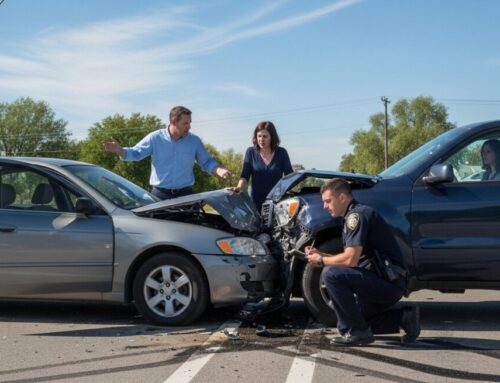
The police report is often the starting point. Officers note road conditions, vehicle positions, visible damage, and any citations issued. While the report is not binding, it carries significant weight because it is an unbiased third-party account. If an officer cites one driver for speeding or reckless driving, the insurer will likely use that as a foundation for fault. However, police reports can contain errors, so you should review yours carefully and file corrections if necessary.
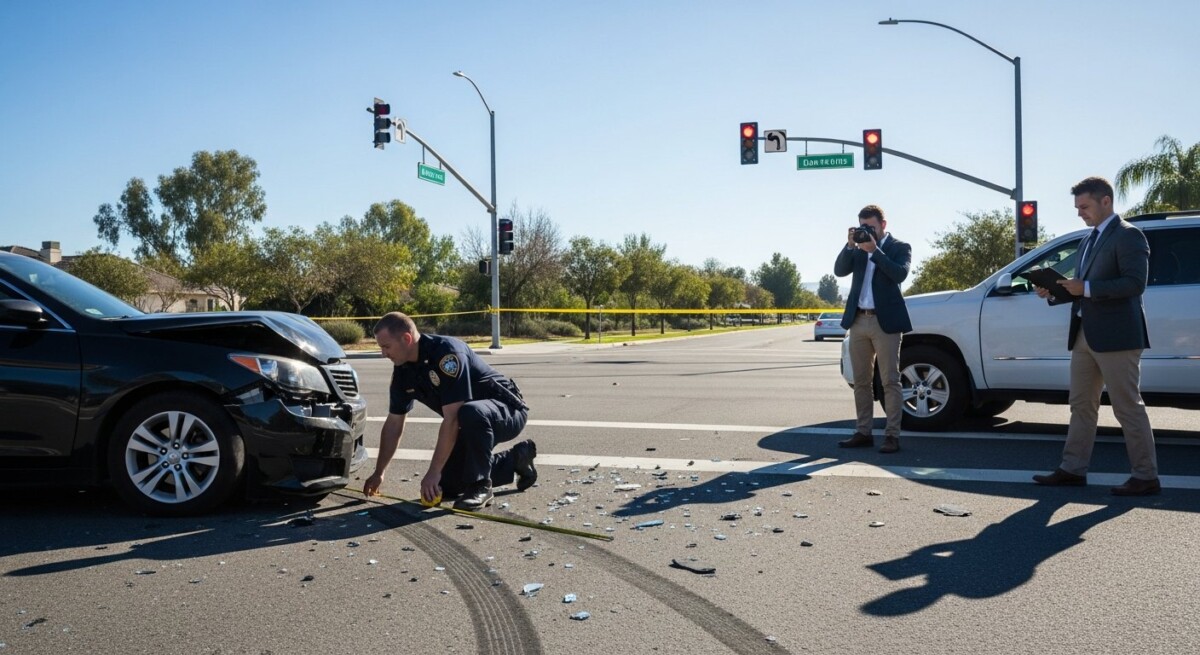
Physical evidence from the vehicles is equally important. The location and severity of damage, known as crush patterns, can tell a story. For instance, rear-end collisions are almost always the fault of the following driver because they have a duty to maintain a safe following distance. Side-impact crashes, also called T-bones, usually point to the driver who ran a stop sign or failed to yield. Adjusters also look at skid marks, debris fields, and airbag deployment to reconstruct the accident sequence.
Witness statements can tip the scale in close cases. Independent witnesses who have no stake in the outcome are highly credible. Insurers also review dashcam footage, traffic camera videos, and smartphone photos taken at the scene. In our guide on fatal car accident lawyer needs, we emphasize that preserving this evidence immediately is crucial, as video recordings are often overwritten within days.
How Comparative and Contributory Fault Affect Payouts
After gathering evidence, the adjuster assigns a percentage of fault to each driver. This percentage directly impacts the settlement amount. For example, if your total damages are $10,000 and you are found 20 percent at fault in a modified comparative state, you receive $8,000. In a pure comparative state, you would still receive $8,000. But in a contributory negligence state, you would receive nothing.
Insurers are not always objective in this calculation. They may inflate your percentage of fault to reduce their payout. This is a common negotiation tactic. For instance, in a lane-change accident, the adjuster might claim you were speeding or not checking your blind spot, even if the other driver crossed the line without signaling. To counter this, you need to present evidence that clearly documents the other driver’s actions.
Consider a scenario where you are rear-ended at a stoplight. The other driver claims you slammed on your brakes without warning. Your dashcam footage shows you stopped gradually. The adjuster will likely assign 100 percent fault to the rear driver. However, if you had a taillight out, the adjuster might assign you 10 percent fault, arguing that you contributed to the collision. This is why even minor vehicle defects can complicate your claim.
Steps to Strengthen Your Fault Claim
You do not have to passively accept an insurer’s verdict. There are proactive steps you can take immediately after an accident to protect your interests. These actions not only help your claim but also prevent the other party from distorting the facts.
- Call the police and request a written report, even for minor fender benders.
- Take photos of all vehicles from multiple angles, including close-ups of damage and the surrounding intersection.
- Exchange insurance and contact information with the other driver, but avoid discussing fault at the scene.
- Seek medical attention promptly, as delayed treatment can be used against you.
- Notify your own insurance company, but stick to the facts and do not speculate.
Each of these steps creates a paper trail that adjusters trust. A police report and medical records are objective. Photos provide a timestamped visual record. If you fail to call the police, the other driver could later submit a fabricated story without any independent verification. If you delay medical care, the insurer may argue your injuries are minor or pre-existing.
Another critical factor is your insurance policy itself. If you have collision coverage, your own insurer may pay for repairs and then seek reimbursement from the other driver’s insurer through a process called subrogation. This can speed up your repair timeline, but it does not resolve who is at fault for your injuries. For serious injuries, you should consult an attorney. A lawyer can conduct an independent investigation, interview witnesses, and negotiate with the adjuster on your behalf. This is particularly important in cases involving commercial vehicles, where multiple insurance policies and higher limits are at stake.
Challenging an Unfair Fault Determination
If you believe the insurer’s fault determination is wrong, you have options. The first step is to contact the adjuster and provide additional evidence, such as a witness statement you located later or a diagram of the accident scene. You can also file a complaint with your state’s department of insurance. This agency regulates insurers and can investigate bad faith practices, though the process can take months.
Another route is to hire an independent accident reconstruction expert. These professionals analyze speed, impact angles, and vehicle dynamics to provide a scientific opinion on fault. While this costs money, it can be decisive in disputed liability cases. For example, if the other driver claims you ran a red light, an expert can use traffic light timing data to prove you had a green light.
When negotiations stall, a personal injury lawsuit may be necessary. The court process allows both sides to present evidence and cross-examine witnesses. However, most cases settle before trial. In fact, over 95 percent of personal injury cases settle out of court. Insurers prefer to avoid the uncertainty and legal fees of a trial. This means that a strong demand letter, supported by evidence, is often enough to secure a fair settlement.
If you are seeking compensation for severe injuries, you should review our article on top injury lawyer in WV selection, as similar criteria apply in most states. A skilled attorney knows how to value a claim, including future medical costs and pain and suffering, which are often overlooked by unrepresented victims.
Special Cases: Commercial and Multi-Vehicle Accidents
Fault determination becomes more complex when commercial vehicles or multiple cars are involved. In multi-vehicle pileups, adjusters must trace the chain of collisions to determine which impact caused which injury. This often requires reconstructing the sequence of events, which can be challenging if vehicles moved after impact.
Commercial vehicles, such as semi-trucks, involve additional legal layers. The driver, the trucking company, and the vehicle owner may all be separate parties. Federal regulations also apply, including hours-of-service rules that limit driving time. If a trucker violated these rules, the company may be directly liable for negligence. In these cases, the evidence needed is not just from the accident scene but also from logbooks, GPS data, and maintenance records.
For those navigating a wrongful death claim after a fatal collision, the stakes are even higher. Our resource on best bankruptcy lawyers in Philadelphia is unrelated to car wrecks, but the principle of thorough vetting applies to legal representation. You need a lawyer who has handled complex liability cases and can secure expert testimony.
Frequently Asked Questions
What if both drivers are partially at fault?
In most states, the insurer will assign a percentage of fault to each driver. Your settlement is reduced by your percentage of fault. For example, if you are 30 percent at fault, you receive 70 percent of your damages. In pure comparative states, you can still recover even at 99 percent fault. In modified comparative states, you are barred from recovery if you are 51 percent or more at fault.
Does the police report determine fault?
No, the police report does not legally determine fault. It is evidence that insurers consider, but it is not binding. An adjuster can deviate from the officer’s opinion if other evidence, such as witness statements or video footage, contradicts it. You can also request the officer to correct factual errors in the report.
How long does an insurance investigation take?
A simple two-car accident with clear liability can be resolved in a few weeks. A complex case involving serious injuries, commercial vehicles, or disputed liability can take several months. The insurer has a duty to conduct a timely investigation, but they are allowed a reasonable period to gather evidence.
Should I give a recorded statement to the other driver’s insurer?
You are not legally required to give a recorded statement to the other driver’s insurance company. You must cooperate with your own insurer if you filed a claim under your policy. If asked for a statement by the other side, it is often wise to decline until you have consulted an attorney, as adjusters may use your words against you.
What if the at-fault driver has no insurance?
If you have uninsured motorist coverage, it will pay for your damages up to your policy limits. If you do not have this coverage, you may need to sue the driver personally, though collecting a judgment can be difficult if they lack assets.
Why Legal Representation Matters
Insurance companies are businesses, and their goal is to minimize payouts. They employ adjusters who are trained to find evidence of your fault, downplay your injuries, and offer quick, lowball settlements. An experienced personal injury attorney levels the playing field. Attorneys know the tactics insurers use and can counter with their own evidence and legal arguments.
When you hire a lawyer, they handle the entire negotiation process. They can also file a lawsuit if a fair settlement is not reached. This pressure often results in higher offers. According to studies, injured parties who hire attorneys receive settlements that are three to five times higher than those who negotiate alone.
If you are in a dispute over fault, do not settle early. Wait until you know the full extent of your injuries and the total cost of your damages. In the meantime, document everything, follow your doctor’s orders, and avoid posting about the accident on social media, as insurers monitor these platforms.
For additional guidance on legal representation, you may want to review our advice on how to hire a DUI lawyer, as the selection criteria for any serious legal matter are similar. Look for experience, communication skills, and a track record of success in personal injury cases.
Ultimately, how insurance decides who is at fault accident is a process based on evidence and legal standards. By understanding it, gathering strong proof, and seeking qualified help, you place yourself in the best position to recover the compensation you deserve.