
Court Order vs. Judgment in a Civil Lawsuit: Key Differences
Understand what is a court order versus a judgment in a civil lawsuit, including enforcement and appeal steps. Call (833)-279-1850 for a free case review.

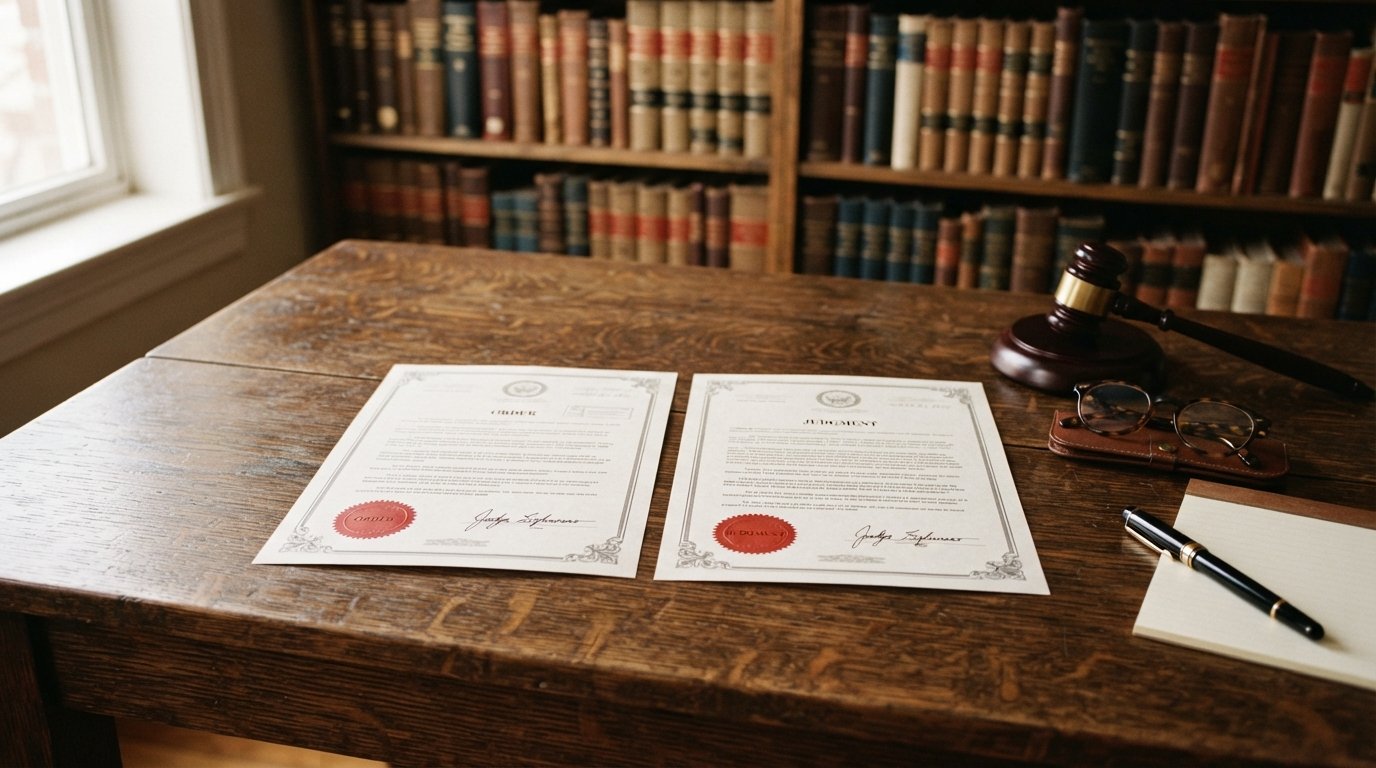
You open your mailbox and find two documents from the court: one is labeled "Order" and the other "Judgment." Both bear the judge's signature, both look official, and both seem to demand something from you or the other side. If you are like most people, you are not sure which one carries more weight or what you are supposed to do next. The confusion is understandable because courts often use these terms in ways that overlap, and the stakes can be high if you miss a deadline or misunderstand your rights.
In a civil lawsuit, a court order and a judgment are related but distinct tools. A court order is a directive from the judge that commands a party to do something (or stop doing something) while the case is ongoing or even after it ends. A judgment is the final determination of the rights and obligations of the parties, typically the last ruling that resolves the case and states who wins and what they are owed. Understanding the difference matters because it affects when you can appeal, when you can collect money, and what steps you must take to protect yourself.
This article breaks down the definitions, examples, and practical consequences of each, so you can read your court papers with confidence and know what to expect next. We will also explain how a judgment becomes collectible, what post-trial motions and appeal deadlines look like, and why satisfying a judgment requires a separate release or satisfaction piece. Along the way, we will point you to resources that can help if you are facing a legal dispute, including a free case evaluation service that connects you with attorneys in your area.
What Is a Court Order? Definition and Common Examples
A court order is any command or direction issued by a judge or a magistrate. It can be written or oral (though oral orders are usually reduced to writing later), and it can address virtually any aspect of a case: procedure, evidence, deadlines, conduct, or temporary relief. Orders are the working machinery of a lawsuit. They keep the case moving, enforce the rules, and protect the parties while the dispute is being resolved.
Orders fall into two broad categories: interlocutory and final. An interlocutory order is one that does not dispose of the entire case. It decides a preliminary matter, such as whether to allow a particular witness to testify, whether to grant a continuance, or whether to order one party to provide documents to the other. Interlocutory orders are not usually appealable until the case ends, although there are exceptions for certain urgent matters like injunctions. A final order, by contrast, resolves a discrete claim or the entire case. But even a "final order" is not necessarily the same as a judgment; the terminology varies by jurisdiction.
Common examples of court orders include:
- Protective orders that limit how evidence can be used or shared, often in cases involving trade secrets or sensitive personal information.
- Discovery orders compelling a party to answer interrogatories, produce documents, or sit for a deposition.
- Preliminary injunctions that require a party to stop certain conduct (like infringing a trademark) while the lawsuit proceeds.
- Scheduling orders setting deadlines for filing motions, completing discovery, and preparing for trial.
- Orders to show cause requiring a party to appear and explain why they should not be held in contempt or why a certain request should not be granted.
If you violate a court order, you can face serious consequences, including monetary sanctions, exclusion of evidence, or even contempt of court, which can carry fines or jail time in extreme cases. That is why it is critical to read every order carefully and comply within the stated deadline. If you do not understand an order, consult an attorney promptly. Do not assume that an order is merely advisory; it is binding.
What Is a Judgment? The Final Resolution of a Case
A judgment is the court's final decision on the merits of a case. It determines the rights and obligations of the parties and typically marks the end of the trial court proceedings. In a civil lawsuit, a judgment usually states which party prevailed and what relief is awarded, such as money damages, specific performance, or a declaratory statement of rights. Once a judgment is entered, the clock starts ticking for post-trial motions and appeals.
Judgments come in several forms. A default judgment is entered when one party fails to respond or appear, and the court awards relief to the other side based on the complaint. A summary judgment is entered when there are no genuine disputes of material fact and one party is entitled to judgment as a matter of law. A consent judgment (or agreed judgment) is entered when the parties settle and ask the court to adopt their agreement as an enforceable order. A judgment notwithstanding the verdict (JNOV) is entered when the judge overturns a jury's verdict because no reasonable jury could have reached that conclusion. Each type has different procedural nuances, but all share the same core function: they resolve the case and create enforceable rights.
Entry of judgment is a formal step. The court clerk typically records the judgment in the docket, and that entry triggers deadlines. For example, in federal court, a party generally has 28 days after entry of judgment to file a motion for a new trial or to alter or amend the judgment under Rules 59 and 60 of the Federal Rules of Civil Procedure. The deadline to file a notice of appeal is usually 30 days after entry of judgment in a civil case (with some exceptions, such as cases involving the United States). Missing these deadlines can be fatal to your rights, so it is essential to calendar them immediately.
It is worth noting that a judgment can be monetary or non-monetary. A money judgment orders one party to pay a sum certain to another. A non-monetary judgment might order a party to transfer property, perform a contract, or refrain from certain conduct. Both types are enforceable, but the collection methods differ.
Key Differences: Court Order vs. Judgment
The simplest way to distinguish the two is to think of a court order as a directive that manages the case, and a judgment as the final scorecard. An order can be issued at any time, often multiple times, and usually addresses a specific issue. A judgment is issued once (per claim or per case) and resolves the entire dispute or a significant portion of it. Orders are frequently interlocutory and not appealable until the end; judgments are typically final and appealable.
Another difference lies in enforceability. A money judgment is immediately enforceable through collection tools such as wage garnishment, bank levies, and liens, although the judgment debtor may have a right to a stay of enforcement pending appeal. An interlocutory order, by contrast, is not usually enforceable as a final matter; it is a step along the way. That said, some orders, like injunctions, are enforceable immediately and can be appealed on an expedited basis.
Here is a quick comparison to keep in mind:
- Timing: Orders can be issued before, during, or after trial; judgments are entered at the conclusion of the case or a discrete claim.
- Scope: Orders often address a single issue (e.g., discovery, scheduling, temporary relief); judgments resolve the ultimate rights and obligations of the parties.
- Appealability: Interlocutory orders are generally not appealable until final judgment; judgments are appealable within strict deadlines.
- Enforcement: Money judgments are collectible; most interlocutory orders are not themselves collectible (though they must be obeyed).
Understanding these differences helps you decide what action to take when you receive a document. If it is an order, you likely need to comply or object within a short timeframe. If it is a judgment, you need to evaluate whether to appeal, pay, or pursue collection, depending on which side you are on.
If you are at the very beginning of a dispute and are wondering whether you even have grounds to file a lawsuit, our guide on when you can file a civil lawsuit explains the foundational requirements and timelines. That context can help you understand how orders and judgments fit into the broader litigation timeline.
How a Judgment Becomes Collectible and Enforcement Tools
A judgment is not self-executing. Winning a money judgment does not automatically put cash in your pocket. You must take steps to collect, and the debtor may resist. The first step is often to send a demand letter and request payment voluntarily. If that fails, you can use formal discovery tools, such as a judgment debtor examination, to uncover the debtor's assets. Many jurisdictions allow you to serve interrogatories and request documents from the debtor to identify bank accounts, employment, and property.
Once you have information, you can employ a variety of enforcement tools. The most common include:
- Wage garnishment: A court order directs the debtor's employer to withhold a portion of wages and send it to you. Federal law limits the amount that can be garnished, and some states have additional protections.
- Bank levy: You obtain a court order requiring a bank to freeze and turn over funds in the debtor's account. Timing is critical because the debtor may withdraw funds if alerted.
- Property lien: You record the judgment against the debtor's real estate, which clouds the title and must be paid off before the property can be sold or refinanced.
- Writ of execution: A court order authorizing a sheriff to seize and sell the debtor's personal property (e.g., vehicles, equipment) to satisfy the judgment.
- Garnishment of other income: Some states allow garnishment of rental income, commissions, or other non-wage income.
Each tool has its own procedural requirements and exemptions. For example, many states protect a certain amount of equity in a homestead, and federal law exempts certain benefits like Social Security from garnishment. It is wise to consult an attorney who knows your state's exemption laws before pursuing collection, as improper collection efforts can expose you to liability.
If you are the judgment debtor, you have rights too. You may be able to claim exemptions, negotiate a payment plan, or file for bankruptcy to discharge the debt (though some judgments, like those for fraud or intentional torts, may be nondischargeable). Ignoring a judgment is never a good strategy; it can lead to garnishment, liens, and damage to your credit.
Post-Trial Motions and Appeal Deadlines After Judgment
After a judgment is entered, the losing party often has a short window to challenge it. Post-trial motions are requests to the trial judge to reconsider, alter, or set aside the judgment. Common post-trial motions include a motion for a new trial (arguing that errors or newly discovered evidence warrant a fresh trial), a motion to alter or amend the judgment (asking the judge to correct legal or factual mistakes), and a motion for judgment as a matter of law (asking the judge to overturn the jury's verdict). Filing these motions can extend the deadline to appeal, but the rules are technical and vary by jurisdiction.
If post-trial motions are denied or not filed, the next step is an appeal. The deadline to file a notice of appeal is strict and usually short: 30 days after entry of judgment in federal civil cases, and similar periods in state courts. Missing the deadline almost always means you lose the right to appeal. If you are considering an appeal, consult an appellate attorney immediately, as the process requires careful review of the record and adherence to formatting and procedural rules.
It is also important to understand that filing an appeal does not automatically stay enforcement of the judgment. In many cases, the judgment creditor can begin collection efforts unless the debtor obtains a stay by posting a supersedeas bond or other security. The bond amount is typically set by the court and is designed to protect the creditor if the appeal is unsuccessful. If you cannot afford a bond, you can ask the court to waive or reduce it, but that is not guaranteed.
Why Satisfying a Judgment Requires a Separate Release or Satisfaction Piece
Paying a judgment does not automatically clear your record. The judgment creditor must file a satisfaction of judgment with the court, and in some jurisdictions, you may need to record a satisfaction piece in the property records if a lien was created. A satisfaction of judgment is a document signed by the creditor acknowledging that the judgment has been paid in full. Once filed, it tells the court and the public that the debt is satisfied. Without it, the judgment remains on your credit report and in public records, potentially affecting your ability to obtain credit or sell property.
If the creditor refuses to file a satisfaction after you have paid, you can file a motion with the court to compel satisfaction. Some states allow you to file an affidavit of satisfaction if you can prove payment. It is also prudent to obtain a written release from the creditor in addition to the court filing, especially if there is any dispute about the amount owed or the scope of the judgment. A release is a contract that extinguishes the debt and can provide additional protection against future collection efforts.
For personal injury plaintiffs, understanding these post-judgment steps is part of the broader settlement process. If you are navigating a personal injury claim and need help finding the right attorney, consider using a service like GoFreeLegal, which connects individuals with attorneys for free case evaluations. Such services can be particularly helpful if you are unsure whether to accept a settlement or pursue a judgment.
Practical Tips for Reading Court Papers
When you receive a document from the court, look at the caption (the top of the page) to see the case name and number. Then scan for the title: "Order" or "Judgment." Read the entire document carefully, including any footnotes or attachments. Pay attention to deadlines and instructions. If the document is an order, note the compliance date and what you must do. If it is a judgment, note the entry date and calculate your appeal deadline. When in doubt, contact the clerk's office or an attorney for clarification. Do not rely on informal advice from friends or online forums, as the rules are specific to your jurisdiction and the type of case.
Finally, keep a file of all court documents and correspondence. You may need them for appeals, collection, or future legal matters. If you are facing a complex civil lawsuit, an experienced attorney can help you interpret orders and judgments, protect your rights, and navigate the procedural maze.
Understanding the distinction between a court order and a judgment empowers you to respond appropriately and avoid costly mistakes. Whether you are a plaintiff seeking to collect a judgment or a defendant trying to comply with an order, knowing what each document means is the first step toward a successful resolution.