
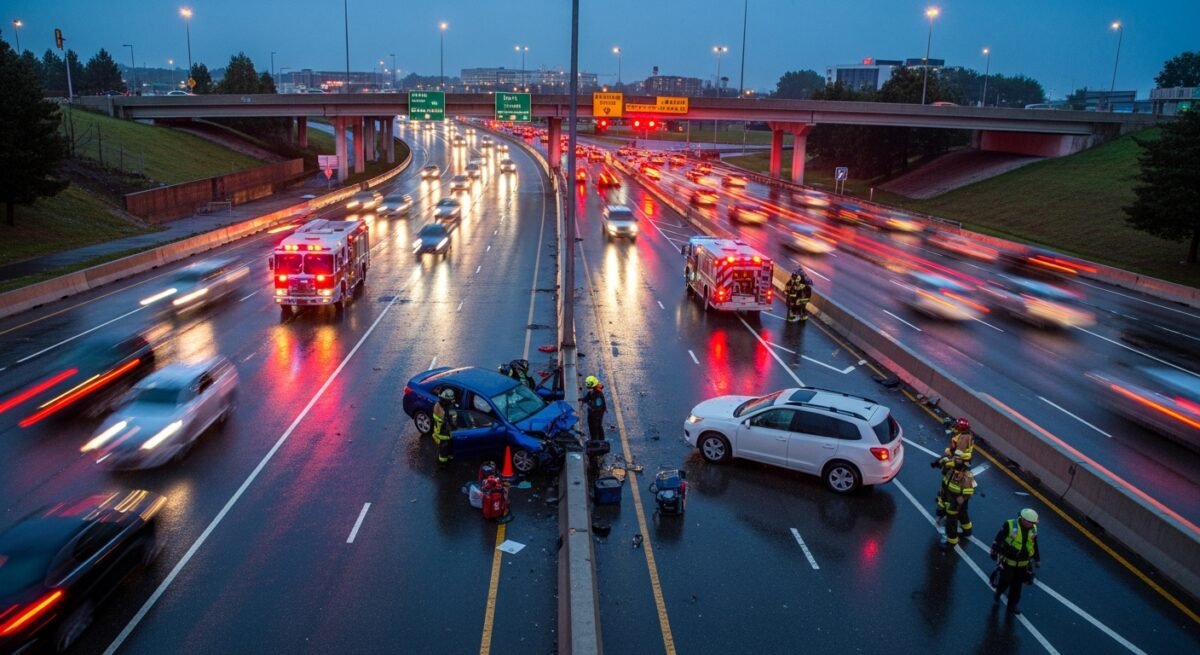
How Often a Motor Vehicle Accident Occurs and Your Legal Rights
With a motor vehicle accident occurring every few seconds, knowing your legal rights is critical. Learn the immediate steps to protect yourself and how to navigate insurance claims to secure full compensation for your injuries and losses.

By Garret Stewart
The statistics are sobering and relentless. On roads across the country, the frequency of collisions forms a constant backdrop to daily life. Understanding the sheer scale of this public safety issue is the first step toward protecting yourself and your rights. When a motor vehicle accident occurs every few seconds, it ceases to be an abstract statistic and becomes a tangible risk for every driver, passenger, and pedestrian. This reality underscores not only the importance of defensive driving but also the critical need to be legally prepared. Knowing what to do in the immediate aftermath and how to navigate the complex insurance and legal landscape can mean the difference between a full recovery and lasting financial hardship.
The Startling Frequency of Traffic Collisions
To grasp the magnitude of the road safety challenge, one must internalize the pace at which crashes happen. While the exact number fluctuates based on reporting methodologies and data sources from organizations like the National Highway Traffic Safety Administration (NHTSA), the underlying truth is alarming. A motor vehicle accident occurs with a frequency that can be measured in seconds, not minutes or hours. This translates to millions of crashes annually, resulting in a cascade of property damage, injuries, and fatalities. Each of these incidents represents a life disrupted, a family impacted, and a legal scenario that may require resolution. The pervasive nature of these events means that, statistically, every driver will be involved in some form of collision multiple times over their lifetime, though most will be minor. This constant risk makes proactive knowledge not just useful but essential.
Primary Causes Behind the Relentless Crash Rate
Understanding why crashes happen at such a frequent clip is key to both prevention and establishing legal liability. The causes are often a toxic combination of human error, environmental factors, and sometimes vehicle defects. Distracted driving, primarily due to smartphone use, has surged to the forefront as a leading cause, effectively putting a dangerously impaired driver behind the wheel every few car lengths on the highway. Driving under the influence of alcohol or drugs remains a stubborn and deadly problem. Speeding aggressively reduces reaction time and magnifies the force of impact exponentially. Fatigued driving impairs judgment and reflexes similarly to intoxication. Environmental hazards like poor weather, faded road markings, or inadequate lighting contribute to the conditions where a motor vehicle accident occurs. Finally, vehicular malfunctions, such as faulty brakes or defective tires, though less common, can directly cause a crash without any driver error. In legal terms, identifying the precise cause or combination of causes is the foundation of any personal injury or property damage claim, as it determines negligence and liability.
Distraction and Impairment: The Leading Culprits
The shift in causation over the past decade is notable. Where once drunk driving was the predominant menace, it now shares the grim spotlight with distraction. A text message, a social media notification, or a quick navigation adjustment can pull a driver’s eyes from the road for critical seconds—long enough for a catastrophic chain of events to begin. Similarly, impairment from substances, whether legal or illegal, continues to cause severe and often fatal collisions. From a legal perspective, evidence of distraction or impairment, such as phone records or toxicology reports, is powerful in establishing fault. These acts are considered clear breaches of the duty of care every driver owes to others on the road.
Immediate Steps to Protect Yourself After a Crash
Given the statistical probability of being involved in a collision, knowing the immediate post-accident protocol is crucial. Your actions in the minutes and hours following the event can significantly impact your health, your insurance claim, and any potential lawsuit. First, ensure safety: if possible, move vehicles to the shoulder and turn on hazard lights. Check for injuries and call 911 immediately, even for seemingly minor incidents—a police report is an invaluable legal document. Exchange information with all other drivers, but avoid discussing fault or making detailed statements about your condition at the scene. Document everything: use your phone to take comprehensive photos of vehicle damage, license plates, the surrounding scene (traffic signs, skid marks), and any visible injuries. Gather contact information from witnesses. Seek medical attention promptly, as some injuries like whiplash or internal trauma may not be immediately apparent. Finally, notify your insurance company to start the claims process, but be cautious in your initial discussions. For a deeper guide on this critical phase, refer to our resource on when to file a police report after an accident for legal purposes.
Navigating Insurance and Legal Claims After an Accident
Once the immediate crisis has passed, you enter the often complex arena of insurance negotiations and potential legal action. This process begins with the insurance claim, where you must deal with adjusters whose primary goal is to minimize the company’s payout. Understanding the types of damages you can claim is vital. Economic damages are quantifiable losses like medical bills, lost wages, and property repair costs. Non-economic damages cover more subjective but very real losses like pain and suffering, emotional distress, and loss of enjoyment of life. Insurance companies frequently offer quick, low-ball settlements hoping you will accept before understanding the full extent of your damages and rights. It is critical not to sign any release or accept a final settlement until you have reached maximum medical improvement and have calculated all future costs. The process of determining how comparative negligence rules reduce your settlement amount by state is a key factor, as your own degree of fault can proportionally diminish your recovery.
When You Need a Personal Injury Attorney
Many wonder when it is necessary to hire legal representation. For minor fender-benders with no injuries, you may handle the claim yourself. However, an attorney becomes essential in several key scenarios: when there are any injuries, even seemingly minor ones; when liability is disputed; when the insurance company denies your claim or offers an insufficient settlement; or when a government entity or a large commercial truck is involved. A skilled personal injury attorney does more than just file paperwork. They conduct a thorough investigation, gather and preserve evidence, consult with medical and accident reconstruction experts, handle all communication with adversarial insurance adjusters, accurately value your claim including future damages, and are prepared to file a lawsuit and advocate for you at trial if a fair settlement cannot be reached. They operate on a contingency fee basis, meaning their payment is a percentage of the recovery they secure for you, aligning their interests with yours. To understand this arrangement fully, our article on understanding contingency fee agreements with personal injury lawyers provides a clear breakdown.
The Critical Role of Evidence and Documentation
Your attorney’s ability to build a strong case hinges on evidence. This extends far beyond the photos you took at the scene. It includes the official police report, all medical records and bills, documentation of lost income, repair estimates, witness statements, and sometimes data from vehicle event data recorders (black boxes). Meticulous documentation creates a timeline and a narrative that supports your claim for compensation. This is especially important for non-economic damages like pain and suffering, which require compelling evidence to justify. For insights on building this evidentiary foundation, the guide on the best way to document injuries and damages for legal claims offers a practical framework.
Frequently Asked Questions
How quickly should I contact a lawyer after a car accident?
You should consult with a personal injury attorney as soon as possible after seeking medical attention, ideally within days of the crash. Early involvement allows your lawyer to guide you through interactions with insurance companies, ensure evidence is preserved, and begin building your case immediately.
What if the accident was partially my fault?
In most states, you can still recover damages even if you are partially at fault, under rules known as comparative negligence. Your recovery will be reduced by your percentage of fault. For example, if you are found 20% at fault and your damages are $100,000, you could recover $80,000. An attorney is crucial in these situations to argue for the lowest possible fault assignment on your behalf.
How long do I have to file a lawsuit after a car accident?
This is governed by a law called the statute of limitations, which varies by state, typically ranging from one to three years from the date of the accident. Missing this deadline absolutely bars you from ever filing a lawsuit to recover damages, making immediate legal consultation imperative.
What is the average settlement for a car accident case?
There is no true “average” as settlements vary wildly based on injury severity, liability clarity, insurance policy limits, and jurisdiction. A minor soft-tissue injury may settle for a few thousand dollars, while a catastrophic injury case can be worth millions. An experienced attorney will evaluate the unique factors of your case to determine its realistic value.
The relentless rhythm of traffic collisions is a stark reminder of the vulnerabilities we accept as part of modern mobility. While safety advancements in vehicles and infrastructure continue, the human element remains the most variable and often the most dangerous factor. Being informed, driving defensively, and understanding your legal rights and responsibilities are the most powerful tools you have. If the unfortunate happens and you find yourself part of the statistic, remember that your actions afterward are critical. Prioritize your health, document meticulously, and seek professional legal guidance to ensure your recovery is as complete as possible, allowing you to move forward from the disruption a crash causes.
Get clarity on your legal rights—start with a free review at LegalCaseReview.com or call 📞 (833) 670-8682.