
Implied Consent Law Pennsylvania: Refusing a Breath Test
Facing a DUI in Pennsylvania? Refusing a breath test triggers an automatic license suspension. Call (833)-279-1850 for a free case review.

By Declan Ward
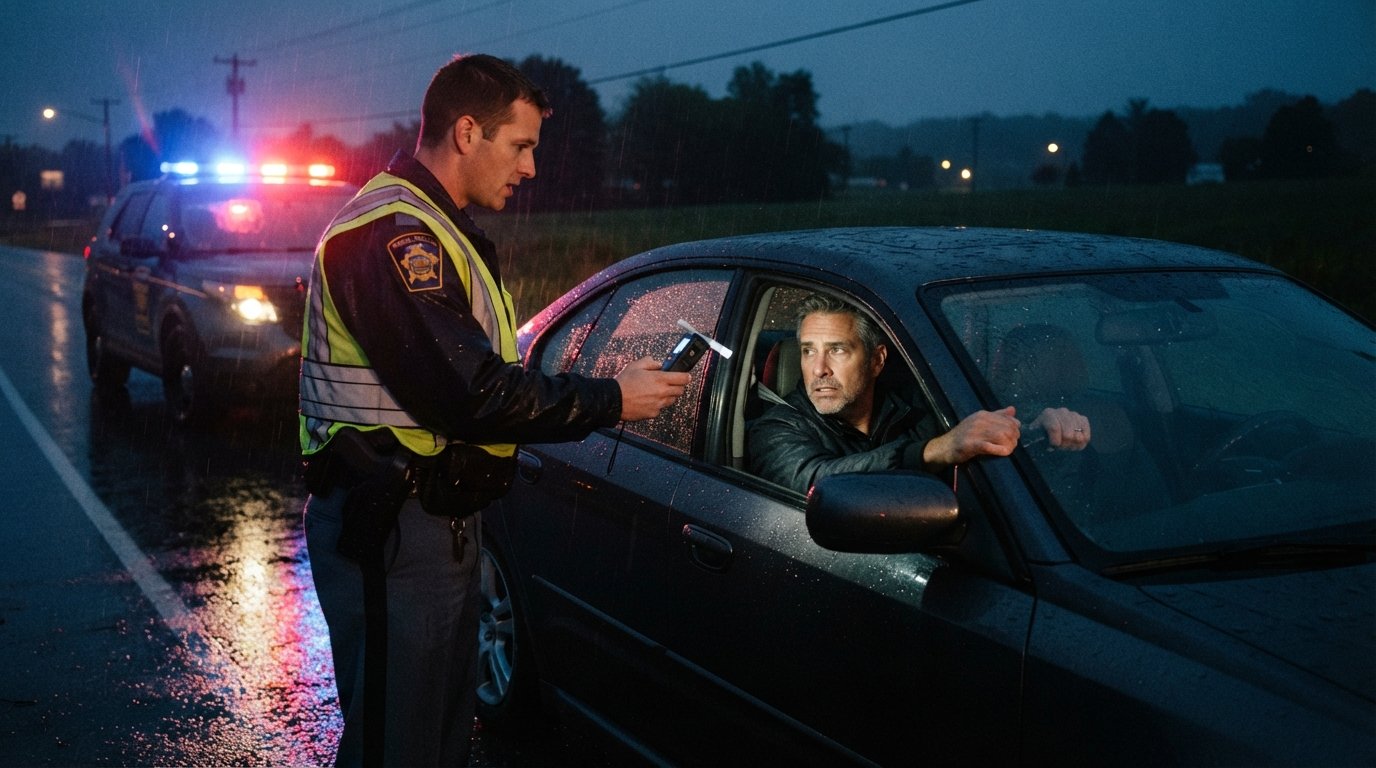
You are pulled over on a Saturday night in Philadelphia or a rural road outside Harrisburg. The officer suspects you have been drinking and asks you to blow into a handheld breath test device. You refuse because you think you can avoid self-incrimination. What happens next often surprises people: your driver's license is automatically suspended, even before any DUI conviction. That is the power of the implied consent law in Pennsylvania. Understanding how this law works, what penalties follow a refusal, and how it interacts with your criminal case can protect you from making a difficult situation far worse.
What Is the Implied Consent Law in Pennsylvania?
Pennsylvania's implied consent law, found primarily in Title 75 of the Pennsylvania Vehicle Code, states that any person who operates a motor vehicle within the Commonwealth is deemed to have given consent to one or more chemical tests of breath, blood, or urine for the purpose of determining blood alcohol content or the presence of controlled substances. In simple terms, by getting behind the wheel, you have already agreed to submit to testing if a police officer has reasonable grounds to believe you are driving under the influence.
This is not a contractual agreement you sign at the DMV. It is a legal fiction created by the legislature. The moment you drive on Pennsylvania roads, the law treats you as having consented. That means a refusal is not just an exercise of your Fifth Amendment rights; it is a violation of the implied consent statute that triggers its own set of civil penalties.
The law applies to both breath tests (often called Breathalyzers) and blood draws. It also covers urine tests when drugs are suspected. Officers do not need a warrant to request a breath test under the implied consent framework, though the legal landscape around blood draws has shifted in recent years due to U.S. Supreme Court decisions. For breath tests specifically, the implied consent rule remains robust in Pennsylvania.
What Happens If You Refuse a Breath Test in Pennsylvania?
Refusing a breath test sets off a chain reaction. The officer will typically read you the implied consent warnings, often from a standard form. If you still refuse, the officer will note the refusal and confiscate your driver's license on the spot (or tell you it is being suspended). You will receive a notice of suspension from PennDOT.
The refusal itself is a civil matter handled by PennDOT, separate from the criminal DUI case. That means you can be found not guilty of DUI but still lose your license for refusing the test. The suspension is automatic unless you successfully challenge it in an administrative hearing.
For a first refusal, the suspension is 12 months. If you have a prior refusal or certain prior DUI offenses within the past 10 years, the suspension can be 18 months or more. These suspensions run consecutively with any suspension imposed for a DUI conviction. In other words, refusing does not help you avoid losing your license; it often makes the loss longer.
Beyond the license suspension, the refusal can be used against you in the criminal DUI trial. Prosecutors may argue that you refused because you knew you were intoxicated. While the refusal itself is not a confession, it can be powerful circumstantial evidence. Your DUI defense attorney will need to address both the criminal charge and the civil refusal suspension, often through separate legal proceedings.
Breath Test vs. Blood Test: Does It Matter Which One You Refuse?
Pennsylvania law treats breath and blood tests similarly under implied consent, but there are important differences. A breath test is less invasive and is usually administered at the scene or at a police station using a portable or stationary device. A blood draw must be performed by a qualified medical professional, often at a hospital.
Refusing a breath test is a straightforward implied consent violation. Refusing a blood draw can be more complicated. In Birchfield v. North Dakota (2016), the U.S. Supreme Court held that the Fourth Amendment does not permit warrantless blood draws in DUI cases without consent or exigent circumstances. However, Pennsylvania's implied consent law still imposes civil penalties for refusing a blood test. The criminal consequences of a blood refusal may differ, but the civil suspension remains.
Some drivers think they can refuse the breath test and then agree to a blood test later. That does not erase the initial refusal. The first refusal triggers the suspension. Cooperating later may help your criminal case, but it will not undo the civil penalty.
Penalties for Refusing a Breath Test in Pennsylvania
The penalties for refusing a breath test are severe and immediate. They are not negotiable with the officer. Here is what you can expect:
- First refusal: 12-month license suspension, plus a requirement to complete an alcohol highway safety school before reinstatement.
- Second or subsequent refusal: 18-month suspension, and you may be classified as a habitual offender if you have prior DUI offenses.
- Criminal DUI charge: The refusal can be used as evidence of consciousness of guilt, potentially strengthening the prosecution's case.
- Ignition interlock requirement: After reinstatement, you may be required to install an ignition interlock device on your vehicle for a period determined by PennDOT.
- Fines and costs: Separate from the suspension, you will face court costs and fines if convicted of DUI.
These penalties are in addition to any penalties for the underlying DUI. If you are convicted of DUI, the suspension for refusal runs consecutively with the DUI suspension. That means a first-time DUI with a refusal can result in a license suspension of 12 months for the refusal plus 12 months for the DUI, for a total of 24 months without a license. That is a long time to rely on rideshares and public transportation.
Can You Challenge a Refusal Suspension?
Yes, you can appeal a refusal suspension. In Pennsylvania, you have 30 days from the date of the suspension notice to file an appeal with the Court of Common Pleas in your county. The appeal is a civil proceeding, not a criminal one. You are not entitled to a jury trial, but you can present evidence and call witnesses.
To win the appeal, you must show that one of the following is true:
- You did not refuse; you simply could not provide a sufficient breath sample due to a medical condition.
- The officer did not have reasonable grounds to believe you were driving under the influence.
- The officer failed to read the implied consent warnings properly.
- You were not actually driving or in physical control of the vehicle.
- The suspension notice was defective or not timely.
These appeals are technical and require strict adherence to deadlines. If you miss the 30-day window, you lose your right to appeal. An experienced DUI attorney can review the facts and determine whether a challenge is viable. Even if you cannot overturn the suspension, your attorney may be able to negotiate a shorter suspension or an ignition interlock limited license that allows you to drive to work or school.
How Refusing a Breath Test Affects Your DUI Case
Refusing a breath test does not prevent the prosecution from charging you with DUI. In fact, it often makes the case more challenging for the defense. Without a breath test result, the prosecution must rely on other evidence: the officer's observations, field sobriety tests, dashcam video, and any admissions you made.
However, the lack of a chemical test result can sometimes work in your favor. If the officer's observations are weak or the field sobriety tests were improperly administered, the prosecution may have difficulty proving you were intoxicated beyond a reasonable doubt. A skilled attorney can exploit these weaknesses. But the refusal itself gives the prosecution a narrative: you refused because you knew you were guilty. That narrative can be powerful with a jury.
In some cases, refusing a breath test leads to a plea bargain that includes a lesser charge or reduced penalties. But that is not guaranteed. The best approach is to consult with an attorney as soon as possible after your arrest. Do not wait until your first court date. Early intervention can preserve evidence and build a stronger defense.
What About Implied Consent and Medical Marijuana or Prescription Drugs?
Pennsylvania's implied consent law applies to more than just alcohol. If an officer suspects you are under the influence of medical marijuana, prescription medications, or illegal drugs, you are still required to submit to a chemical test of blood or urine. Refusing a test under those circumstances carries the same civil penalties as refusing a breath test for alcohol.
Medical marijuana patients often wonder if they can refuse a blood test because they have a valid prescription. The answer is no. Pennsylvania law does not provide an exception for medical marijuana users. If you are driving and an officer has reasonable grounds to believe you are impaired, you must submit to testing. Refusing will result in a suspension, even if you were not actually impaired at the time.
This area of law is evolving as more states legalize cannabis. But in Pennsylvania, the implied consent statute remains strict. If you are a medical marijuana patient, it is critical to understand your rights and obligations before you get behind the wheel.
Steps to Take After a Breath Test Refusal
If you have already refused a breath test, you need to act quickly. The clock is ticking on your appeal rights and your criminal case. Here is a step-by-step framework to follow:
- Write down everything you remember. Details matter: what the officer said, how you responded, whether you were read the implied consent warnings, and whether you were asked to sign anything. Do this while your memory is fresh.
- Contact a DUI attorney immediately. Many attorneys offer free consultations. Bring your paperwork, including the suspension notice and any citation you received.
- File your appeal within 30 days. If you miss the deadline, you lose. Your attorney can handle this for you.
- Request a copy of your driving record. This will show any prior offenses that could affect the length of your suspension.
- Do not miss any court dates. Missing a criminal court date can result in a bench warrant and additional charges.
Following these steps can make the difference between a manageable outcome and a legal disaster. The worst thing you can do is nothing. The suspension will not go away on its own, and the criminal charges will not disappear.
If you are also dealing with the financial fallout of an accident or injury, you may be wondering how settlement money is handled. For a detailed explanation, see our guide on how lawyers distribute settlement money to understand the process from start to finish.
Does Refusing a Breath Test Affect Your Insurance?
Yes. A refusal suspension is reported to your insurance company, and it can cause your premiums to skyrocket. Some insurers may cancel your policy altogether. In Pennsylvania, insurance companies are allowed to consider a DUI refusal when setting rates. Even if you are not convicted of DUI, the refusal itself can be treated as a high-risk indicator.
If you are required to file an SR-22 form (proof of financial responsibility) after a DUI conviction, the refusal suspension can complicate that process. You may need to maintain SR-22 coverage for three years, which is expensive. The total cost of a refusal can easily reach thousands of dollars when you factor in fines, attorney fees, towing, rideshares, and increased insurance premiums.
Common Myths About Implied Consent in Pennsylvania
There are many misconceptions about implied consent and breath test refusals. Let us clear up a few of the most common ones.
Myth 1: You have the right to refuse without consequences. You do have the physical ability to refuse, but the law imposes automatic civil penalties. There is no such thing as a free refusal in Pennsylvania.
Myth 2: Refusing means the officer cannot charge you with DUI. The officer can still charge you based on other evidence. The refusal may actually make the prosecution's case stronger by suggesting consciousness of guilt.
Myth 3: You can change your mind later and avoid the suspension. Once you refuse, the refusal is recorded. Agreeing to a test later does not erase the initial refusal. The suspension still applies.
Myth 4: Implied consent only applies to alcohol. It applies to drugs and medications as well. If you are suspected of driving under the influence of any substance, you are required to submit to testing.
Understanding these myths can help you make better decisions if you are ever pulled over. The best decision is always to comply with the officer's request for a chemical test, even if you believe you are not impaired. You can fight the DUI charge later with the help of an attorney. Refusing only adds a separate civil penalty that is difficult to undo.
When to Seek Legal Help
If you have been arrested for DUI and refused a breath test, you need legal representation. The stakes are high: your license, your job, and your freedom may be on the line. An experienced DUI attorney can review the traffic stop, the officer's conduct, the calibration and maintenance records of the breath test device, and the implied consent warnings. They can file the appeal of your suspension and negotiate with the district attorney on the criminal charge.
Do not try to handle this alone. The legal system is complex, and the deadlines are strict. A single missed filing can cost you your license for a year or more. Many attorneys offer free initial consultations, so there is no reason to delay. If you are looking for a qualified attorney in Pennsylvania, you can start by requesting a free case evaluation through a trusted legal resource. Platforms like FreeLegalCaseReview connect individuals with experienced DUI and personal injury lawyers who can explain your options and help you protect your rights.
Remember, the implied consent law in Pennsylvania is not optional. It is a condition of driving in the state. Refusing a breath test does not help you avoid a DUI conviction; it simply adds a license suspension to your problems. The smarter path is to comply with the test, then challenge the evidence with a skilled attorney. That approach preserves your ability to fight the charges while avoiding the automatic civil penalty.
If you are facing a refusal suspension or DUI charge, take action today. Contact an attorney, gather your documents, and understand your deadlines. The sooner you act, the more options you have. Do not let a moment of panic behind the wheel turn into a year of lost driving privileges. With the right legal guidance, you can navigate the implied consent law and work toward a better outcome.