
DUI Checkpoint Rights in Pennsylvania: What to Do
Facing a DUI checkpoint in PA? Know your rights and what to do. Call (833)-279-1850 for a free case review and protect your future.

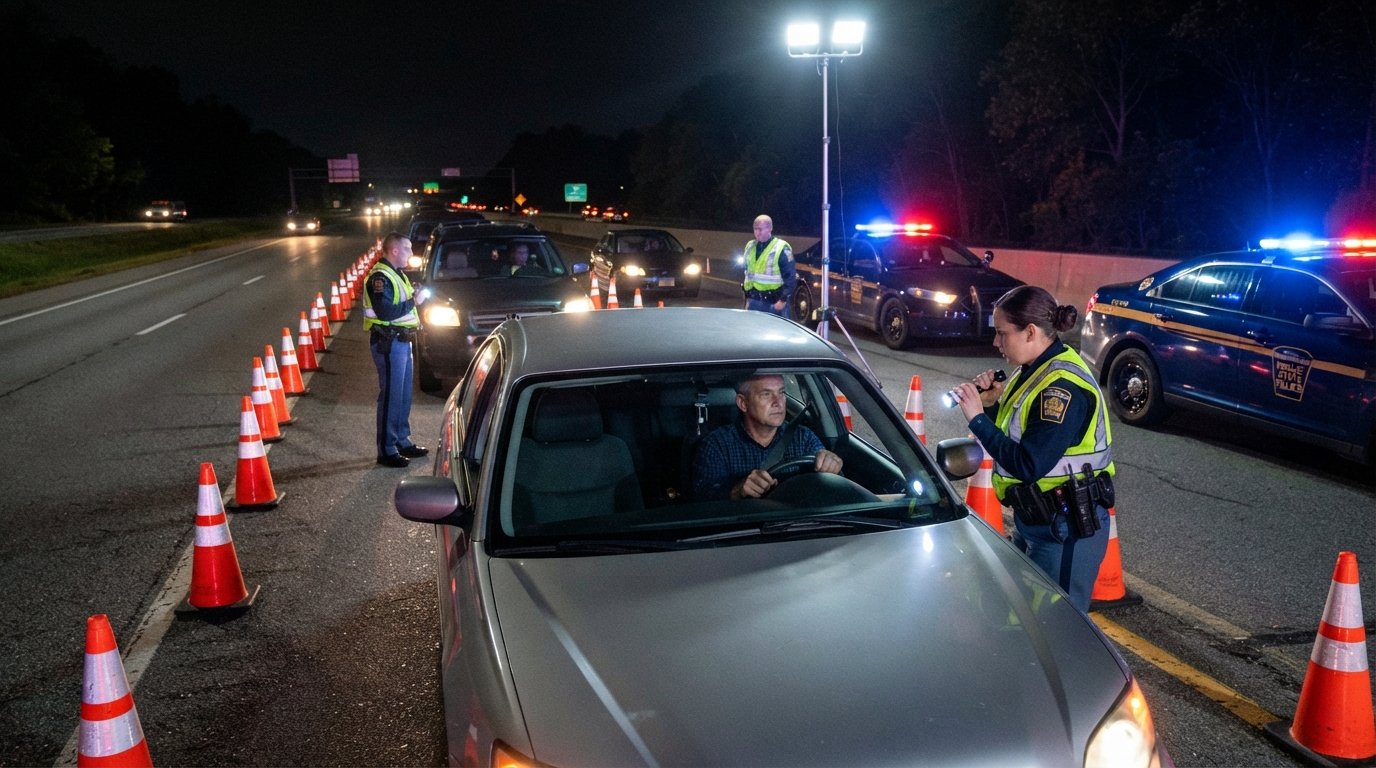
You see the flashing lights and the row of orange cones ahead. Your heart races, even though you have had nothing to drink. Pennsylvania sobriety checkpoints are legal, but they come with specific rules that both police and drivers must follow. Knowing your DUI checkpoint rights in Pennsylvania and what to do if you encounter one can mean the difference between a routine stop and a serious criminal charge. This guide explains how checkpoints work, what you must do, what you can refuse, and when to call a lawyer.
How Pennsylvania Sobriety Checkpoints Are Authorized and Conducted
Pennsylvania is one of many states that permit sobriety checkpoints, but the practice is tightly regulated. The Pennsylvania Supreme Court has held that checkpoint stops are constitutional only if they follow strict procedural guidelines designed to minimize intrusion on drivers. These guidelines come from the landmark case Commonwealth v. Tarbert and subsequent rulings. Police departments must establish a written plan before setting up a checkpoint, and that plan must be approved by a supervisor. The plan typically specifies the location, the time window, the number of officers involved, and the method for selecting which vehicles to stop.
Officers generally cannot stop every single car, as that would create excessive delays. Instead, they usually follow a neutral formula, such as stopping every third or fifth vehicle. The checkpoint must be highly visible, with signs, cones, and marked patrol cars, so drivers can see it from a safe distance. The location must be chosen based on safety and prior DUI statistics, not on arbitrary or discriminatory factors. If these rules are not followed, any evidence obtained at the checkpoint may be suppressed in court.
The purpose of a sobriety checkpoint is not to catch every impaired driver but to deter people from driving under the influence and to remove dangerously impaired drivers from the road. During the stop, an officer will typically approach your vehicle, identify themselves, and ask for your license, registration, and proof of insurance. They will also observe your appearance, speech, and odor for signs of impairment. If they suspect you are under the influence, they may ask you to perform field sobriety tests or submit to a preliminary breath test. Understanding these procedures helps you stay calm and respond appropriately.
Can You Turn Away or Refuse to Answer Questions at a Checkpoint?
One of the most common questions drivers ask is whether they can simply turn around and avoid the checkpoint altogether. In Pennsylvania, the answer is not straightforward. If you approach a checkpoint and make a lawful U-turn before entering the checkpoint area, you are generally not required to stop. However, police may follow you if they observe a traffic violation or have reasonable suspicion that you are driving impaired. Turning away is not illegal in itself, but it may draw attention. Some departments position officers to watch for drivers who make abrupt turns or U-turns to avoid the checkpoint, and those officers may conduct a traffic stop if they see a violation.
Once you are stopped at a checkpoint, you are required to provide your driver's license, registration, and proof of insurance. This is a basic requirement under Pennsylvania law, and failing to produce these documents can result in citations. However, you are not required to answer questions beyond identifying yourself and providing the documents. You can politely decline to answer questions such as "Have you been drinking tonight?" or "Where are you coming from?" You should remain calm and respectful, but you do not have to incriminate yourself.
It is important to understand that refusing to answer questions is not an admission of guilt. You have the right to remain silent under the Fifth Amendment, and this right applies during a checkpoint stop. However, you should not lie to the police, as providing false information can lead to additional charges. If an officer asks you to step out of the vehicle, you should comply, as refusing to exit can escalate the situation. The key is to be cooperative with lawful orders while politely asserting your rights.
What Happens If You Refuse a Breath or Chemical Test at a Checkpoint
Pennsylvania's Implied Consent Law means that by driving on public roads, you have already agreed to submit to chemical testing (breath, blood, or urine) if an officer has reasonable suspicion that you are driving under the influence. At a checkpoint, an officer may ask you to take a preliminary breath test (PBT) if they suspect impairment. The PBT is a handheld device that provides a rough estimate of your blood alcohol content. Refusing a PBT is not typically a violation of the Implied Consent Law, but it may give the officer additional probable cause to arrest you and request a more formal chemical test.
If you are arrested for DUI, you will be asked to submit to a formal chemical test, usually a blood draw or a breath test at the police station. If you refuse this test, you will face automatic penalties under the Implied Consent Law, regardless of whether you are ultimately convicted of DUI. For a first refusal, your license will be suspended for 12 months, and you will be required to undergo an alcohol and drug treatment evaluation before you can get your license back. For a second or subsequent refusal, the suspension is 18 months, and you may also face mandatory ignition interlock requirements.
Refusing a chemical test does not prevent the prosecution from using other evidence against you, such as the officer's observations, field sobriety test results, and any statements you made. In fact, a refusal can be used against you in court as evidence of consciousness of guilt. It is crucial to consult with an experienced DUI attorney to understand the consequences of refusal in your specific case. An attorney can review the checkpoint procedures and the arrest to determine if your rights were violated.
Practical Steps to Take and Avoid During a Checkpoint Stop
When you approach a checkpoint, the best approach is to stay calm, be polite, and keep your hands visible on the steering wheel. Pull over safely when directed, roll down your window, and wait for the officer to speak. Have your license, registration, and insurance card ready. You can hand these documents to the officer without making any statements. If the officer asks if you have been drinking, you can politely say, "I prefer not to answer that question." Remember that you are not required to perform field sobriety tests, but refusing them may lead to an arrest if the officer has other evidence of impairment.
Here is a list of practical do's and don'ts to keep in mind:
- Do remain calm and courteous. Aggressive behavior can escalate the situation and lead to additional charges.
- Do provide your license, registration, and proof of insurance when asked.
- Do politely decline to answer questions about your drinking or destination.
- Do not lie or provide false information. This can be used against you.
- Do not resist arrest or refuse to exit the vehicle if ordered to do so.
After the stop, if you are allowed to leave, you should write down everything you remember as soon as possible: the location, the time, the officers' names and badge numbers, the questions asked, and any tests you were requested to perform. This information can be valuable to your attorney if you later face charges. If you are arrested, do not make any statements without an attorney present. Contact a DUI lawyer immediately.
If you are searching for legal representation after a checkpoint arrest, you may come across services that connect you with attorneys. One such resource is AttorneyLeads, a platform that provides pre-screened legal leads to law firms. While it is a B2B service, it reflects the importance of finding qualified counsel. For a free case evaluation and to learn more about your rights, consider reaching out to LegalCaseReview's network of experienced Pennsylvania DUI attorneys. You can also read about navigating DUI legal recruitment challenges to understand how to choose the right lawyer for your situation.
When to Consult an Attorney After a Checkpoint Arrest
If you are arrested at a DUI checkpoint, you should consult an attorney as soon as possible. The sooner you involve a lawyer, the better your chances of mounting a strong defense. An attorney can investigate whether the checkpoint complied with the legal requirements, whether the officer had probable cause to arrest you, and whether your rights were violated during the stop. They can also challenge the results of any chemical tests and negotiate with the prosecution.
Many people wonder if they need a lawyer for a first-time DUI offense. The answer is yes. A DUI conviction can have lasting consequences, including license suspension, fines, jail time, and increased insurance rates. It can also affect your employment and professional reputation. An experienced DUI attorney can help you understand your options, such as pleading to a lesser charge or entering a diversion program. They can also represent you at administrative hearings to challenge your license suspension.
When choosing an attorney, look for someone who specializes in DUI defense and has experience with checkpoint cases in Pennsylvania. Ask about their track record and their approach to challenging checkpoints. LegalCaseReview offers a patented attorney selection process that identifies top-rated lawyers in your area. You can request a free, no-obligation case evaluation to discuss your situation and get matched with a qualified attorney. Remember that the information in this article is for educational purposes only and is not legal advice. Every case is unique, and you should consult with a licensed attorney for advice specific to your circumstances.
Facing a DUI checkpoint can be stressful, but knowing your rights and obligations helps you navigate the situation with confidence. Stay calm, be respectful, and remember that you have the right to remain silent and to seek legal counsel. If you are arrested, do not hesitate to reach out to a qualified DUI attorney who can protect your rights and help you achieve the best possible outcome.