
Pedestrian Accident Rights in PA Crosswalk Law
Pedestrian accident rights in Pennsylvania crosswalk law explained, including fault rules and evidence tips. Call (833)-279-1850 for a free case review.

By Brielle Hawke
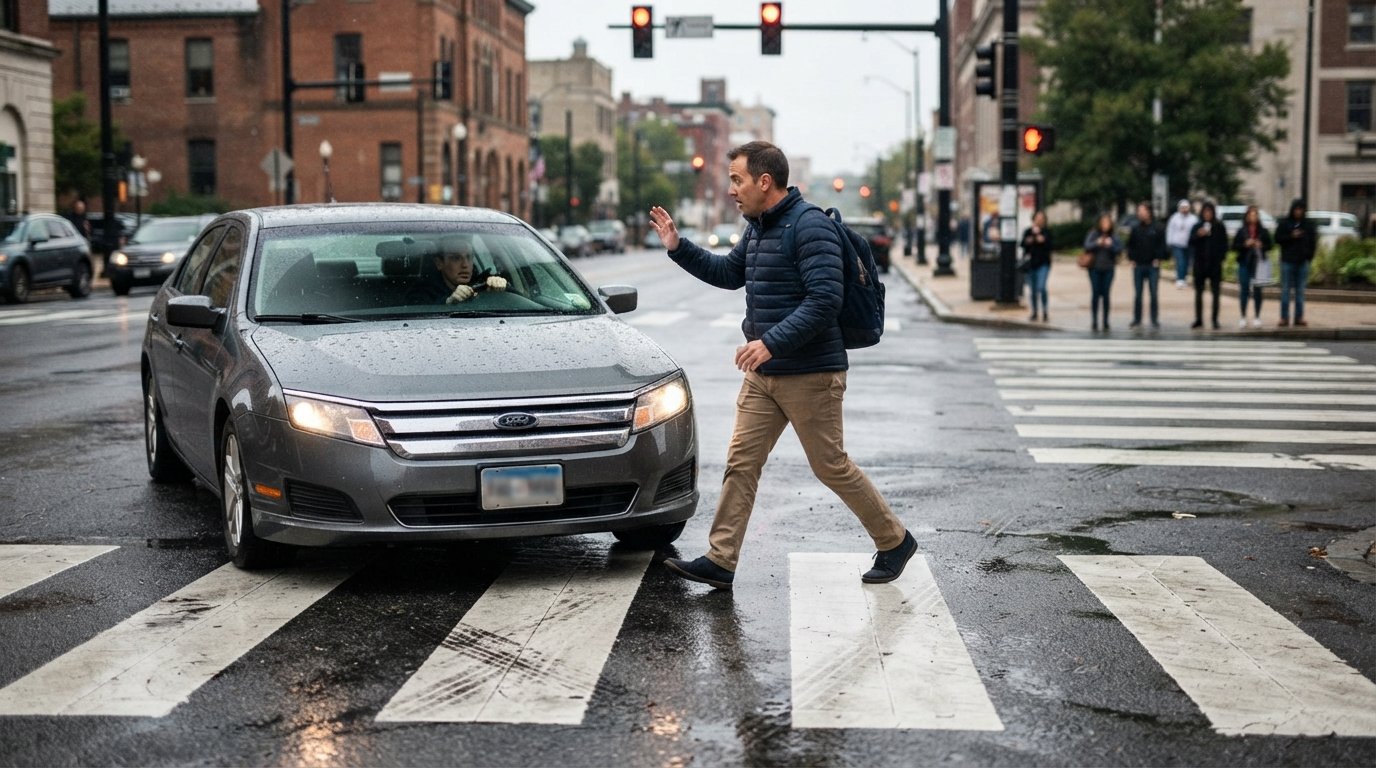
A driver who fails to yield to a pedestrian in a marked crosswalk can turn a routine walk into a life-altering event. In Pennsylvania, the law gives pedestrians strong protections at crosswalks, but those protections are not automatic. Fault is often shared, insurance companies push back, and the absence of vehicle damage can make a serious injury claim surprisingly difficult to prove. Understanding pedestrian accident rights in Pennsylvania crosswalk law is the first step toward protecting your health and your financial recovery after a collision.
This guide explains the right-of-way rules that shape fault, why liability frequently splits between driver and pedestrian, how to document injuries when there is no dented bumper to photograph, and where a free case evaluation fits into the process. The information is educational and does not create an attorney-client relationship, but it will help you ask better questions and avoid costly mistakes in the critical days after a crash.
Pennsylvania Crosswalk Law: The Right-of-Way Rules That Decide Fault
Pennsylvania's vehicle code imposes clear duties on drivers approaching crosswalks. Under 75 Pa.C.S. Section 3542, a driver must yield the right-of-way to a pedestrian crossing the roadway within a crosswalk, whether the crosswalk is marked with painted lines or is an unmarked continuation of a sidewalk at an intersection. The duty applies when the pedestrian is on the half of the roadway where the vehicle is traveling, or when the pedestrian is approaching closely enough from the opposite half to be in danger. Drivers also may not overtake another vehicle that has stopped at a crosswalk, a rule designed to prevent the classic "second lane" collision in which one car stops and another passes illegally, striking the walker.
Pedestrians have duties as well. A walker may not suddenly leave a curb or other place of safety and walk or run into the path of a vehicle that is so close that it is impossible for the driver to yield. Pedestrians crossing outside a crosswalk at an intersection must yield to vehicles, and crossing between adjacent intersections where traffic signals are in operation is generally prohibited. These rules matter because they frame every fault dispute: the driver's duty to yield is broad, but the pedestrian's duty to avoid an immediate hazard is real, and violating it can reduce or even eliminate recovery under Pennsylvania's comparative negligence statute.
Pennsylvania follows a modified comparative negligence rule. A pedestrian can recover damages as long as their own negligence is not greater than the combined negligence of all defendants. If a jury finds the pedestrian 51 percent or more at fault, recovery is barred entirely. If the pedestrian is 50 percent or less at fault, the award is reduced proportionally. In practical terms, a walker who darts into traffic from between parked cars faces an uphill battle, while a walker struck in a marked crosswalk by a distracted driver usually starts from a position of strength.
Why Fault Often Splits Between Driver and Pedestrian
Real crashes rarely fit a clean narrative. A driver may be speeding, texting, or rolling through a right turn on red, while the pedestrian may be wearing dark clothing at night, looking at a phone, or stepping off the curb before the signal changes. Defense attorneys and insurers seize on these details to argue comparative fault, and even a modest percentage assignment can shrink a settlement by thousands of dollars. Common split-fault scenarios include dusk and nighttime collisions where visibility is poor, mid-block crossings outside marked crosswalks, and intersection crashes where the pedestrian signal and the turning vehicle's light are both green but the driver fails to yield while turning.
Evidence of driver distraction is often the deciding factor. Phone records, dash camera footage, traffic camera video, and event data recorders from the vehicle can show whether the driver braked, how fast the car was moving, and whether the driver was looking at a screen. Pennsylvania law also imposes heightened duties on drivers near schools, bus stops, and areas with vulnerable road users, and a violation of those duties can support a claim for negligence per se. A pedestrian who was in a marked crosswalk with the right-of-way, wearing visible clothing, and paying attention has a strong argument that the driver bears the majority of fault.
Comparative fault is not just a trial issue; it shapes settlement negotiations from day one. Insurers routinely make low initial offers that bake in an assumption of pedestrian fault, sometimes 20 or 30 percent, before any evidence is developed. Rebutting that assumption with witness statements, surveillance video, and a prompt investigation is one of the most valuable services a personal injury attorney provides. For a broader look at how pedestrian claims are handled in other major cities, including the role of local crosswalk ordinances, see this guide on Chicago pedestrian accident lawyers, which illustrates how municipal rules can supplement state law.
Documenting Injuries and Evidence When There Is No Vehicle Damage
Pedestrian crashes often produce little or no visible damage to the vehicle, especially at low speeds, during turns, or when a mirror clips a walker. That absence of property damage becomes a weapon for insurers, who argue that a minor impact could not have caused serious injuries. The reality is that a two-ton vehicle transferring energy into an unprotected human body can cause traumatic brain injury, spinal cord damage, fractures, and soft tissue trauma even when the bumper shows nothing. Building a credible claim therefore requires a different kind of evidence strategy, one that focuses on the body, the scene, and the timeline rather than on the car.
The most important steps happen in the first hours and days. Seek medical attention immediately, even if you feel fine, because adrenaline can mask symptoms and because a contemporaneous medical record linking complaints to the crash is powerful evidence. Photograph the scene from multiple angles, including the crosswalk markings, traffic signals, signage, and sight lines. Collect contact information from witnesses and ask whether they saw the driver distracted or speeding. Preserve your clothing and shoes, which can show impact marks and support the mechanism of injury. Request the police crash report and confirm that the officer recorded the crosswalk location and any citations issued to the driver.
A structured evidence checklist helps prevent gaps that insurers exploit later:
- Medical records and imaging from the emergency department, follow-up visits, and specialists, plus a clear narrative of how symptoms evolved.
- Scene documentation, including photos of crosswalk paint, signal timing, lighting, and any obstructed views, taken at the same time of day if possible.
- Witness statements with names, phone numbers, and brief summaries of what each person saw.
- Vehicle and driver information, including insurance details from the police report and any citations issued.
- Video evidence, including nearby business surveillance, doorbell cameras, traffic cameras, and dash footage from the striking vehicle or nearby cars.
Gaps in treatment are another favorite defense tactic. A pedestrian who waits a week to see a doctor, or who skips recommended physical therapy, will hear the argument that the injury was minor or unrelated. Consistency matters. Follow your providers' recommendations, keep a symptom journal, and document how the injury affects work, sleep, and daily activities. If the crash involved a commercial vehicle, a rideshare driver, or a public entity, additional evidence such as driver logs, dispatch records, and maintenance histories may be available, and spoliation letters can preserve it before it disappears.
How a Free Case Evaluation Fits Into a Pedestrian Claim
A free case evaluation is not a sales pitch; it is an early triage step that answers three questions: whether you have a viable claim, who the responsible parties are, and what evidence needs to be preserved right now. In a pedestrian case, the evaluation typically covers the crosswalk rules that apply, the comparative fault picture, the available insurance coverage (including uninsured and underinsured motorist coverage on the pedestrian's own auto policy or a household policy), and the deadlines that apply. Pennsylvania's statute of limitations for personal injury is generally two years, but claims involving government entities can require notice in as little as six months, so timing matters.
Bring as much as you can to the evaluation: the police report, photos, medical records, insurance correspondence, and a written timeline of events. The reviewer can then assess whether the driver's insurer has made a premature low offer, whether a lien or health insurance reimbursement issue exists, and whether the case is better suited to negotiation or litigation. If you are an attorney or a firm evaluating how to reach injured pedestrians efficiently, platforms such as AttorneyLeads connect law practices with pre-screened, practice-specific legal leads, which is a different service from the consumer-facing case review described here.
For injured pedestrians, the key benefit of a free evaluation is leverage. Insurers know that represented claimants are more likely to document thoroughly, file on time, and push back against inflated fault percentages. Even if you ultimately handle the claim yourself, understanding the crosswalk rules and the comparative fault framework puts you in a stronger negotiating position. If you do hire counsel, confirm the fee structure in writing, ask who will handle your file, and understand that LegalCaseReview is not a law firm and does not provide legal advice; it connects consumers with attorneys who may pay for promotional placement.
Practical Steps to Protect Your Rights After a Crosswalk Collision
The days immediately after a pedestrian crash are chaotic, and small decisions can have outsized consequences. Calling 911, staying at the scene, and requesting a police report creates an official record that is hard to dispute later. Accepting a quick settlement from an adjuster before treatment is complete is one of the most common and costly mistakes, because once you sign a release, the claim is over even if new injuries surface. Similarly, posting details about the crash on social media can hand the defense ammunition about your activities, your mood, or your physical capabilities.
A sensible sequence looks like this:
- Call 911 and request police and medical assistance at the scene, and ask the officer for the crash report number.
- Seek medical care the same day and follow all treatment recommendations without gaps.
- Photograph the scene, your injuries, your clothing, and any vehicles involved, and collect witness contact information.
- Notify your own auto insurer if you have medical payments or uninsured motorist coverage, and preserve that correspondence.
- Consult a personal injury attorney or request a free case evaluation before speaking with the driver's insurer or signing anything.
Each step reinforces the next. A prompt police report supports the scene photos; consistent treatment supports the injury narrative; and an early evaluation prevents the insurer from locking in a fault assumption before the evidence is gathered. Pedestrians in Pennsylvania have meaningful rights under crosswalk law, but those rights are only as strong as the record built to support them.
If you or someone you love was struck in a crosswalk, treat the next few weeks as a documentation project and a legal decision point, not just a medical recovery period. The law favors pedestrians who can show they were where they belonged, doing what the rules required, and the evidence that proves it is easiest to collect right now.