
Pennsylvania Motorcycle Accident Guide: Rider Liability
Rider liability in Pennsylvania motorcycle crashes explained, from helmet rules to comparative fault. Call (833)-279-1850 for a free case review.

By Lenora West
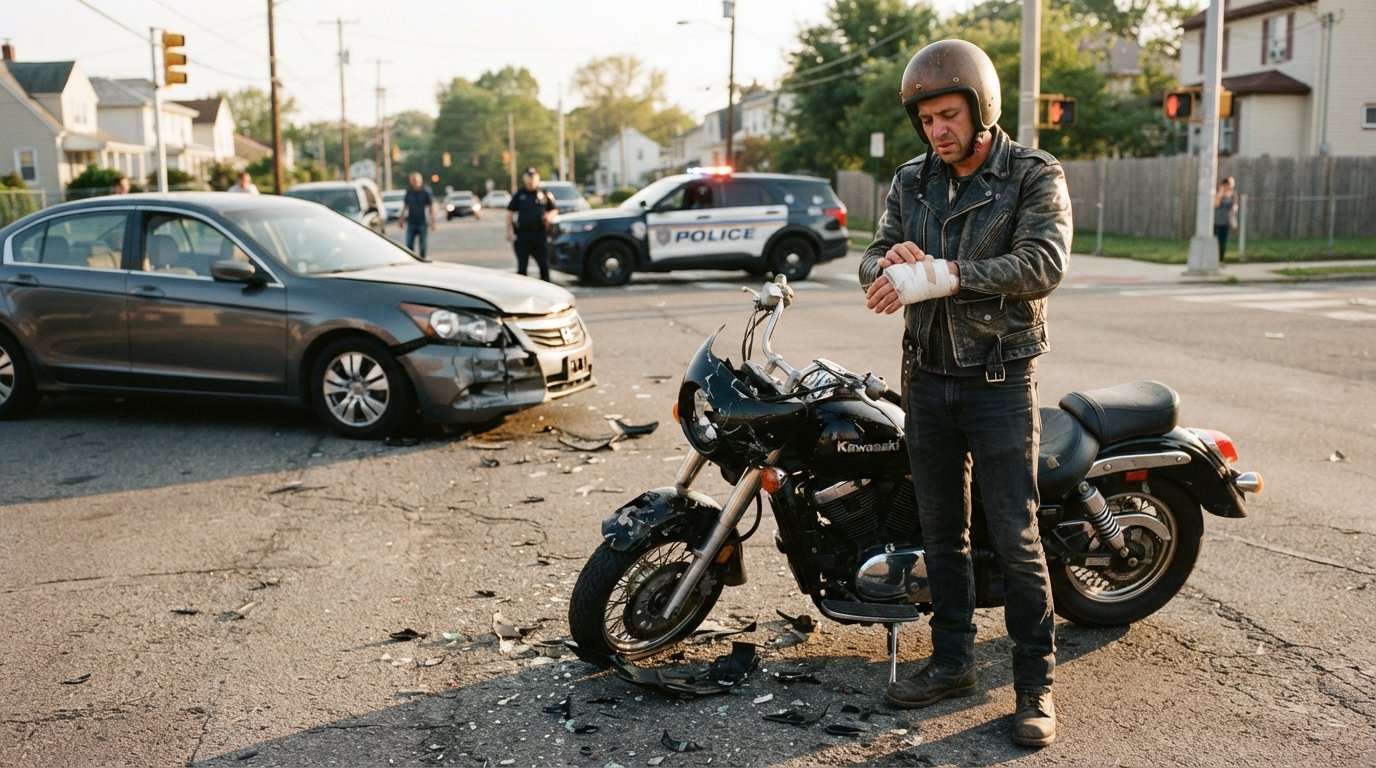
You are riding north on Route 1 outside Philadelphia when a sedan turns left across your lane. The impact throws you from the bike, and you wake up in an ambulance with a fractured wrist and road rash across your arm. The police report is still pending, the insurer is already calling, and one question keeps circling: could this crash be treated as your fault simply because you ride a motorcycle? Pennsylvania law does not work that way, but the insurance company on the other side may try to build a case around that assumption. Understanding how rider liability actually operates in the Keystone State is the first step toward protecting your recovery.
This motorcycle accident legal guide Pennsylvania rider liability breaks down the rules that decide fault after a bike crash, the defenses insurers raise against motorcyclists, and the practical steps that preserve a claim. It is general education, not legal advice, and every crash has its own facts. Still, knowing the framework helps you ask better questions and avoid costly early mistakes.
How Pennsylvania Treats Helmet Use and Comparative Negligence
Pennsylvania is one of the few states that repealed its universal helmet law. Under 75 Pa.C.S. Section 3525, riders aged 21 and older may ride without a helmet if they have at least two years of riding experience or have completed an approved motorcycle safety course. Riders under 21 must wear a helmet at all times, and every rider, regardless of age, must wear eye protection unless the bike has a windshield. These rules matter after a crash because insurers and defense attorneys use helmet status as a wedge to argue the rider contributed to their own injuries.
The good news is that helmet use is not a legal bar to recovery. If you were legally entitled to ride without a helmet, the defense cannot simply point at your bare head and ask a jury to deny your claim. What they can do is argue comparative negligence, the doctrine that reduces a plaintiff's recovery by their share of fault. Pennsylvania follows a modified comparative negligence rule under 42 Pa.C.S. Section 7102. A rider can recover damages as long as their own negligence is not greater than the combined negligence of all defendants. If a jury finds the rider 51 percent or more at fault, recovery is barred entirely. If the rider is found 40 percent at fault, the award is reduced by that percentage.
In practice, helmet status can influence a jury's perception even when it should not. Defense experts sometimes testify that a helmet would have prevented or reduced specific injuries, which can inflate the rider's alleged share of fault. That is why experienced counsel often retain a biomechanics or accident reconstruction expert early, before the insurer's narrative hardens. For riders who want a deeper look at how fault and case evaluation work together, a guide on when to hire a motorcycle accident lawyer offers useful context, even though the procedural rules differ by state.
Comparative negligence also interacts with Pennsylvania's choice no-fault system. Riders who selected limited tort coverage may face restrictions on recovering noneconomic damages such as pain and suffering unless they qualify for a serious injury exception. Full tort coverage preserves the right to pursue those damages. Reviewing your own policy declarations page after a crash is not glamorous, but it shapes the entire claim strategy.
Common Defense Arguments Against Motorcyclists
Insurance adjusters and defense attorneys have a playbook for motorcycle crashes, and it rarely changes. The goal is to shift blame onto the rider, reduce the settlement value, or create enough doubt that the rider accepts a low offer. Recognizing these arguments early lets you gather evidence that neutralizes them.
The most frequent defenses include:
- Speed and reckless riding allegations: Adjusters claim the bike was traveling faster than traffic or weaving between lanes, often without reconstruction data.
- Lane splitting and filtering claims: Pennsylvania does not authorize lane splitting, so any suggestion the rider was between lanes becomes a fault argument even when the crash had nothing to do with positioning.
- Conspicuity arguments: The defense asserts the rider was hard to see because of dark clothing, a small profile, or a non-compliant headlight, shifting attention from the driver's failure to yield.
- Helmet and gear attacks: As noted above, the defense argues that the rider's choices worsened the injuries, inflating comparative fault.
- Licensing and endorsement issues: If the rider lacked a motorcycle endorsement or had a suspended license, the defense uses it to suggest a pattern of disregard for safety rules.
Each of these arguments has a counter. Speed claims fall apart without black box data, witness statements, or scene measurements. Conspicuity arguments weaken when the driver had a statutory duty to yield and simply failed to look. Licensing issues, while unhelpful, do not automatically establish causation; the defense still has to connect the violation to the crash itself. The key is to respond with evidence rather than argument, which is why documentation matters so much in the first weeks after impact.
Left-turn crashes deserve special attention because they are the single most common motorcycle collision pattern. Drivers frequently tell police they never saw the bike. Pennsylvania law imposes a duty on the left-turning driver to yield to oncoming traffic, and a violation of that duty creates a strong negligence case. Even so, adjusters will probe for any reason to assign partial fault to the rider, such as a modified exhaust, an aftermarket turn signal, or a helmet camera that captured the rider's own speed. Preserving that footage before it overwrites itself can be decisive.
Road Hazard and Defective Bike Part Claims
Not every motorcycle crash involves another vehicle. A significant share of rider injuries come from road defects, debris, and mechanical failures. Pennsylvania law treats these as distinct claim types with different defendants and different proof requirements, and riders often overlook them because the crash feels like their own mistake.
Road hazard claims target the government entity responsible for maintaining the roadway. Potholes, uneven pavement, gravel left behind by construction crews, failed patches, and missing or obscured warning signs can all support a claim against a municipality, county, or the Pennsylvania Department of Transportation. These cases carry a short notice deadline: under 42 Pa.C.S. Section 5522, written notice of the injury and the location must generally be given to the government entity within six months. Miss that window and the claim can be barred regardless of how strong the evidence is. Government entities also benefit from sovereign immunity protections, so the claim must fit within a recognized exception, such as a dangerous condition of the roadway itself.
Defective bike part claims follow product liability principles. If a brake line fails, a tire blows out prematurely, or a fork assembly cracks under normal use, the manufacturer, distributor, or retailer may be liable under theories of design defect, manufacturing defect, or failure to warn. These cases require preserving the component in its post-crash condition and resisting pressure to let a shop repair or discard it. An expert inspection can determine whether the part failed because of a defect or because of crash damage, and that distinction often decides the case.
Road hazard and product claims frequently overlap with a rider's own comparative fault analysis. If the rider was speeding when hitting a pothole, the defense will argue the speed caused the loss of control rather than the defect. If a tire failed, the defense may claim the rider ignored visible wear. Building these cases means documenting the roadway, the weather, the maintenance history, and the component's service records. Photographs taken at the scene, before the bike is moved, are among the most valuable evidence a rider can collect.
Steps to Preserve Evidence After a Motorcycle Crash
Evidence in a motorcycle case degrades faster than in almost any other type of collision. Vehicles get repaired or totaled, helmet cameras overwrite their storage, road defects get patched, and witnesses move on. The rider who acts quickly and systematically keeps options open that would otherwise disappear.
Follow these steps as soon as it is safe to do so:
- Call 911 and get a police report: A formal report creates an official record of the scene, the parties, and any citations issued. Note the report number and the responding officer's name.
- Document the scene and the bike: Photograph the vehicle positions, road surface, debris, skid marks, traffic signals, and your gear. Do not repair or clean the motorcycle until an expert has inspected it.
- Collect witness information: Names, phone numbers, and email addresses from anyone who saw the crash, including passengers in the other vehicle. Witnesses disappear quickly.
- Preserve digital evidence: Download helmet camera, dash camera, and phone footage immediately. Send a written preservation letter to the other driver's insurer and, if a commercial vehicle is involved, to the company.
- Seek medical treatment and keep records: Gaps in treatment are used to argue injuries were minor or unrelated. Follow through with every referral and keep all bills, imaging, and discharge instructions.
Beyond the scene, preserve your own riding records: the purchase and service history of the bike, receipts for safety gear, and any communications with the other driver or insurer. Avoid posting about the crash on social media, since adjusters routinely review public profiles for statements that can be twisted into admissions. If you are contacted by the other driver's insurer, keep the conversation limited to basic facts and decline recorded statements until you have reviewed your options.
Pennsylvania's statute of limitations for most personal injury claims is two years from the date of injury under 42 Pa.C.S. Section 5524, but shorter deadlines apply to government claims and to some insurance notice requirements. Missing a deadline usually ends the claim, no matter how clear the liability. A free case evaluation can clarify which deadlines apply to your situation and whether multiple defendants are involved.
When to Bring in Legal Help and How to Choose It
Some motorcycle crashes resolve fairly through the at-fault driver's insurer, especially when liability is clear, injuries are minor, and the rider has full tort coverage. Many do not. Disputes over comparative fault, serious injuries, disputed policy limits, and crashes involving commercial vehicles or government roadways usually benefit from professional representation. The insurer's adjuster is not on your side, even when the conversation feels friendly.
When evaluating representation, ask specific questions: How many motorcycle cases have you handled in Pennsylvania? Do you work with accident reconstruction or biomechanics experts? How do you handle the comparative negligence arguments insurers raise against riders? What are your fees, and are they contingent on recovery? A reputable attorney will answer these directly and provide a written fee agreement before you sign anything. Platforms that connect injured people with vetted counsel, such as LawyerOffer, can help you compare options when you are not sure where to start, though you should always confirm licensing and experience directly with any attorney you consider hiring.
Riders should also understand how liens affect the final number. Health insurers, hospitals, and Medicaid may assert reimbursement claims against a settlement, and Medicare has its own conditional payment rules. A settlement that looks generous before liens can shrink considerably afterward. Ask any attorney how they handle lien negotiation and whether they will reduce their fee to account for outstanding medical bills. For riders focused on the total picture rather than the headline number, that conversation matters as much as the liability analysis.
Pennsylvania's motorcycle community is large, and the law surrounding rider liability continues to evolve through case decisions and statutory amendments. The rules described here reflect the general framework, but a specific crash requires a specific review. The most reliable path is to document thoroughly, avoid early admissions, and get a clear read on fault and deadlines before signing anything. That approach protects the rider's ability to recover for injuries, lost income, and property damage while keeping the insurer's blame-shifting tactics in check.