
Role of Expert Witnesses in Personal Injury Trials
Expert witnesses shape personal injury trials by clarifying complex evidence and strengthening settlement leverage. Call (833)-279-1850 for a free case review.

By Catherine Stout
When a personal injury case moves from negotiation toward a courtroom, the testimony of an expert witness can reshape everything. These professionals translate complex technical, medical, or financial evidence into language a jury can understand, and their opinions often decide whether a plaintiff receives full compensation or walks away with far less. Understanding the role of expert witnesses in personal injury trials helps injured people and their families know what to expect, why these witnesses matter, and how a strong expert can pressure insurers into a fair settlement before trial even begins.
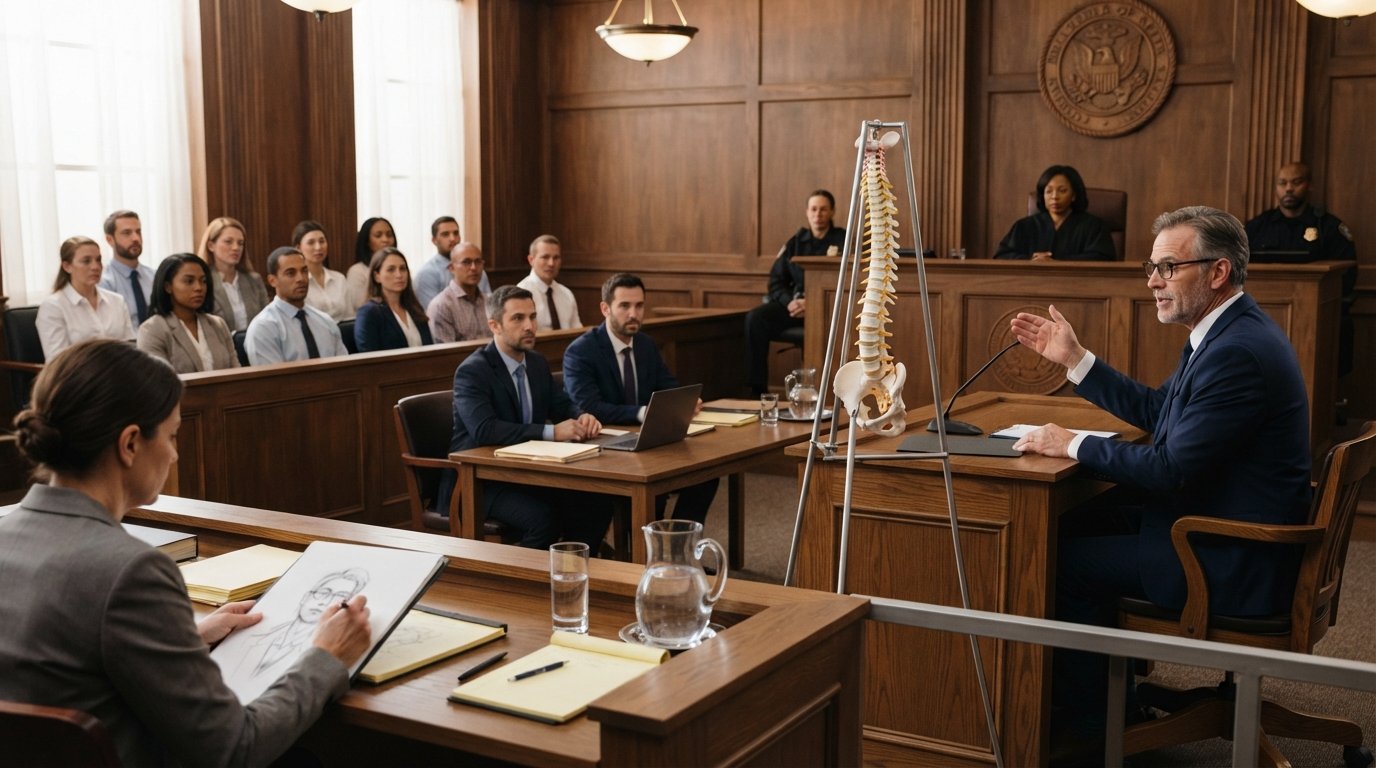
An expert witness is someone with specialized knowledge, training, or experience beyond that of an average person. Courts allow these witnesses to offer opinions, not just facts, because certain issues are too technical for jurors to evaluate on their own. In a personal injury trial, that might mean a biomechanical engineer explaining how a crash caused a spinal injury, or an economist calculating lost future earnings. Without this testimony, a jury may struggle to connect the defendant's conduct to the plaintiff's damages.
Why Expert Witnesses Matter in Personal Injury Litigation
Personal injury trials hinge on two questions: who was at fault, and how much harm resulted. Both questions usually require specialized insight. A treating physician can describe injuries and treatment, but an independent medical expert can explain causation, prognosis, and whether the injury is permanent. Similarly, an accident reconstruction specialist can determine speed, impact angle, and reaction time, which directly affects the fault analysis. These details are not obvious to the average juror, so expert testimony bridges the gap between raw evidence and a convincing legal narrative.
Experts also help establish the standard of care in negligence cases. For example, in a premises liability claim involving a slippery floor, a safety expert might testify about industry cleaning practices and warning requirements. That testimony gives the jury a benchmark for judging the property owner's behavior. Without it, the defense could argue that the owner did nothing wrong simply because no rule was obviously broken.
Another critical function is quantifying damages. Economic experts calculate past and future medical costs, lost wages, reduced earning capacity, and rehabilitation expenses. Life care planners outline the ongoing needs of a catastrophically injured plaintiff. These figures give the jury a concrete number to consider when awarding compensation. In many cases, the difference between a modest settlement offer and a substantial verdict comes down to how well the plaintiff's experts can document and explain these losses.
Types of Expert Witnesses Commonly Used in Personal Injury Trials
Different cases call for different experts, but several categories appear repeatedly in personal injury litigation. Each brings a unique perspective that supports a specific element of the claim.
- Medical experts: Physicians, surgeons, and specialists who testify about injury severity, causation, treatment options, and long-term prognosis.
- Accident reconstruction experts: Engineers and investigators who analyze skid marks, vehicle damage, and scene evidence to determine how the accident occurred.
- Economists and vocational experts: Professionals who calculate lost earnings, diminished earning capacity, and the present value of future losses.
- Life care planners: Experts who project the cost of future medical care, therapy, assistive devices, and home modifications.
- Safety and human factors experts: Specialists who evaluate whether a property owner, manufacturer, or employer followed accepted safety practices.
The choice of experts depends on the facts of the case and the specific damages claimed. A simple soft-tissue injury may require only a treating physician and perhaps an economist, while a catastrophic brain injury case might involve a neurologist, neuropsychologist, life care planner, and multiple economic experts. Each addition increases cost, so attorneys carefully weigh which experts will provide the most persuasive value.
In mass tort litigation, expert testimony becomes even more central. These consolidated cases often involve thousands of plaintiffs alleging harm from a common product or drug. Experts must establish general causation, meaning that the product can cause the alleged injury, and specific causation, meaning that it did cause this particular plaintiff's injury. The scientific and medical evidence presented by experts can determine whether the entire litigation moves forward or collapses. For those exploring these complex claims, resources on what lawyers do in personal injury cases can clarify how expert coordination fits into the broader legal strategy.
How Expert Witnesses Are Selected and Qualified
Not just anyone with a professional title can serve as an expert witness. Courts apply standards, most notably the Daubert and Frye tests, to determine whether expert testimony is admissible. These tests examine whether the expert's methods are scientifically valid, whether the reasoning can be tested, and whether the technique has gained general acceptance in the relevant field. A qualified expert must have genuine expertise in the specific area at issue, not just a general medical or engineering background.
Attorneys typically look for experts with strong credentials, relevant experience, and a track record of credible testimony. They also consider communication skills, because an expert who cannot explain complex ideas clearly will not help the jury. Prior testimony history matters as well; an expert who has testified too often for one side may be seen as a hired gun rather than an objective professional.
The selection process often involves reviewing the expert's publications, prior deposition transcripts, and courtroom demeanor. Attorneys may also consult colleagues who have used the expert before. Once selected, the expert reviews medical records, accident reports, photographs, and other evidence, then prepares a report summarizing opinions. That report becomes a key part of pretrial discovery and often shapes settlement negotiations.
Challenges to Expert Testimony
Opposing counsel can challenge an expert's qualifications, methodology, or conclusions. They may file a motion to exclude the testimony entirely, arguing that the expert's methods are unreliable or that the expert lacks sufficient expertise. If the challenge succeeds, the plaintiff may lose a crucial piece of evidence, which can weaken the case or force a lower settlement. This is why experienced attorneys invest significant time in vetting experts and ensuring their opinions rest on solid, defensible foundations.
During cross-examination, defense attorneys attempt to highlight inconsistencies, bias, or gaps in the expert's analysis. A well-prepared expert can withstand these attacks by staying within the bounds of their expertise, acknowledging limitations, and explaining the basis for each opinion clearly. The credibility of the expert often influences how much weight the jury gives to the testimony.
The Role of Expert Witnesses in Settlement Negotiations
Most personal injury cases settle before trial, and expert witnesses play a major role in that process. A strong expert report can pressure insurers to increase their offer because it demonstrates that the plaintiff has credible evidence supporting both liability and damages. Defense attorneys know that if the case goes to trial, the jury may hear persuasive testimony from a respected specialist, which creates uncertainty about the outcome.
Experts also participate in depositions, where opposing counsel questions them under oath about their opinions and methodology. A confident, well-reasoned deposition performance can strengthen the plaintiff's negotiating position. Conversely, a weak deposition may embolden the insurer to hold firm on a low offer, betting that the expert will not perform well in front of a jury.
In some cases, the mere threat of expert testimony is enough to prompt a fair settlement. Insurers evaluate risk carefully, and the prospect of a sympathetic expert explaining the plaintiff's suffering and future needs can be a powerful motivator. Attorneys often use expert reports as leverage, presenting them during mediation or settlement conferences to show the strength of the case.
Limits and Costs of Expert Witness Testimony
Expert witnesses are not a guaranteed path to victory. Their testimony can be excluded, discredited, or outweighed by contrary experts hired by the defense. In many trials, both sides present competing experts, and the jury must decide which is more credible. This battle of experts can make outcomes unpredictable, which is one reason many cases settle rather than proceed to verdict.
Cost is another significant consideration. Qualified experts charge hourly rates that can range from a few hundred to over a thousand dollars per hour, and complex cases may require multiple experts. These expenses are often advanced by the attorney and repaid from the settlement or verdict. For plaintiffs with limited resources, the cost of experts can be a barrier, though contingency fee arrangements typically shift the upfront burden to the lawyer.
Despite these challenges, expert testimony remains indispensable in serious personal injury cases. Without it, plaintiffs would struggle to prove causation, establish the standard of care, or quantify damages in a way that resonates with a jury. The role of expert witnesses in personal injury trials is therefore not just supportive; it is often the backbone of a successful claim.
Preparing for Trial: Coordination Between Attorneys and Experts
Effective use of expert witnesses requires close collaboration between the attorney and the expert from the early stages of the case. Attorneys must educate experts about the legal standards, the elements of the claim, and the specific issues the jury will decide. Experts, in turn, help attorneys understand the technical nuances that shape strategy. This partnership ensures that the expert's testimony aligns with the overall case theory and addresses the points that matter most.
Mock trials and focus groups can be valuable tools for testing how jurors react to expert testimony. Attorneys may adjust their presentation based on feedback, simplifying complex concepts or emphasizing certain details. Preparation also includes anticipating cross-examination questions and rehearsing responses, so the expert appears calm and credible under pressure.
In the end, the most successful personal injury trials are those where attorneys and experts work as a team, each bringing their expertise to bear on the shared goal of achieving justice for the injured plaintiff. For law firms seeking to connect with clients who need this level of representation, platforms like AttorneyLeads provide pre-screened legal leads that can help build a strong personal injury practice.
Expert witnesses do more than testify; they clarify, quantify, and persuade. Their contributions often determine whether an injured person receives the compensation needed to rebuild their life. As long as personal injury trials involve complex medical, technical, and financial questions, experts will remain essential participants in the pursuit of fair outcomes.