
Uninsured Motorist Coverage Claim in Pennsylvania: How It Works
Understand your uninsured motorist coverage claim in Pennsylvania, including stacking, deadlines, and bad faith. Call (833)-279-1850 for a free case review.

By Silas Morton
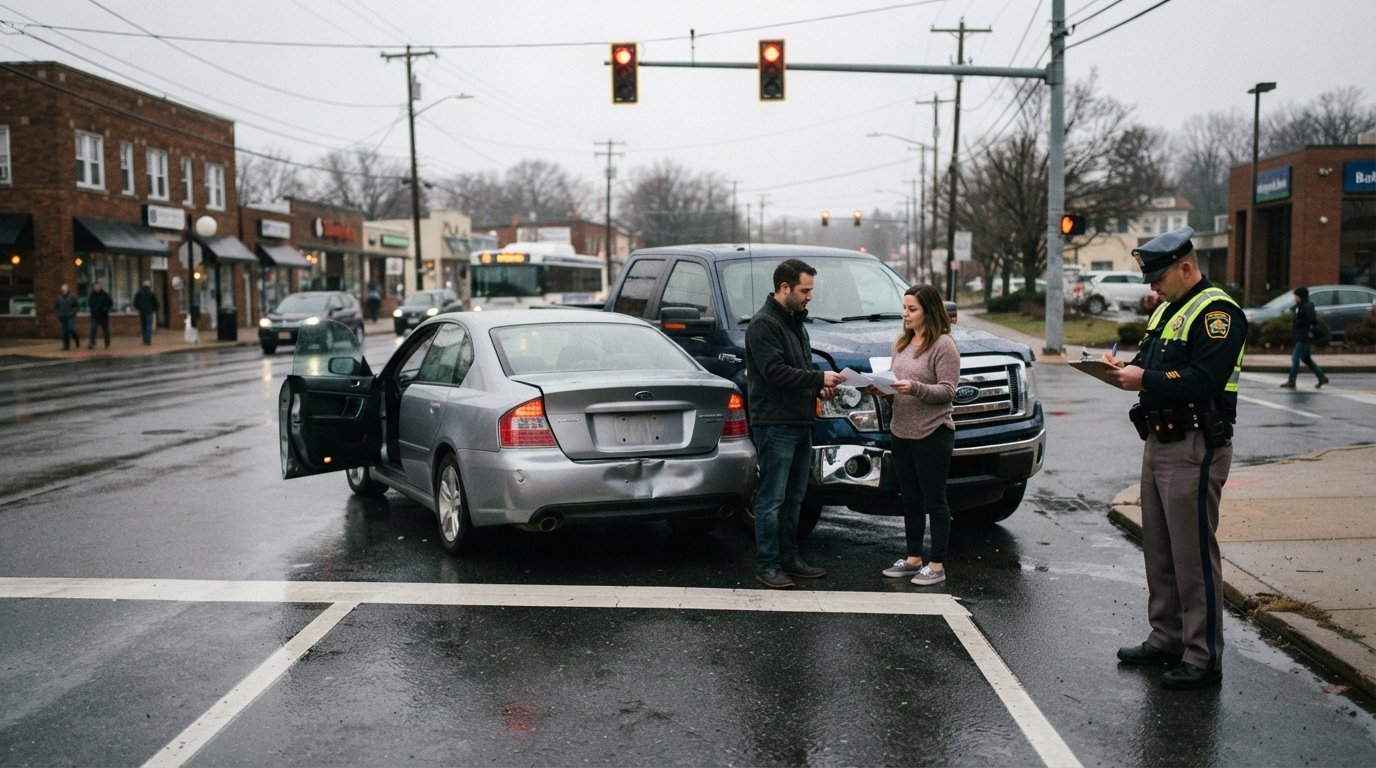
You are sitting at a red light when a driver slams into your rear bumper. You exchange information, call the police, and later learn the at-fault driver has no insurance at all. Or perhaps the driver has insurance, but the policy limits are so low they barely cover your medical bills. In Pennsylvania, this scenario is more common than many drivers realize. The Insurance Research Council estimates that roughly one in eight drivers nationwide operates without insurance, and Pennsylvania is not immune to that trend. When the at-fault party cannot pay, your own uninsured motorist (UM) or underinsured motorist (UIM) coverage becomes the financial safety net you purchased without fully understanding it. This guide explains the uninsured motorist coverage claim in Pennsylvania how it works, from the difference between UM and UIM to stacking rules, filing deadlines, and what to do when your insurer delays or denies your claim.
Uninsured vs. Underinsured Motorist Coverage: What Is the Difference?
Pennsylvania law requires insurers to offer uninsured motorist coverage, but you must actively reject it in writing if you do not want it. Uninsured motorist coverage (UM) applies when the at-fault driver has no liability insurance whatsoever, or when the driver flees the scene in a hit-and-run accident. If you are injured by a driver who cannot be identified, UM coverage steps in just as if that phantom driver had a policy. This is a critical protection because hit-and-run accidents are notoriously difficult to resolve without your own coverage.
Underinsured motorist coverage (UIM) is different. It applies when the at-fault driver has liability insurance, but the policy limits are insufficient to cover your damages. For example, suppose the other driver carries the Pennsylvania minimum of $15,000 per person for bodily injury. You suffer a serious back injury requiring surgery, and your total damages exceed $100,000. The other driver's insurer pays its $15,000 limit, leaving a massive shortfall. Your UIM coverage can then fill that gap, up to your own policy limits. UIM is not mandatory in Pennsylvania, but it is arguably the most valuable coverage a driver can buy.
The key distinction is that UM responds to a complete absence of insurance, while UIM responds to inadequate insurance. Both coverages apply to you, your family members, and passengers in your vehicle, and they typically follow you even when you are a pedestrian or riding in someone else's car. Understanding this difference is the first step in making sense of the uninsured motorist coverage claim in Pennsylvania how it works process.
Pennsylvania Stacking Rules and Waivers
Stacking allows you to combine the UM or UIM limits from multiple vehicles on your policy, or from multiple policies in your household, to increase the total available coverage. In Pennsylvania, stacking is permitted for uninsured and underinsured motorist benefits unless you sign a valid waiver. For example, if you insure three vehicles with $100,000 in UIM coverage each, stacking could provide up to $300,000 in total UIM benefits for a single accident. That is a significant difference for a serious injury claim.
However, Pennsylvania insurers frequently include waiver language in their policies. If you signed a stacking waiver, you are limited to the coverage on the vehicle involved in the accident. The waiver must be knowing and voluntary, and courts have scrutinized whether insurers properly explained the consequences. If you are unsure whether you signed a waiver, pull out your declarations page and policy jacket. Look for language that says something like "stacking is waived" or "the limits shown are the maximum payable regardless of the number of vehicles." If you never signed such a document, you may have a strong argument that stacking applies.
There is another wrinkle: Pennsylvania's Motor Vehicle Financial Responsibility Law gives insurers the right to include anti-stacking language, but the validity of that language depends on strict compliance with statutory notice requirements. Courts have held that an insurer cannot enforce a stacking waiver that was not properly explained to the policyholder. This is one reason why having an experienced attorney review your policy is valuable. As you navigate the uninsured motorist coverage claim in Pennsylvania how it works, the stacking analysis can substantially increase the value of your recovery.
How to File a UM or UIM Claim with Your Own Insurer
Filing a UM or UIM claim is not as simple as calling your agent and describing the accident. Your insurer will treat the claim like an adversarial proceeding, even though you are its policyholder. The company will assign an adjuster, request a recorded statement, and scrutinize your medical records. To protect your rights, follow a structured approach.
First, notify your insurer promptly. Most policies require notice within a reasonable time, and some include specific deadlines. Do not wait weeks or months. Second, gather documentation: the police report, the other driver's insurance information (or proof that no insurance exists), medical records, bills, wage loss verification, and photographs of the scene and vehicle damage. Third, be cautious with recorded statements. You are generally required to cooperate with your insurer, but you are not required to provide a statement without preparation. Consider consulting an attorney before giving a detailed recorded statement, especially if your injuries are serious.
Here is a practical sequence for moving a UM or UIM claim forward:
- Confirm coverage and limits. Request a copy of your declarations page and the full policy. Verify whether UM and UIM coverage exist, the limits, and whether stacking applies.
- Establish the at-fault driver's insurance status. For UM, obtain a police report or an affidavit confirming no insurance. For UIM, obtain the other driver's policy limits in writing from their insurer.
- Document your damages thoroughly. Collect medical records, billing statements, lost wage letters from your employer, and evidence of pain and suffering. Keep a daily symptom journal if your injuries are ongoing.
- Submit a demand package. Send your insurer a organized demand letter with supporting documentation and a settlement figure. This begins formal negotiations.
- Evaluate the offer and negotiate. Do not accept the first offer. UM and UIM adjusters often open low. Compare the offer against your documented damages and be prepared to explain why it is insufficient.
If negotiations stall, you may need to invoke the policy's appraisal or arbitration clause. Many Pennsylvania UM and UIM policies require binding arbitration when the parties cannot agree on damages. Arbitration can be faster and less formal than litigation, but it is still an adversarial process where evidence and presentation matter. An attorney can help you prepare for arbitration and avoid procedural pitfalls that could waive your rights.
For a broader perspective on selecting qualified counsel for disability-related claims, which sometimes overlap with accident injuries, see this guide on top Pennsylvania disability lawyers. The same diligence applies when choosing an attorney for a UM or UIM claim.
Bad Faith Concerns When Your Insurer Delays or Denies
Pennsylvania law imposes a duty of good faith and fair dealing on insurers. If your insurer unreasonably delays payment, fails to investigate promptly, or denies a valid claim without a reasonable basis, you may have a bad faith claim under 42 Pa.C.S. Section 8371. Bad faith remedies can include interest, punitive damages, and attorney fees. However, bad faith is difficult to prove. Courts require clear and convincing evidence that the insurer acted with a dishonest purpose or ill will, or that it knowingly or recklessly disregarded a lack of reasonable basis for its position.
Common bad faith tactics in UM and UIM claims include demanding unnecessary recorded statements, delaying consent to settlement with the at-fault driver, undervaluing medical evidence, and failing to disclose policy limits. If you suspect bad faith, document every communication with your insurer. Keep a log of phone calls, letters, and emails. Note the dates you provided information and the dates the insurer responded. This record can become evidence in a bad faith action.
It is important to remember that your insurer is not on your side in a UM or UIM claim, even though you are its customer. The adjuster's job is to protect the company's bottom line. That does not mean every delay is bad faith, but it does mean you should not assume the insurer will voluntarily pay what your claim is worth. If you are facing significant medical bills and lost income, consider speaking with an attorney who handles insurance bad faith cases. LegalCaseReview offers a free case evaluation and can connect you with attorneys experienced in Pennsylvania UM and UIM claims. If you are also dealing with a car accident and need legal guidance, resources such as CarInjuryAccident can help you understand your options.
Deadlines and Documentation You Need
Pennsylvania has a two-year statute of limitations for personal injury claims, and that deadline generally applies to UM and UIM claims as well. If you do not file suit within two years of the accident, you may lose your right to recover, even if your insurer is still negotiating. Do not let a claims adjuster talk you into delaying formal action without a written agreement to toll the statute. Verbal assurances are not enough.
In addition to the statute of limitations, your policy may contain contractual notice deadlines. Some policies require notice of a UM or UIM claim within 30 days of the accident, and proof of claim within a specified period. Read your policy carefully or ask your attorney to review it. Missing a contractual deadline can give your insurer grounds to deny coverage.
Documentation is the backbone of any successful claim. You should assemble the following:
- Police report and accident report: Establishes the facts of the crash and the other driver's information.
- Insurance information: The at-fault driver's declarations page or a denial letter, plus your own policy documents.
- Medical records and bills: Emergency room records, treatment notes, imaging, surgical reports, and all billing statements.
- Wage loss documentation: Pay stubs, employer letters, and tax returns to prove lost income.
- Evidence of pain and suffering: A symptom journal, photographs of injuries, and testimony from family members.
Keep copies of everything you send to your insurer. Send documents by certified mail or email with delivery confirmation. If you later need to file a bad faith claim or go to arbitration, a clear paper trail will strengthen your position. The uninsured motorist coverage claim in Pennsylvania how it works process rewards organization and persistence. Insurers respond better to well-documented demands, and arbitrators or judges are more likely to trust a claimant who has kept meticulous records.
Practical Tips for Maximizing Your Recovery
UM and UIM claims are not just about proving the accident happened. They are about proving the full extent of your damages and overcoming the insurer's natural inclination to minimize them. Start by seeking medical treatment immediately and following your doctor's recommendations without gaps. Insurance adjusters look for gaps in treatment as evidence that you were not seriously injured. If you miss appointments or stop physical therapy early, the insurer will use that against you.
Be honest and consistent in your reporting. If you tell your doctor you have headaches and tell the adjuster you feel fine, the inconsistency will undermine your credibility. Keep a journal of your symptoms, limitations, and how the injury affects your daily life. This kind of evidence is powerful in arbitration and at trial. Also, avoid posting about your accident on social media. Insurers routinely review public profiles for evidence that contradicts your claimed injuries.
Finally, do not sign a release or settlement agreement without understanding its consequences. A release for a UM or UIM claim may waive your right to pursue other claims, including a bad faith claim or a claim against another party. If you are unsure, have an attorney review the document before you sign. The stakes are high, and a few minutes of legal review can prevent a costly mistake.
If you have been injured by an uninsured or underinsured driver in Pennsylvania, you do not have to navigate the claims process alone. LegalCaseReview provides educational resources and a free case evaluation to help you understand your rights. Call (833)-279-1850 to speak with a team that can review your situation and connect you with experienced attorneys. Whether you are dealing with a straightforward UM claim or a complex stacking dispute, getting informed is the first step toward protecting your recovery.