
Challenging Field Sobriety Tests in Pennsylvania DUI Cases
Challenging field sobriety tests in Pennsylvania DUI cases can reduce or dismiss charges. Call 8332791850 for a free case review and protect your rights.

By Kaia Thornton
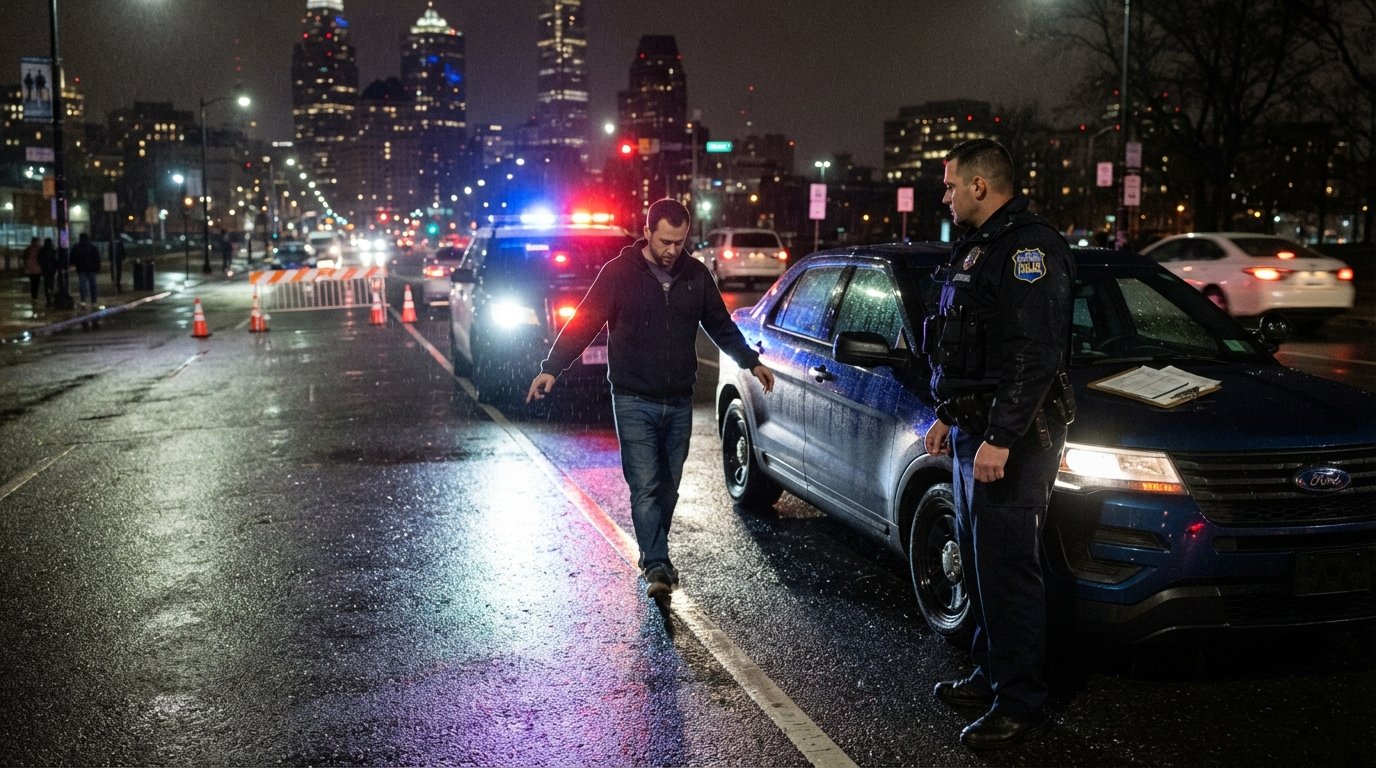
A traffic stop on a Friday night in Philadelphia, a suburban checkpoint in Montgomery County, or a late drive home near Pittsburgh can turn into a DUI charge in minutes. Officers often rely on three standard field sobriety tests to build probable cause: the Horizontal Gaze Nystagmus, the Walk and Turn, and the One Leg Stand. These tests look scientific on a police report, but they are not perfect. In fact, they are frequently challenged in Pennsylvania DUI cases, and those challenges can change the outcome of a case. Understanding how these tests work, where they break down, and what a strong defense looks like gives you a realistic view of your options.
At the same time, a DUI charge does not exist in isolation. It intersects with license suspensions, implied consent rules, and sometimes with personal injury or accident claims if the stop followed a crash. If you are trying to sort out the legal side while dealing with insurance adjusters or medical bills, a free case evaluation can help you see the full picture before you decide your next step.
What Pennsylvania Law Says About Field Sobriety Tests
Pennsylvania does not require you to submit to field sobriety tests. Unlike a chemical test of breath or blood, which is governed by the state's implied consent law, the physical coordination tests are voluntary in practice. An officer may ask you to step out of the car and perform them, but a refusal is not itself a separate crime. That distinction matters because many drivers do not realize they can politely decline. The officer may still arrest you based on other observations, but the absence of test results removes a key piece of evidence the prosecution would otherwise use.
If you do perform the tests, the results are not automatically conclusive. They are designed to generate clues of impairment, and courts treat them as one part of the larger probable cause analysis. Defense attorneys routinely argue that the tests were administered incorrectly, scored unfairly, or interpreted through the lens of an officer who had already decided to arrest. To understand how the chemical testing side works, including the consequences of refusal and the role of implied consent, it helps to review the Pennsylvania DUI implied consent law because that framework often runs parallel to any challenge of the physical tests.
Pennsylvania also has a tiered DUI structure based on blood alcohol concentration and prior offenses. General impairment applies when a driver is deemed incapable of safe driving regardless of a specific number. Higher tiers apply at 0.10 percent and 0.16 percent. Field sobriety tests are most often used to establish the general impairment tier, which makes them a prime target for challenge when chemical evidence is weak or unavailable.
The Three Standard Tests and How They Are Supposed to Work
The National Highway Traffic Safety Administration developed a standardized battery of three tests. Officers who complete NHTSA training are expected to follow specific instructions and scoring criteria. When they deviate from those standards, the reliability of the results drops. Here is what each test is supposed to measure and where it commonly goes wrong.
Horizontal Gaze Nystagmus (HGN)
HGN looks for involuntary jerking of the eyes as they track a moving object, usually a pen or a small light. The officer checks for lack of smooth pursuit, distinct nystagmus at maximum deviation, and onset of nystagmus before 45 degrees. The theory is that alcohol and certain other substances exaggerate this jerking. The problem is that many medical conditions, head injuries, fatigue, and even some prescription medications can produce similar results. An officer who moves the stimulus too quickly, holds it too high, or fails to check for equal pupil size can compromise the test.
HGN is also the most technically demanding of the three. Small errors in administration can create false clues. Because the test relies on the officer's visual observation, there is no recording of what the eyes actually did. That makes cross examination essential. A skilled defense attorney will ask about the officer's training, the lighting at the scene, the distance from the driver, and whether any medical or vision issues were noted.
Walk and Turn
The Walk and Turn is a divided attention test. The driver must listen to instructions, stand heel to toe, take nine heel to toe steps down a line, turn in a specific way, and take nine steps back. The officer scores eight possible clues, including starting too soon, losing balance during instructions, stepping off the line, and using arms for balance. Two or more clues are considered evidence of impairment.
In real world conditions, this test is often administered on uneven pavement, gravel, or a sloped shoulder. Wind, traffic noise, and flashing lights can distract the driver. Footwear matters too. A person in heels, boots, or sandals may struggle even when completely sober. Age, weight, and physical fitness also affect performance. An officer who fails to demonstrate the test properly or who gives inconsistent instructions creates grounds for challenge.
One Leg Stand
The One Leg Stand requires the driver to raise one foot about six inches off the ground, keep the leg straight, and count out loud for thirty seconds while watching the raised foot. The officer looks for swaying, hopping, putting the foot down, and using arms for balance. Four clues or more suggest impairment. Like the Walk and Turn, this test is heavily influenced by balance, coordination, and physical condition. Inner ear disorders, back problems, and leg injuries can make the test nearly impossible for a sober person.
Officers sometimes combine the One Leg Stand with other tasks or ask the driver to recite the alphabet or count backward. These additional tasks are not part of the standardized battery and can introduce more error. When an officer invents a test on the spot, the results are much easier to attack.
Common Grounds for Challenging Field Sobriety Tests in Pennsylvania DUI Cases
Challenges to field sobriety tests usually fall into a few categories. The strongest cases often combine several of them. The goal is not necessarily to prove the driver was sober. It is to show that the test evidence is unreliable, incomplete, or unfairly prejudicial. If the court agrees, that evidence may be suppressed or given little weight.
One of the most effective challenges is improper administration. NHTSA standards are specific. If the officer skipped the instruction phase, failed to demonstrate the test, or scored clues that do not match the definition, the results can be called into question. Another common issue is environmental conditions. A test given on a busy roadside at night, with passing headlights and uneven ground, is not the controlled setting the test assumes.
Personal factors are equally important. Medical conditions, injuries, medications, and even fatigue can mimic the clues officers look for. A driver with a knee injury may wobble on the One Leg Stand for reasons that have nothing to do with alcohol. A driver with an inner ear condition may sway regardless of sobriety. When these factors are documented, they can seriously undermine the prosecution's case.
Scoring and documentation errors also matter. Officers sometimes record clues inconsistently, fail to note which foot was used, or omit the exact words they used to instruct the driver. Body camera footage, when available, can reveal discrepancies between the report and what actually happened. If the video shows a calm, cooperative driver who followed instructions, the written report may look exaggerated.
Finally, the officer's training and experience can be challenged. Not every officer who administers field sobriety tests has current certification. Some have let their training lapse. Others have been disciplined for improper testing in the past. Cross examination on these points can reduce the weight the court gives to the officer's opinion.
How Pennsylvania Courts Treat Test Challenges
Pennsylvania courts have consistently held that field sobriety tests are not scientific evidence in the same way a blood test is. They are observational tools. That means the prosecution must lay a foundation showing the officer was trained, the tests were administered properly, and the results are relevant. If the defense can show a flaw in that foundation, the judge may exclude the evidence or limit how it can be used.
In some cases, the defense files a motion to suppress. If the stop itself was unlawful, everything that followed, including the field tests, may be thrown out. If the stop was lawful but the tests were conducted improperly, the defense may argue that the results should not be admitted. Even when the evidence is admitted, the defense can still present its own expert or use cross examination to show the jury why the tests are not reliable.
It is important to remember that a DUI case is not just about the field tests. Chemical test results, officer observations, and the driving behavior that led to the stop all play a role. A challenge to the field tests is one part of a broader defense strategy. In some cases, it is the difference between a conviction and a reduced charge. In others, it supports a plea negotiation that avoids the harshest penalties.
Practical Steps If You Are Facing a DUI Charge
If you have been charged with DUI in Pennsylvania, the steps you take in the first few days can shape the rest of the case. The legal process moves quickly, and deadlines for motions and hearings are strict. Here are the key actions to consider.
- Write down everything you remember about the stop, including where it happened, what the officer said, and what you were asked to do.
- Gather any medical records that document conditions or injuries that could affect your performance on field sobriety tests.
- Request the police report, body camera footage, and any dash camera video as soon as possible.
- Do not discuss the case with anyone other than your attorney, and do not post about it on social media.
- Contact a DUI defense attorney who regularly handles cases in the county where you were charged.
These steps help preserve evidence and give your attorney the tools to challenge the field sobriety tests effectively. Waiting too long can mean lost video, faded memories, and missed opportunities to file motions. Even if you believe the evidence against you is strong, an experienced attorney may find issues that are not obvious to you.
If you are also dealing with a personal injury claim from the same incident, or if you are trying to understand how a DUI charge might affect a civil case, a free case evaluation can connect you with attorneys who handle both sides of the matter. LegalCaseReview offers a free, confidential review of your situation through its trusted attorney matching platform, which can help you find the right representation without upfront cost.
The Role of an Attorney in Challenging Field Sobriety Tests
A DUI defense attorney does more than argue that the tests were unfair. The attorney reviews the entire chain of events, from the initial traffic stop to the chemical testing and the booking process. If any step was improper, it can be challenged. The attorney may hire an expert to review the administration of the tests or to explain how medical conditions can affect performance. In some cases, the attorney will file a motion to suppress the test results entirely.
Experience with local courts matters. Some judges are more receptive to certain arguments than others. An attorney who knows the prosecutors and the judges in a particular county can tailor the defense strategy accordingly. That local knowledge often makes the difference between a standard plea and a favorable outcome.
Beyond the courtroom, an attorney can help you understand the collateral consequences of a DUI conviction. These may include license suspension, increased insurance rates, and mandatory ignition interlock requirements. If you are a commercial driver or your job requires a clean record, the stakes are even higher. A lawyer can explain these consequences and work to minimize them.
What to Look for in a DUI Defense Attorney
Not every attorney who handles DUI cases has the same level of experience. When you are interviewing potential lawyers, ask about their track record with field sobriety test challenges. Find out whether they have completed NHTSA training or worked with experts in the field. Ask how many DUI cases they have taken to trial and what results they have achieved. A lawyer who understands the science behind the tests is in a much better position to challenge them.
You should also ask about communication. Will you speak directly with the attorney or with a paralegal? How often will you receive updates? What is the fee structure? Some attorneys charge a flat fee for DUI cases, while others bill hourly. Understanding the cost upfront helps you avoid surprises later.
Finally, trust your instincts. A good attorney will listen to your story, explain the law in plain language, and give you a realistic assessment of your options. If a lawyer promises a specific outcome without reviewing the evidence, that is a red flag. The best defense strategies are built on facts, not guarantees.
Challenging field sobriety tests in Pennsylvania DUI cases is a complex but often worthwhile endeavor. These tests are not infallible, and the law does not require you to accept them at face value. With the right attorney and a careful review of the evidence, you can hold the prosecution to its burden and protect your rights. If you are ready to explore your options, reach out for a free consultation and take the first step toward a stronger defense.