
How Expert Witnesses Shape Mass Tort Trials: A 2026 Guide
Expert witnesses drive mass tort outcomes by proving causation and damages. Call (833)-279-1850 for a free case review and attorney match.
Imagine thousands of plaintiffs, each with a similar story of harm, facing a corporate defendant in a single courtroom. How does a jury make sense of complex science, medical evidence, and billions of dollars in claimed damages? The answer often rests on the shoulders of expert witnesses. In mass tort trials, these professionals are not just supporting actors; they are the architects of the case, translating impenetrable data into compelling narratives that judges and juries can understand. Their testimony can determine whether a case proceeds, how damages are calculated, and ultimately, whether victims receive compensation. Understanding how expert witnesses are used in mass tort trials is essential for anyone navigating these high-stakes legal battles, from claimants to legal professionals.
The Pivotal Roles of Expert Witnesses in Mass Torts
Mass torts differ from ordinary lawsuits in scale and complexity. They involve hundreds or thousands of plaintiffs, each alleging harm from a common product, drug, or environmental exposure. Expert witnesses serve as the bridge between raw scientific data and the legal elements of a case. Their roles can be broadly categorized into two main functions: causation and damages. Causation experts establish the link between the defendant's conduct and the plaintiffs' injuries, while damages experts quantify the financial and human costs of those injuries. In many mass torts, additional experts may address issues like regulatory compliance, industry standards, or epidemiological patterns.
Causation experts often include medical doctors, epidemiologists, toxicologists, and biostatisticians. They analyze studies, patient records, and exposure data to determine whether a product or substance can cause the alleged harm, and whether it did so in specific plaintiffs. For example, in talc litigation, plaintiffs rely on experts to show that asbestos contamination in talcum powder can cause ovarian cancer or mesothelioma. These experts must not only present scientific evidence but also withstand rigorous challenges to their methodology and conclusions. Their testimony is frequently the battleground on which the entire case turns.
Damages experts, on the other hand, focus on quantifying the impact of the harm. They may include economists, accountants, life-care planners, and vocational rehabilitation specialists. These experts calculate past and future medical expenses, lost earnings, pain and suffering, and other compensatory damages. In mass tort trials, they often use statistical models and aggregated data to estimate damages across a plaintiff group, while also accounting for individual differences. Their testimony helps juries understand the financial scope of the harm and ensures that awards are grounded in evidence rather than speculation. In our guide on the role of expert witnesses in personal injury trials, we explain how these principles apply in single-plaintiff cases, which often serve as bellwethers for mass torts.
Admissibility Standards: Daubert and Frye
Before an expert can testify, the court must determine whether their testimony is admissible. Two primary standards govern this gatekeeping function: the Daubert standard and the Frye standard. The Daubert standard, established by the U.S. Supreme Court in Daubert v. Merrell Dow Pharmaceuticals, Inc., requires the trial judge to assess whether the expert's methodology is scientifically valid and reliably applied to the facts of the case. Courts consider factors such as whether the theory can be and has been tested, whether it has been subjected to peer review, its known or potential error rate, and its general acceptance in the relevant scientific community. Daubert is used in federal courts and in many state courts.
The Frye standard, on the other hand, is older and more permissive. It asks whether the expert's methodology is generally accepted by the relevant scientific community. Frye is still used in a minority of states, including California and New York. The choice between Daubert and Frye can significantly affect which experts are allowed to testify and how the case unfolds. Under Daubert, judges act as gatekeepers, often holding pretrial hearings (Daubert hearings) to scrutinize expert evidence. Under Frye, the focus is more on consensus within the scientific field, which can sometimes allow novel theories to be presented if they have gained general acceptance.
In mass tort trials, these standards are critical because defendants often challenge expert testimony aggressively. A successful Daubert motion can exclude a plaintiff's key causation expert, potentially dooming the entire case. Conversely, if the expert survives the challenge, their testimony can carry enormous weight. Attorneys on both sides invest substantial resources in preparing experts for these admissibility battles, knowing that the outcome may dictate the trajectory of the litigation. The strategic use of expert witnesses in mass tort trials is therefore inseparable from a deep understanding of these evidentiary rules.
Presenting Expert Testimony in Group Trials
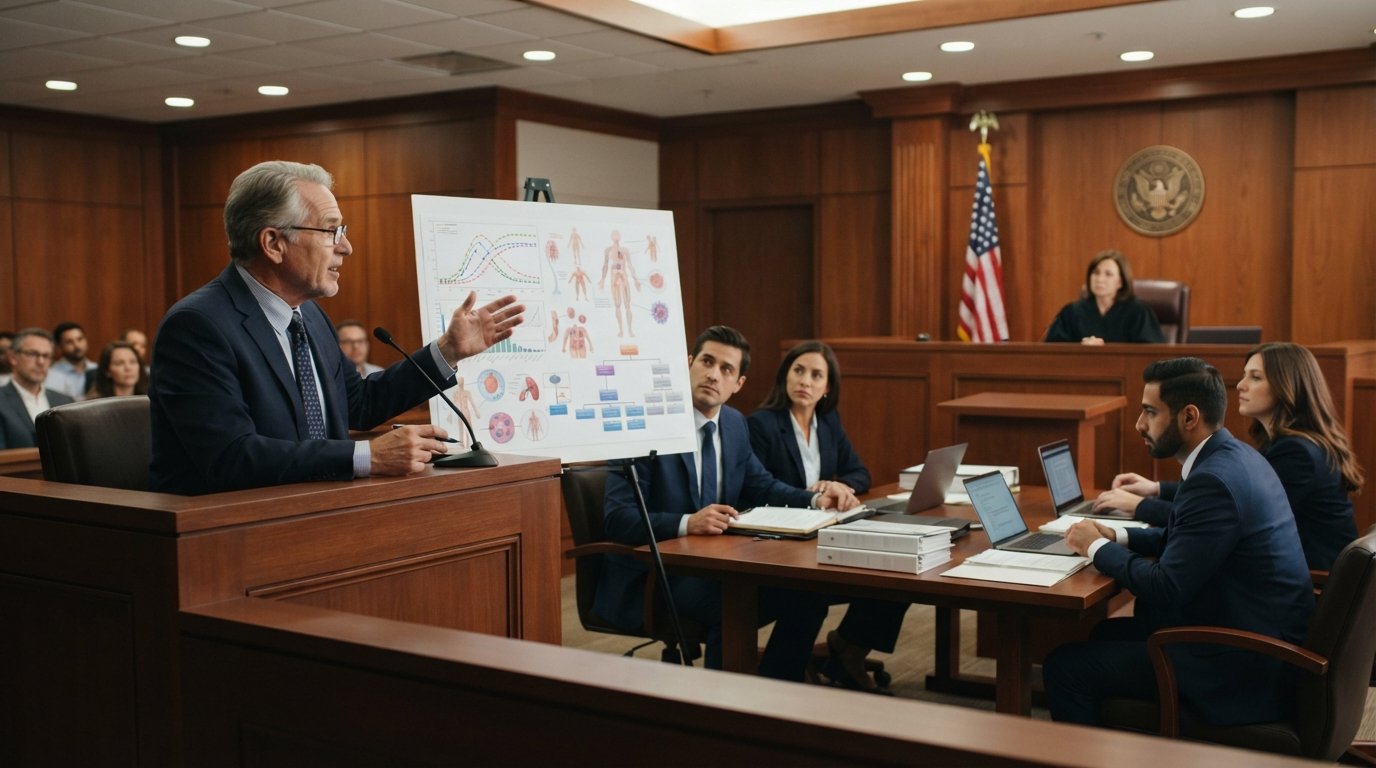
Mass tort trials present unique challenges for presenting expert testimony. Unlike individual trials, where a single plaintiff's story dominates, mass torts often involve bellwether trials, test cases, or consolidated proceedings. In these settings, experts may testify about general causation (whether a product can cause harm) and specific causation (whether it did cause harm to a particular plaintiff). The presentation must balance the need for scientific rigor with the jury's ability to comprehend complex information. Attorneys often use visual aids, animations, and plain-language explanations to make expert testimony accessible.
In group trials, experts may be called to testify once for multiple plaintiffs, or they may be deposed and their testimony presented via video. The order of witnesses and the scope of their testimony are carefully choreographed to build a coherent narrative. For example, a plaintiffs' team might first present a causation expert to establish the scientific link, followed by a damages expert to quantify the harm. Defense experts then attempt to rebut these claims, often challenging the plaintiffs' experts' methodology or offering alternative explanations for the injuries. The jury must weigh conflicting expert opinions, which can be a daunting task.
Judges play a crucial role in managing expert testimony in mass torts. They may limit the number of experts, set time limits for testimony, and provide jury instructions that explain how to evaluate expert evidence. In some cases, courts appoint neutral experts or special masters to help with complex scientific issues. The presentation of expert testimony is thus a collaborative effort involving attorneys, judges, and the experts themselves, all aimed at ensuring a fair and informed adjudication. The effectiveness of this presentation can significantly influence the outcome of the trial and the settlement value of the case.
Scoring and Proof Patterns in Talc and PFAS Litigation
Recent mass torts, such as those involving talcum powder and PFAS (per- and polyfluoroalkyl substances), illustrate how expert testimony shapes scoring and proof patterns. In talc litigation, plaintiffs allege that Johnson & Johnson's talcum powder products were contaminated with asbestos and caused ovarian cancer and mesothelioma. The cases hinge on expert testimony regarding asbestos contamination, exposure pathways, and medical causation. Over time, plaintiffs have developed a playbook that includes epidemiological studies, tissue analyses, and industry documents. Defendants, in turn, have challenged the reliability of these experts, often arguing that the science is inconclusive.
The scoring patterns in talc cases have been mixed but impactful. Several high-profile jury verdicts have awarded substantial damages to plaintiffs, driven in part by compelling expert testimony. For instance, experts have testified about the presence of asbestos in talc, the lack of warning to consumers, and the biological mechanisms of cancer development. These testimonies have persuaded juries to find liability and award punitive damages. However, defendants have also won some cases by successfully excluding plaintiffs' experts or presenting their own experts who dispute the causation link. The evolving science and the admissibility battles continue to shape the litigation.
PFAS litigation, involving contamination of water sources by firefighting foam and other products, presents similar dynamics. Plaintiffs rely on experts in toxicology, hydrology, and epidemiology to establish that PFAS exposure causes various health conditions, including cancer, thyroid disease, and immune system disorders. The proof patterns here often involve complex exposure modeling and longitudinal studies. Experts must demonstrate that the plaintiffs' exposure levels were sufficient to cause harm, a challenge that requires sophisticated statistical analysis. The outcomes of these cases will depend heavily on how courts apply Daubert or Frye and how juries interpret the expert evidence. As these litigations mature, the role of expert witnesses in shaping settlement values and trial outcomes will only grow more pronounced.
How Expert Selection Affects Settlement Value
The selection of expert witnesses can dramatically influence the settlement value of a mass tort case. Strong, credible experts increase the likelihood of a favorable verdict, which in turn pressures defendants to offer higher settlements. Conversely, weak or unreliable experts can undermine a case, leading to lower offers or even dismissal. Attorneys therefore invest significant time and resources in identifying and vetting experts. They look for individuals with impeccable credentials, relevant experience, and the ability to communicate effectively to a jury. The expert's publication record, prior testimony, and demeanor are all considered.
In mass torts, the selection of experts also has strategic implications. Plaintiffs' attorneys may seek experts who have previously testified in similar cases and achieved favorable results. They may also look for experts who can withstand aggressive cross-examination and present complex science in an accessible way. Defendants, on the other hand, seek experts who can cast doubt on the plaintiffs' theories or offer alternative explanations. The battle of experts often becomes a battle of credentials and credibility. A well-chosen expert can turn the tide of a case, while a poor choice can be disastrous.
Ultimately, the use of expert witnesses in mass tort trials is a multifaceted process that requires careful planning, rigorous preparation, and a deep understanding of both science and law. As mass torts continue to evolve, the role of experts will remain central to the pursuit of justice for injured parties. For those seeking legal representation, understanding these dynamics can help in selecting the right attorney and building a strong case. Platforms like AttorneyLeads connect law firms with pre-screened clients, facilitating access to experienced counsel in complex litigation. Whether you are a claimant or a legal professional, recognizing the pivotal role of expert witnesses is essential in navigating the challenging landscape of mass tort litigation.
Expert witnesses are the cornerstone of mass tort trials, transforming complex science into persuasive legal arguments. Their testimony on causation and damages, filtered through admissibility standards like Daubert and Frye, can determine the fate of thousands of claims. By understanding how experts are selected, presented, and challenged, stakeholders can better appreciate the intricacies of these high-stakes cases and the factors that drive settlement values.